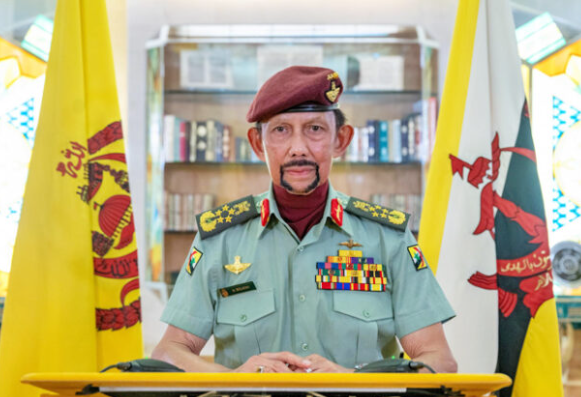
Brunei's Sultan Hassanal Bolkiah has used the occasion of the Islamic New Year 1448 Hijrah to deliver a comprehensive address emphasizing the interconnected nature of national progress and spiritual commitment. The monarch framed the arrival of a new calendar year not as a moment to initiate fresh endeavours, but rather as a crucial juncture for citizens to reassess and strengthen their existing resolve toward collective advancement. His remarks underscored a vision of development that transcends purely economic metrics, instead weaving together material prosperity with the spiritual well-being that forms the foundation of a cohesive society.
In articulating his vision of comprehensive national progress, the Sultan drew a deliberate distinction between two spheres of effort that he views as mutually reinforcing. The material dimension encompasses the economy and physical infrastructure—the tangible elements of development that improve living standards and create opportunities for citizens. Simultaneously, the spiritual dimension encompasses religious knowledge, formal education systems, and dakwah activities that seek to deepen Islamic understanding and practice within society. By presenting these as parallel rather than competing priorities, the monarch signalled that sustainable advancement requires simultaneous attention to both dimensions, avoiding the false choice between economic development and religious vitality that sometimes characterises policy debates across the region.
The Sultan's invocation of sincere intention and divine blessing reflects a governance framework distinctly rooted in Islamic principles. His call for citizens to express gratitude to Allah for the opportunity to witness another Islamic new year, and his aspiration that the coming months will be filled with beneficial deeds for families and the nation, emphasised the spiritual accountability that should accompany material endeavour. This framing is particularly significant for Southeast Asian observers, as it demonstrates how Islamic monarchy in Brunei integrates religious rhetoric with practical governance concerns in a manner that appears seamless to the local population while potentially offering insights into alternative models of faith-based governance in the region.
A substantial portion of the Sultan's address confronted the geopolitical realities facing the broader Muslim world and the specific vulnerabilities facing smaller nations. He acknowledged that contemporary global conditions are characterised by persistent conflict and instability, noting that warfare generates suffering and hardship that spare no party from its consequences. This sober assessment of international conditions contrasted sharply with his expression of gratitude for Brunei's own trajectory, which he characterised as one of sustained peace and stability, insulated from the natural disasters that periodically devastate neighbouring regions. The implicit message—that Brunei's relative security represents a precious achievement worthy of protection rather than a guaranteed condition—carries particular resonance for other small Southeast Asian states navigating complex regional dynamics.
The Sultan attributed Brunei's peaceful trajectory to a foundation of spiritual practice, specifically identifying prayer, religious remembrance and Quranic recitation as the sources of the nation's blessing. This theological interpretation of national security and stability reflects a worldview in which material and spiritual dimensions are fundamentally inseparable. Rather than reducing national protection to military capability or diplomatic strategy alone, the Sultan positioned spiritual disciplines as essential components of national resilience, a perspective that would be familiar to citizens of Brunei but may strike external observers as reflecting a distinctly religious approach to statecraft that shapes how the nation conceptualizes its security.
Despite acknowledging Brunei's relative stability, the Sultan identified crime as a persistent challenge requiring urgent collective action. His specific references to drug-related offences and theft indicated a focus on criminal activities that authorities view as particularly corrosive to the social fabric and national image. The monarch's characterization of such crimes as religiously condemned actions served dual purposes: it provided theological legitimacy for law enforcement efforts while simultaneously framing crime prevention as a religious obligation rather than merely a secular regulatory function. This integration of religious and legal frameworks for addressing criminal behaviour is notable in the Malaysian and broader Southeast Asian context, where similar approaches have proven contentious in some quarters.
The Sultan's prescription for addressing crime centered on institutional action and religious education working in concert. He called upon agencies responsible for security and religious affairs to respond swiftly and effectively to criminal threats, while emphasising the particular importance of the religious sector in strengthening dakwah efforts and religious education. This institutional approach reflects recognition that criminal behaviour cannot be addressed through enforcement alone, but requires parallel efforts to cultivate social awareness and moral consciousness that naturally incline citizens toward rejecting drugs and criminal conduct. The emphasis on religious institutions as essential partners in crime prevention demonstrates how Brunei's governance structures integrate religious authorities into security strategies in ways that differ meaningfully from secular governance models.
The Sultan's closing exhortation crystallised the central tension underlying his entire address: the need for vigilance without complacency, for practical effort without losing faith in divine protection. He called on Muslims to maintain constant watchfulness, to avoid negligence and self-satisfaction, while simultaneously intensifying prayer and remembrance of Allah. This balance between human agency and divine blessing reflects Islamic theological principles, but also conveys a practical governance message that citizens must remain engaged and alert rather than passive or fatalistic. For a small nation like Brunei, this combination of spiritual trust and practical vigilance represents a coherent response to the challenges of maintaining stability and prosperity amid regional uncertainties.
The address concluded with the Sultan and royal family extending new year greetings to all citizens and residents, a gesture that reaffirmed national unity transcending citizenship status. This inclusive framing acknowledged the multi-ethnic and multi-faith composition of Brunei's population while centring the Islamic calendar as the official marker of national renewal. For Malaysian observers, the Sultan's comprehensive vision of Islamic governance integrated with practical statecraft offers a study in how religious leadership and national administration can be articulated together, with implications for ongoing debates about Islam's role in Southeast Asian politics and governance.