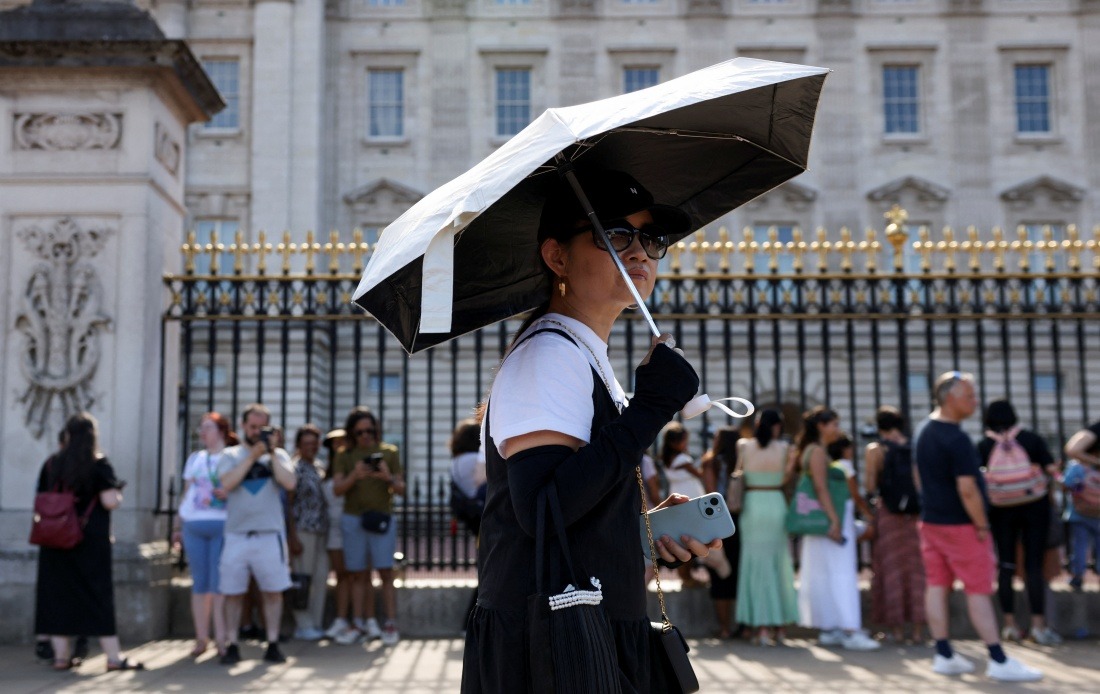
The United Kingdom's Household Division took the unusual step of cancelling ceremonial guard changes across London and Windsor on Tuesday through Thursday, responding to an unprecedented heatwave forecast to sweep the nation this week. The decision, which affects iconic ceremonies including those at Buckingham Palace, reflects growing concerns about public and military welfare during what meteorologists warn could be the hottest June on record for the country.
Britain's Met Office issued a rare red weather alert earlier this week, the most serious tier in the national warning system, signalling dangerous conditions across much of southern England and Wales. This classification indicates that not only are temperatures expected to be exceptionally high, but the prolonged nature of the extreme heat poses genuine health risks to vulnerable populations and those engaged in strenuous activities. The alert underscores how seriously forecasters are treating the developing weather pattern.
Temperature projections released by meteorological authorities point to readings of 39 degrees Celsius expected on Wednesday and Thursday, with some regions potentially experiencing even more severe conditions. Such temperatures remain relatively rare for the UK, where infrastructure and public habits have traditionally been designed around cooler maritime climates. For context, these readings would represent a significant departure from typical June weather in Britain and highlight how climate patterns are evolving across the region.
The Household Division articulated its reasoning in a formal statement, emphasising that the decision prioritised the wellbeing of soldiers under their command, the military working horses integral to ceremonial functions, and the substantial crowds that typically gather to witness these traditional spectacles. This multi-layered concern reflects the reality that prolonged exposure to extreme heat poses genuine physiological risks, particularly for individuals wearing heavy ceremonial uniforms and for animals engaged in demanding work during peak temperature hours.
While the full ceremonial guard changes were suspended, authorities implemented a modified operational schedule for the Royal Horse Guards' changing ceremony on Wednesday. This streamlined version would commence earlier in the morning when temperatures remained comparatively lower, eliminating the traditional ceremonial pageantry but maintaining essential security functions. Additionally, the military implemented practical adjustments including positioning soldiers in shaded locations and rotating personnel at shorter intervals to prevent heat exhaustion.
The heatwave's disruptive effects extended far beyond ceremonial London, creating cascading consequences throughout the educational sector. Hundreds of schools across southern England made the difficult decision to close their doors rather than risk operating buildings without adequate cooling during dangerous temperature conditions. Somerset County Council confirmed approximately 100 schools would remain shuttered throughout the period of extreme heat, while Buckinghamshire reported a similar figure, and Gloucestershire saw more than 80 educational institutions suspend normal operations.
These closures concentrated heavily in areas designated under the red weather alert, creating particular disruption in the densely populated regions of London and the Home Counties. Nearly ten major schools in the capital alone cancelled in-person instruction, forcing families to adapt to sudden remote learning arrangements with minimal notice. The concentration of closures in these southern regions reflects both the intensity of forecast temperatures and the reality that infrastructure in these areas was not designed to withstand or safely accommodate such conditions.
The decision by educational authorities represents a notable shift in how British institutions respond to extreme weather. Historically, schools operated through most conditions, but this week's forecast prompted recognition that attempting to maintain normal operations would create unsafe environments for students and staff. The closure strategy, while disruptive to family routines and educational schedules, reflects contemporary understanding of heat-related health risks, particularly for young people engaged in indoor activities without proper ventilation or cooling systems.
For Malaysian observers monitoring international responses to extreme weather, the British experience offers instructive parallels and contrasts. While Malaysia regularly experiences tropical heat and high humidity that would seem extreme by British standards, the relative suddenness of these conditions in the UK demonstrates how societies accustomed to temperate climates struggle to adapt rapidly. The suspension of iconic ceremonies and educational closures illustrate how even wealthy developed nations face significant operational challenges when weather patterns shift dramatically from historical norms.
The incident also underscores broader climate adaptation challenges facing nations worldwide. As extreme weather becomes increasingly frequent across previously stable regions, established institutions and systems designed around historical climate parameters require recalibration. The British response—prioritising human and animal welfare over ceremonial tradition and educational schedules—suggests a growing willingness to subordinate routine operations to safety considerations when environmental conditions warrant such decisions.
Looking forward, the UK's experience this week may prompt further consideration of infrastructure resilience and adaptation strategies across northern European nations. Building cooling standards, outdoor work protocols during extreme heat, and emergency response procedures may all face scrutiny following this heatwave. For Southeast Asian nations already accustomed to managing extreme heat, the British example paradoxically demonstrates that temperature alone matters less than the gap between environmental conditions and built infrastructure designed to accommodate them.
The cancellation of Buckingham Palace's ceremonial guard changes, while symbolically significant given the ceremony's historical prominence, ultimately represents a pragmatic prioritisation of welfare over tradition. As global climate patterns continue evolving, such decisions may become increasingly common across regions unaccustomed to extreme heat, fundamentally reshaping how historical and ceremonial obligations are balanced against contemporary safety imperatives.

