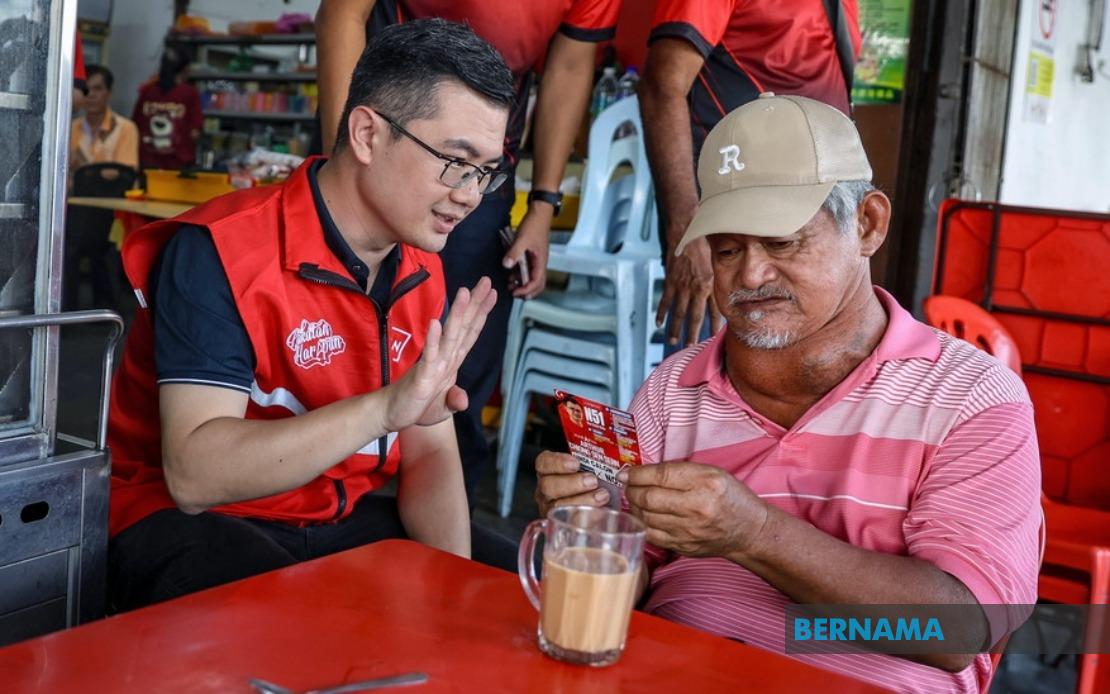
The Johor state election campaign has taken a troubling turn in the Bukit Batu constituency, where Pakatan Harapan's Arthur Chiong Sen Sern reported deliberate destruction of his campaign materials to police, highlighting rising tensions as voters prepare to cast ballots for the 56 contested seats across the state on July 11.
Chiong revealed that vandals targeted his campaign infrastructure in at least two distinct areas within his electoral division. In Kampung Sri Paya, party flags were discarded into a drainage channel, while multiple billboards promoting his candidacy were ripped down by the perpetrators. A subsequent incident occurred in Taman Putri, where identical acts of sabotage affected both campaign signage and party flags, though the identity of those responsible remained unclear at the time of his complaint.
Responding swiftly to the incidents, Chiong lodged a formal complaint with the Air Bemban police station to ensure the matter received proper investigative attention from law enforcement authorities. The decision to involve police underscores the seriousness with which the candidate views the deliberate obstruction of his campaign activities, a concerning development in what should be a peaceful democratic process.
At a media briefing conducted at his campaign headquarters, the Main Operations Room N.51 Bukit Batu, Chiong expressed genuine distress at the actions perpetrated by what he termed irresponsible elements determined to undermine his political efforts through sabotage and what he characterised as treacherous conduct. His comments revealed frustration with the brazen nature of the attacks, which extended beyond simple vandalism to suggest a coordinated effort targeting his campaign across multiple locations.
Despite the provocation and clear attempts to disrupt his campaign momentum, Chiong maintained a resolute commitment to his electoral ambitions, refusing to allow the sabotage to deter his efforts to retain the seat for his party. His resilience reflects the determination candidates must demonstrate in Malaysia's competitive electoral environment, where campaigns often face various forms of obstruction and intimidation.
Chiong took the opportunity to issue a broader appeal to all political participants in the Johor elections, urging them to embrace mature and responsible campaigning practices. He specifically called for campaigns characterised by harmony and civility, explicitly rejecting the hostile and deceitful tactics that have occasionally marred Malaysian electoral contests. His appeal resonates particularly in a context where campaign-related incidents have occasionally generated community tensions.
The Bukit Batu contest itself reflects the fragmented nature of contemporary Malaysian politics, with five candidates competing for the single state assembly seat. Beyond Chiong's Pakatan Harapan candidacy under the PKR banner, the division will see competition from R. Kumaran representing the Barisan Nasional through MIC, M. Premanand contesting for the Muda party, G. Tamili running under Bersama, and independent candidate Kamaruzaman Ali. This crowded field demonstrates how the traditional two-coalition framework has given way to a more complex multi-party landscape in which smaller parties and independent candidates now credibly contest state-level races.
The broader Johor election context adds significance to incidents like those in Bukit Batu. The 16th state election represents a substantial democratic exercise, with 172 candidates altogether standing for the 56 available state assembly seats, making it a consequential contest that will reshape the political composition of one of Malaysia's most economically important states. Early voting commenced on July 7, with the main polling day scheduled for July 11, providing a relatively compressed campaign timeline that intensifies pressure on all participants.
Incidents of campaign material destruction, while occasionally occurring in Malaysian elections, warrant particular attention given their potential to escalate tensions and undermine public confidence in electoral processes. Such acts typically suggest frustration among certain groups with the competitive dynamics, and their occurrence so close to polling day raises concerns about the prevailing campaign atmosphere in affected constituencies. The willingness of Chiong to publicly report the matter and appeal for better standards suggests he intends to position his campaign on higher ethical ground, contrasting his approach with those allegedly engaged in destructive tactics.
From a broader regional perspective, the Johor election serves as an important barometer for Malaysian politics more generally. As the state with the second-largest population and significant economic weight, electoral outcomes there often foreshadow national political trends. Campaign-related incidents and the way candidates and authorities respond to them help establish precedents for acceptable political behaviour that may influence contests elsewhere in the country. Chiong's approach of combining formal legal channels with public appeals for civility represents one response model to campaign obstruction.
The incident also raises questions about security and enforcement during campaign periods. Electoral commissions and local authorities bear responsibility for ensuring that candidates can conduct campaigns free from intimidation or destruction of materials, yet such incidents continue to occur. Effective police investigation of the Bukit Batu incidents could demonstrate that serious consequences await those who resort to sabotage, potentially deterring similar conduct elsewhere.
For Malaysian voters and observers monitoring the Johor campaign, the reported sabotage serves as a reminder of the importance of scrutinising not merely candidates' policy platforms but also their conduct and that of their supporters. Elections should be decided on merit and persuasion, not through suppression of competing voices through destruction or intimidation. As Bukit Batu voters prepare to choose their state representative, they do so against a backdrop where campaign-related tensions have already surfaced, making the character and civility of the democratic process itself a substantive issue worthy of their consideration.

