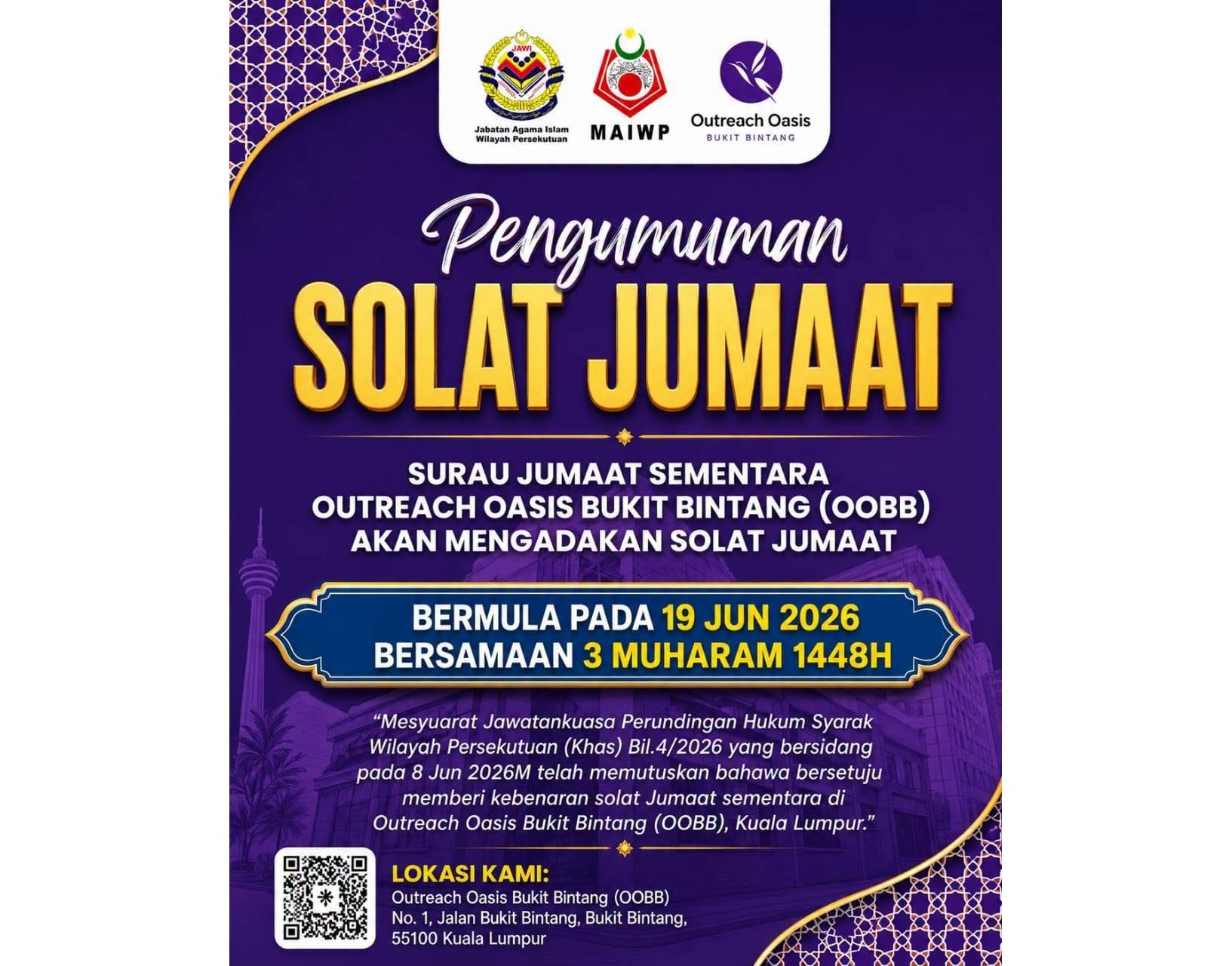
Muslims working in or visiting Kuala Lumpur's bustling Bukit Bintang district now have a dedicated space to fulfil their Friday prayer obligations, following a landmark decision by the Ministry in the Prime Minister's Department (Religious Affairs). Beginning June 19, the Bukit Bintang Outreach Oasis will serve as a temporary prayer facility for the city's growing Muslim population in this commercial hub, marking a significant milestone for religious accommodation in one of Malaysia's most frequented shopping and entertainment precincts.
The announcement came from Dr. Zulkifli Hassan, the minister overseeing religious affairs, who framed the initiative as a temporary solution while construction of a permanent Friday surau progresses at the location. His remarks underscored both the practical challenge faced by Muslim workers and shoppers in the area and the government's commitment to supporting Islamic religious practices in secular commercial spaces. The temporary arrangement represents a pragmatic approach to meeting immediate community needs whilst longer-term infrastructure develops.
For the Muslim community in Bukit Bintang, this facility addresses a long-standing inconvenience. Previously, those wishing to observe Friday prayers had limited options, often requiring them to leave the district, navigate through traffic, or rush to distant mosques, creating genuine hardship during work hours. The new arrangement eliminates these logistical barriers, allowing individuals to maintain their religious obligations without significant disruption to their daily schedules. This is particularly meaningful for those employed in retail, hospitality, and office settings throughout the district.
The government has invested considerable effort in developing a comfortable and properly equipped permanent surau facility specifically designed for Bukit Bintang's unique context as a major shopping and tourism destination. The temporary provision at the Outreach Oasis demonstrates official recognition that religious infrastructure development requires time, whilst community needs are immediate. This staged approach reflects practical governance, balancing immediate service delivery with longer-term sustainable solutions.
Dr. Zulkifli's invitation for the wider Bukit Bintang community to participate in these prayers carries deeper significance beyond logistical convenience. By encouraging attendance and describing it as a demonstration of solidarity, he frames religious observance not merely as personal devotion but as a communal expression of Islamic identity within Malaysia's plural society. His language emphasises collective participation and support for Islamic values, positioning the surau as a symbol of Malaysia's commitment to religious pluralism and accommodation.
The initiative also reflects broader governmental recognition of Kuala Lumpur's transformation and the need for religious facilities to evolve alongside urban development. Bukit Bintang's status as a major commercial and tourist attraction means it hosts diverse populations throughout the week. Providing appropriate religious facilities demonstrates that Malaysia's approach to urban planning increasingly acknowledges the spiritual needs of various faith communities. This becomes particularly important in cosmopolitan areas where workers, residents, and visitors from across the country and beyond require access to places of worship.
From a practical standpoint, the temporary facility represents an interim measure designed to gather operational experience and community feedback before the permanent surau opens. Such pilot approaches allow authorities to understand actual usage patterns, identify any logistical gaps, and refine designs for the permanent structure. This evidence-based approach should result in a more effective final facility that genuinely meets community requirements rather than merely meeting architectural specifications.
The presence of a dedicated Friday prayer space in Bukit Bintang also carries symbolic importance for Malaysia's religious landscape. Shopping districts globally often present challenges for religious observance due to their commercial nature and secular environment. By establishing prayer facilities in such spaces, Malaysia demonstrates that religious accommodation and modern commerce are not mutually exclusive. This sends an important message about the country's inclusive approach to managing its Muslim-majority, multi-faith society.
For Malaysian Muslim professionals and entrepreneurs, particularly women and younger workers, the facility may reduce stress associated with balancing workplace responsibilities with religious obligations. The ability to perform Friday prayers without leaving the district or incurring significant time penalties could influence employment decisions and work satisfaction. Organisations in Bukit Bintang may also benefit from employees' improved focus and reduced anxiety about missing religious observances during work hours.
The temporary arrangement also provides an opportunity for different stakeholder groups to collaborate and coordinate. The Bukit Bintang Outreach Oasis management, religious authorities, and the local Muslim community will work together to ensure the facility operates smoothly. Such cooperation builds social cohesion and demonstrates how commercial and religious institutions can partner constructively to serve shared communities.
Looking forward, the completion of the permanent surau will represent an important infrastructure milestone for Kuala Lumpur. Its design, capacity, and facilities will likely become a reference point for similar projects in other major shopping districts across Malaysia. The lessons learned during the temporary phase will inform best practices for accommodating religious observance in increasingly secular and commercialised urban spaces.
The initiative ultimately reflects Malaysia's continuing evolution in managing religious pluralism within rapid urbanisation. As cities become more dense and diverse, governments must proactively address the practical needs of various communities, ensuring that religious freedom translates into tangible infrastructure and accommodation. The Bukit Bintang facility, both temporary and permanent iterations, exemplifies this commitment to balancing secular modernity with religious accommodation, a challenge increasingly relevant across Southeast Asia's developing economies.

