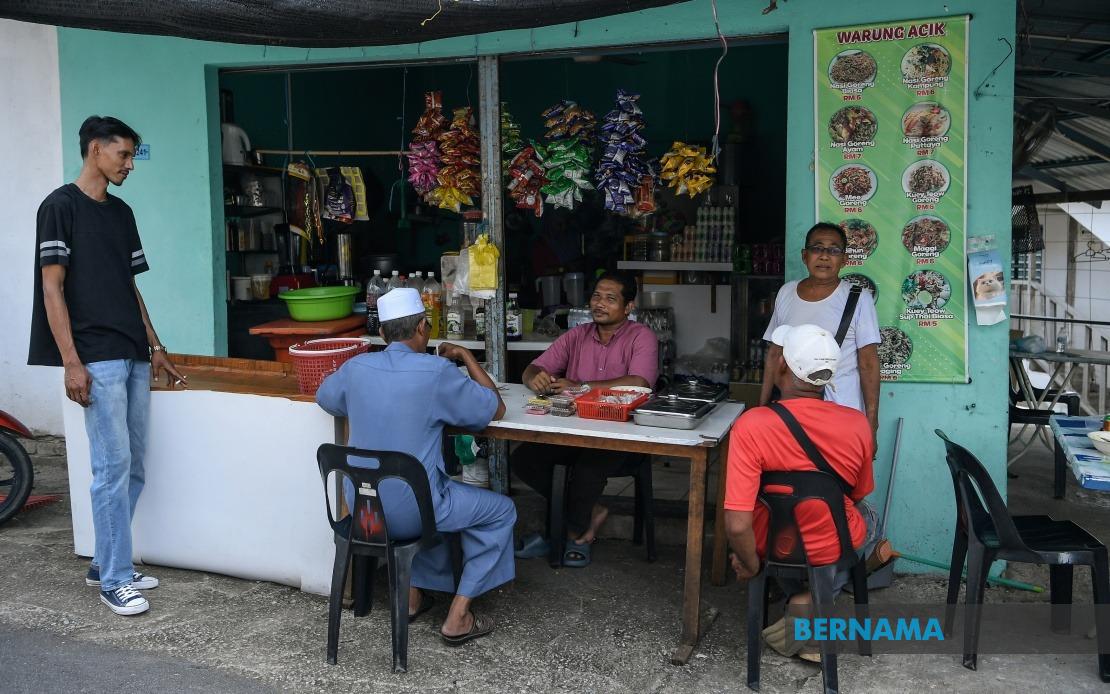
Residents of Bukit Malut in Langkawi have launched a concerted effort to challenge the damaging reputation their settlement has acquired, particularly allegations that it functions as an entry point and refuge for undocumented migrants fleeing Myanmar. The community's frustration reflects a broader tension between geographical proximity to maritime borders and the social consequences of baseless suspicion, raising questions about how coastal communities navigate security concerns versus identity and belonging.
Mohamad Fadzli Abdullah, who leads the Bukit Malut Neighbourhood Watch, articulated the community's core grievance: residents bear the blame whenever refugee-related incidents occur in Langkawi, regardless of evidence or logical connection. This pattern of scapegoating has persisted for years, creating an atmosphere where the settlement's inhabitants are routinely cast as complicit in border security failures simply by virtue of where they live. The mechanism of blame operates almost reflexively in public discourse, with social media amplifying unsubstantiated claims that travel faster than corrections.
Crucially, Mohamad Fadzli pointed out that Bukit Malut's geographical position makes it an unlikely landing site for clandestine operations. The settlement sits in immediate proximity to installations operated by the Malaysian Maritime Enforcement Agency, the Royal Malaysian Customs Department, and the Royal Malaysian Navy. These overlapping security presences mean that suspicious maritime activity would be extraordinarily difficult to conceal, rendering the refugee-haven narrative fundamentally implausible from an operational standpoint. Yet logic appears insufficient against entrenched perceptions.
The neighbourhood watch chairman also addressed claims that the area is cordoned off or dangerous, characterizations that have created a chilling effect on outsiders visiting the community. Mohamad Fadzli emphasized that no restrictions exist on access and that security presence reflects normal monitoring rather than sinister intent. This distinction matters because it reveals how security infrastructure, which serves legitimate protective functions, becomes reinterpreted through a lens of suspicion and mystery when applied to communities already marked as different or suspect.
Economically, Bukit Malut represents a conventional working-class settlement. Approximately 85 percent of residents derive their livelihoods from fishing, a maritime economy deeply rooted in Langkawi's maritime heritage. The remaining population comprises traders, car rental operators, civil servants, uniformed personnel, and graduates employed across various sectors. This occupational diversity contradicts the monolithic characterization that underpins much of the stigma, revealing instead a community with conventional economic integration and professional aspiration.
Hashanah Zakaria, a 42-year-old resident with more than two decades of tenure in Bukit Malut, appealed directly to the public to visit the community and form independent judgments rather than accepting social media narratives uncritically. Her observation that Bukit Malut functions like any other village community, without elevated crime or serious security issues, extends an invitation for empirical verification over assumption. Notably, she also mentioned the collateral damage the settlement's poor reputation inflicts on younger residents, including her own child at boarding school, who must navigate peer perception shaped by geographical stigma rather than individual merit.
Abas Salam, aged 62 and among the earliest settlers in Kampung Tanjung Lembung within Bukit Malut, provided historical testimony that directly contests the refugee-settlement thesis. Throughout more than three decades of residence, he has never encountered evidence of undocumented Myanmar nationals living permanently in the area. His account carries particular weight because as a pioneer settler, Abas participated in the community's foundational development, constructing homes, a mosque, and religious schools largely through internal resources and effort. This history of self-directed community building contradicts narratives depicting the settlement as lawless or external to the Malaysian social fabric.
Abas's insistence that residents are "Kedah Malay-Muslims and legitimate Malaysian citizens" represents more than a demographic clarification; it constitutes an assertion of belonging against efforts to render the community foreign or suspect. The repeated denial that residents are Rohingya speaks to a particular anxiety about conflation with refugee populations, suggesting that the stigma operates not merely through geographical association but through the implicit racialization of the settlement. When communities become reflexively linked to asylum seekers despite absence of evidence, questions emerge about what underlying assumptions drive such associations.
The convergence of testimonies from Bukit Malut residents reveals a community experiencing what might be termed "stigma persistence"—the phenomenon whereby negative associations, once established, prove remarkably resistant to factual correction or contradictory evidence. Psychologically and sociologically, such persistence occurs because stereotypes fulfill cognitive and social functions beyond mere description; they organize uncertainty and often reinforce existing power hierarchies. In this case, the refugee stigma may persist partly because it allocates responsibility for complex border-management challenges to a visible, geographically bounded community.
For Malaysia more broadly, the Bukit Malut case illustrates tensions inherent in managing porous maritime borders while maintaining social cohesion in coastal settlements. When residents of border-adjacent communities become indiscriminately associated with security threats, the effect extends beyond individual reputation to question whether certain populations can be fully integrated into national belonging. This dynamic becomes especially fraught given Malaysia's role as a transit point for regional refugee flows, where security imperatives can overshadow humanitarian considerations and where communities themselves become collateral damage in the struggle to manage irregular migration.
The community's push-back also underscores the importance of local agency in countering misinformation. Rather than passively accepting marginalization, Bukit Malut residents have chosen to speak publicly, provide testimony, and invite scrutiny. This active assertion of dignity and accurate self-representation offers a model for how communities can combat stigma through documentary evidence, personal testimony, and direct appeal to public reason. Yet their success ultimately depends on media literacy and receptiveness among audiences primed to skepticism by competing narratives circulating online and offline.
Moving forward, resolving the Bukit Malut stigma requires intervention at multiple levels: media organizations must exercise greater scrutiny when attributing refugee incidents to specific settlements, security agencies should provide transparent communications about actual threats and activities, and public discourse must distinguish between legitimate border security concerns and scapegoating of vulnerable communities. The residents of Bukit Malut are asserting a fundamental right to reputation and belonging—not immunity from reasonable security oversight, but liberation from unfounded association with activities in which they do not participate and which geographic factors and institutional presence would make extraordinarily difficult to conceal.

