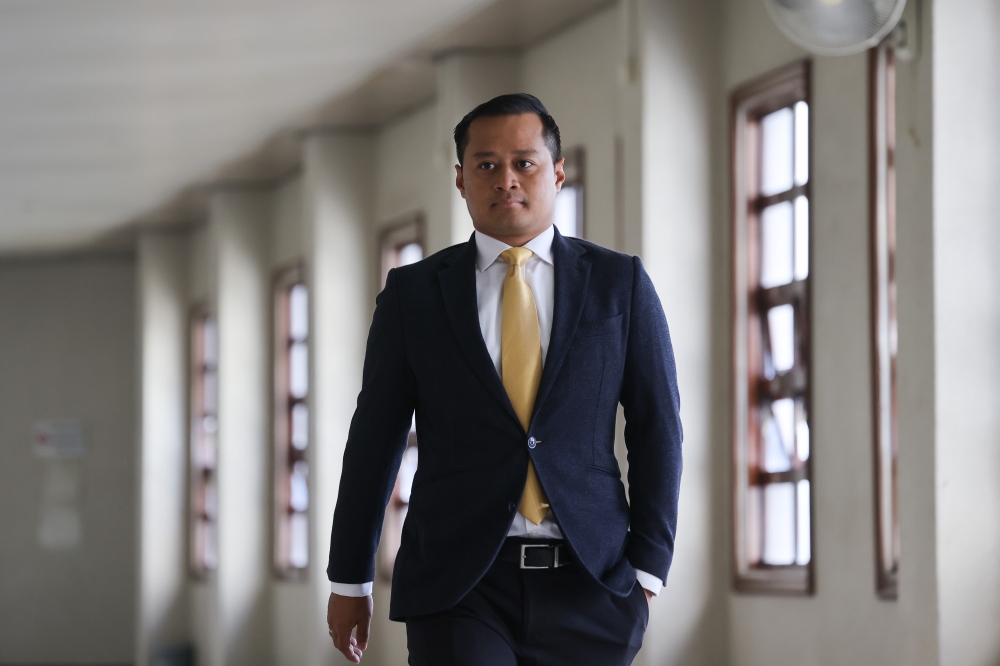
A businessman gave testimony at the High Court here on Monday that he had no prior knowledge of his brother's decision to donate part of their company's RM13.7 million earnings to the Bersatu political party. The revelation surfaced during the ongoing trial of Muhyiddin Yassin, the former Prime Minister and current Bersatu chairperson, who faces corruption charges related to alleged improper financial dealings.
Shahrin Shamsuddin's statement provides a window into the movement of corporate funds toward political channels, raising questions about transparency and consent within family-controlled businesses. The timing and nature of the transfer have become central to prosecutors' efforts to establish links between corporate donations and potential corruption. The discovery emerged only when Shahrin was reviewing company records, according to his court testimony, highlighting a significant breach in communication and governance within the business partnership.
The RM13.7 million figure represents a substantial sum in the context of Malaysian political financing, particularly when examining how businesses channel contributions to political movements. Bersatu, founded by Muhyiddin himself, has been scrutinised in recent years regarding the sources and management of its financial resources. The revelation that family members within a business may donate without mutual agreement underscores recurring concerns about the oversight mechanisms within Malaysia's political funding landscape.
Shahrin's testimony carries implications beyond the immediate trial. It illustrates how corporate structures can be exploited to facilitate political contributions, potentially circumventing transparency requirements. The High Court hearing has become increasingly focused on establishing the decision-making processes and financial authorisation within the company, with prosecutors attempting to demonstrate that the funds' movement to Bersatu may have been improper or undisclosed to relevant parties.
The case reflects broader discussions in Malaysia about corporate governance and political party financing. Unlike some jurisdictions with strict regulations on campaign contributions and mandatory disclosure of major donations, Malaysia's regulatory framework has evolved considerably but still faces gaps in transparency. The court proceedings highlight the importance of such safeguards, particularly when substantial sums from privately-held companies flow toward political organisations without proper documentation or consent protocols.
Muhyiddin's trial encompasses multiple financial allegations spanning his tenure in various governmental and political roles. The Bersatu donation appears to be one element within a larger pattern that prosecutors are attempting to construct. The defence has sought to challenge the characterisation of these transactions, arguing that they represent legitimate business activities rather than evidence of corruption or improper conduct.
For Malaysian observers following corporate accountability and political transparency, the testimony underscores how family-run enterprises can present governance challenges. When business partners operate without clearly established protocols for major financial decisions, situations like Shahrin's discovery of the undisclosed donation become possible. This highlights the necessity for formalised procedures, board approvals, and documented consent for significant capital movements, even within closely-held companies.
The RM13.7 million donation also contextualises Bersatu's funding sources. Since the party's establishment in 2016, it has attracted financial support from various quarters, and the party's relationships with business interests have periodically attracted media scrutiny. The court case provides public insight into mechanisms through which such support has been mobilised, albeit through contested circumstances.
Shahrin's role as a witness illustrates how company insiders frequently become instrumental in corruption investigations, often providing documentation and testimonies that prosecutors rely upon to construct their cases. His discovery of the transfer and subsequent decision to testify represents a critical juncture in the trial's progression. The court's examination of how he became aware of the donation and the circumstances surrounding it will likely influence perceptions of the transaction's legitimacy.
The trial's outcome may establish important precedents regarding corporate donation mechanisms and the standards expected for transparency in political financing. If the court determines that the transfer constituted improper conduct, it could prompt both political parties and businesses to reconsider their donation protocols. Conversely, if the defence successfully argues that standard commercial and political relationships were maintained, the ruling may leave existing practices largely unchanged.
For Southeast Asian jurisdictions observing Malaysia's corruption prosecution efforts, the trial demonstrates both the commitment to investigating high-level figures and the challenges inherent in establishing criminal intent around financial transactions. The reliance on witness testimony from business associates, combined with documentary evidence of fund movements, represents the conventional prosecutorial approach in such cases across the region.
As proceedings continue, the court will need to establish whether Muhyiddin himself had knowledge of the donation's origin and whether he took actions that might constitute corruption. Shahrin's testimony, while highlighting improper internal business communication, becomes relevant to the broader question of whether political donations were solicited improperly or whether Muhyiddin was complicit in concealing their sources from relevant authorities.

