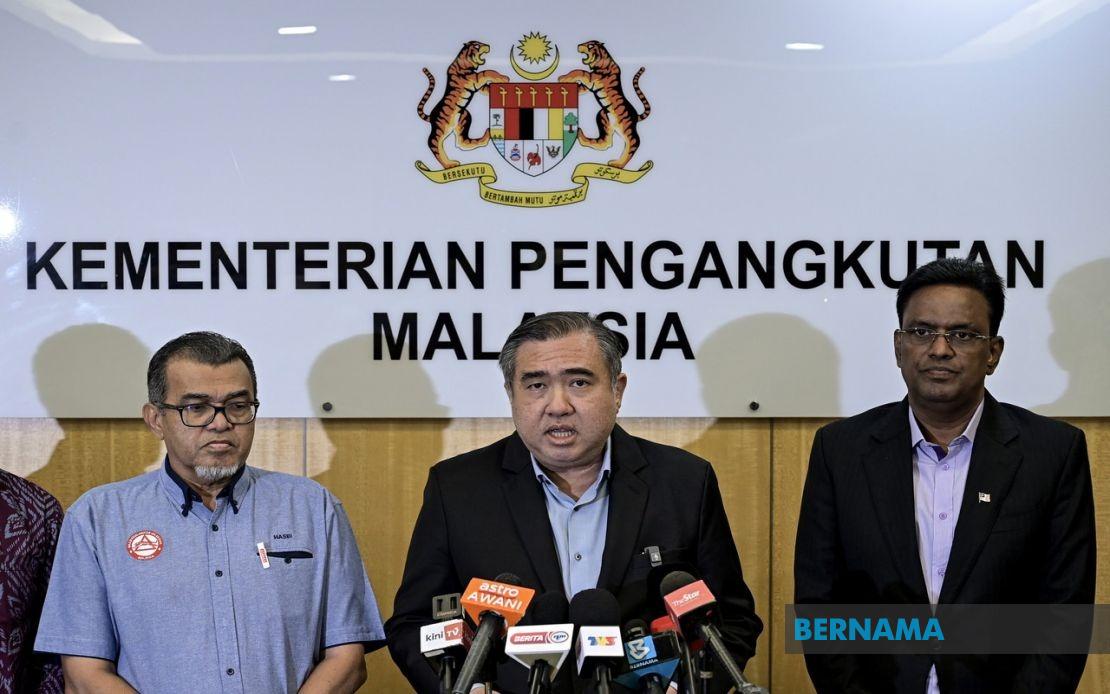
The Malaysian Cabinet has endorsed in-principle amendments to the Road Transport Act 1987 (Act 333) that would empower courts to impose compensation orders on road offenders as supplementary penalties. Transport Minister Anthony Loke announced the decision at a press conference in Putrajaya on Wednesday, signalling a significant shift in how Malaysia approaches accountability for traffic violations and their human costs.
Under the proposed framework, compensation would function as a distinct punishment layer overlaid on top of existing criminal sanctions. Offenders convicted of traffic offences would face the possibility of paying damages to victims or their families in addition to imprisonment, monetary fines, and driving disqualification orders already stipulated in traffic law. Importantly, Loke emphasised that courts rather than government agencies would determine compensation amounts on a case-by-case basis, taking into account the severity of the offence, the nature and extent of injuries sustained, financial losses incurred by the victim or bereaved family members, and the offender's financial capacity to meet such obligations.
The proposal encompasses a broad range of driving infractions, with particular emphasis on serious violations including driving while intoxicated by alcohol or illegal drugs and reckless or dangerous driving behaviours. By casting the net widely across multiple categories of traffic offences, the amendment aims to establish a principle that all road wrongdoing carries consequences beyond the criminal realm, extending into civil restitution. This approach reflects growing recognition among policymakers that victims of traffic accidents often face substantial medical costs, lost income, funeral expenses, and psychological trauma that existing penalty structures fail to address adequately.
One of the most carefully calibrated aspects of the proposal is its interaction with existing legal remedies. Loke was explicit that the new compensation mechanism would operate alongside, rather than replacing, victims' established rights to pursue insurance claims against vehicles or drivers' policies and to initiate civil lawsuits seeking damages through courts. This dual-track approach prevents the government from using mandatory court-ordered compensation as a reason to restrict or diminish insurance coverage or access to civil courts, a concern that consumer advocates and legal experts might otherwise have raised. The amendment thus expands rather than constrains victims' pathways to financial recovery.
The Transport Ministry's commitment to stakeholder consultation before finalising legislative language reflects the complexity of the initiative. Officials will engage extensively with other government agencies, the insurance industry, and interested parties to resolve several substantive questions. Determining which categories of injury qualify as serious enough to trigger enhanced compensation, establishing procedures when offenders lack means to pay, and defining the precise scope of recoverable losses all require careful calibration to ensure fairness and enforceability. Without industry buy-in from insurers and adequate answers to operational challenges, implementation could encounter resistance or disputes.
Another notable feature is the temporal limitation built into the amendment's application. Loke confirmed that the new compensation provisions would apply exclusively to offences committed after Parliament passes the amended legislation, reflecting the longstanding common law principle that criminal laws cannot operate retrospectively. This means offenders involved in accidents prior to the law's enactment would not face compensation orders, even if their cases were still moving through courts. While this approach protects offenders from unexpected liability for past conduct, it also means the measure will take years to produce meaningful compensation outcomes across Malaysian road accident cases.
The Transport Ministry aims to table the amended bill during Parliament's year-end sitting, contingent upon completing the drafting process and concluding stakeholder consultations. Loke indicated his intention to refer the measure to a special select committee for cross-party parliamentary scrutiny, a procedural choice that signals recognition of the bill's societal importance and desire to build broad political consensus. By inviting input from opposition as well as government lawmakers before the full chamber debates the measure, the minister appears to view compensation for traffic accident victims as a matter transcending partisan politics.
The amendment also includes provisions to strengthen KEJARA, the Road Offence Demerit Points System, though details about these ancillary reforms remain sketchy. The demerit framework suspends driving privileges after accumulation of points from various violations, serving as a progressive enforcement mechanism. By enhancing this system alongside introducing compensation orders, authorities are pursuing a multi-faceted strategy combining punishment, rehabilitation through licence suspension, and financial restitution.
For Malaysian accident victims and their families, the amendment represents potential vindication of their suffering. Persons seriously injured in preventable accidents or families bereft by traffic fatalities often struggle financially for years while bearing their losses alone. Insurance settlements may prove inadequate, civil lawsuits consume time and money, and criminal penalties imposed on wrongdoing drivers feel disconnected from victims' material circumstances. Permitting courts to order offenders to contribute directly to compensating those harmed by their conduct introduces a justice element currently absent from Malaysia's largely retributive traffic penalty regime.
The proposal also carries implications for road safety culture more broadly. When offenders recognise that causing injury through dangerous driving will result not merely in jail time or fines but also in paying substantial sums to injured parties, deterrent effects may intensify. The prospect of compensating a victim's family for loss of life or supporting rehabilitation of seriously injured persons might influence decision-making among drivers tempted to speed, drive impaired, or otherwise take hazardous risks. Making road danger economically consequential for perpetrators rather than solely a criminal matter could prove more behavioural-modifying than traditional enforcement approaches.
Insurance industry reactions will merit close observation during the consultation period. Insurers traditionally resist expanding insured parties' liabilities, fearing pressure to cover additional damages categories. However, court-ordered compensation based on individual culpability might be structured to remain separate from insurance coverage questions, potentially moderating industry objections. The ministry's explicit commitment to consulting the insurance sector before finalising bill language suggests officials recognise the importance of securing industry cooperation for smooth implementation.
The amendment also raises practical questions about enforcement. What mechanisms will compel offenders to pay compensation orders, particularly if they possess limited assets? Will instalments be permitted for impoverished offenders? These operational details remain unresolved but will require explicit legislative provision or subordinate rules to ensure compensation orders represent more than symbolic pronouncements with minimal real-world effect. The ministry's plan to examine these matters during stakeholder engagement appears recognition that ambitious compensation concepts require robust enforcement architecture to succeed.

