Prompted by a series of high-profile security lapses that have raised questions about Malaysia's capacity to protect its airports, the Cabinet has issued a directive requiring comprehensive reform of airport security protocols. Home Minister Datuk Seri Saifuddin Nasution Ismail announced in Sandakan that both the Ministry of Home Affairs and Ministry of Transport have been given a fortnight to prepare a detailed improvement strategy. The urgency of this timeline underscores the government's determination to address vulnerabilities that have attracted unwanted international attention and potentially complicated Malaysia's standing as a secure travel destination in Southeast Asia.
The catalyst for this intervention stems from mounting concerns within Cabinet circles that recent incidents have exposed meaningful gaps in airport security infrastructure and procedures. Several cases have involved Malaysian nationals, most notably the arrest of a Malaysian pilot following the seizure of approximately 25 kilogrammes of MDMA drugs at Indonesia's Soekarno-Hatta Airport. Such incidents, while technically occurring outside Malaysian territory, nonetheless implicate the country's reputation and raise questions about screening processes at departure points. Saifuddin characterised Cabinet's outlook as increasingly serious, emphasising that the incidents collectively create a damaging perception of systemic weaknesses that require immediate institutional response. The government's willingness to set a specific two-week deadline signals that officials view the situation as genuinely problematic rather than routine.
The minister elaborated that the forthcoming security plan would necessarily involve coordination across multiple agencies and stakeholder groups, reflecting the complexity of modern airport operations. A comprehensive approach demands integration of intelligence capabilities, passenger screening technologies, cargo handling protocols, and staff training frameworks. By tasking two separate ministries with this assignment, the government acknowledges that airport security encompasses both regulatory oversight and operational management domains. The plan's scope will likely extend beyond terminal security into broader supply chain vulnerabilities, staff vetting procedures, and data-sharing protocols with international partners, particularly given Malaysia's position as a regional aviation hub with daily connectivity to dozens of countries.
Parallel to addressing domestic security concerns, the government is simultaneously engaged in diplomatic efforts to rehabilitate Malaysia's international image regarding safety in the eastern Sabah region. Saifuddin noted that the Ministry of Home Affairs is actively encouraging foreign governments to reconsider restrictive travel advisories, particularly for the east coast. This dual-track approach reveals official recognition that security improvements require both tangible operational changes and careful management of perception among key markets. Several nations, including Japan and Switzerland, have already amended their travel advisories following sustained government engagement, suggesting that diplomatic messaging can achieve measurable results when backed by genuine security improvements in the relevant areas.
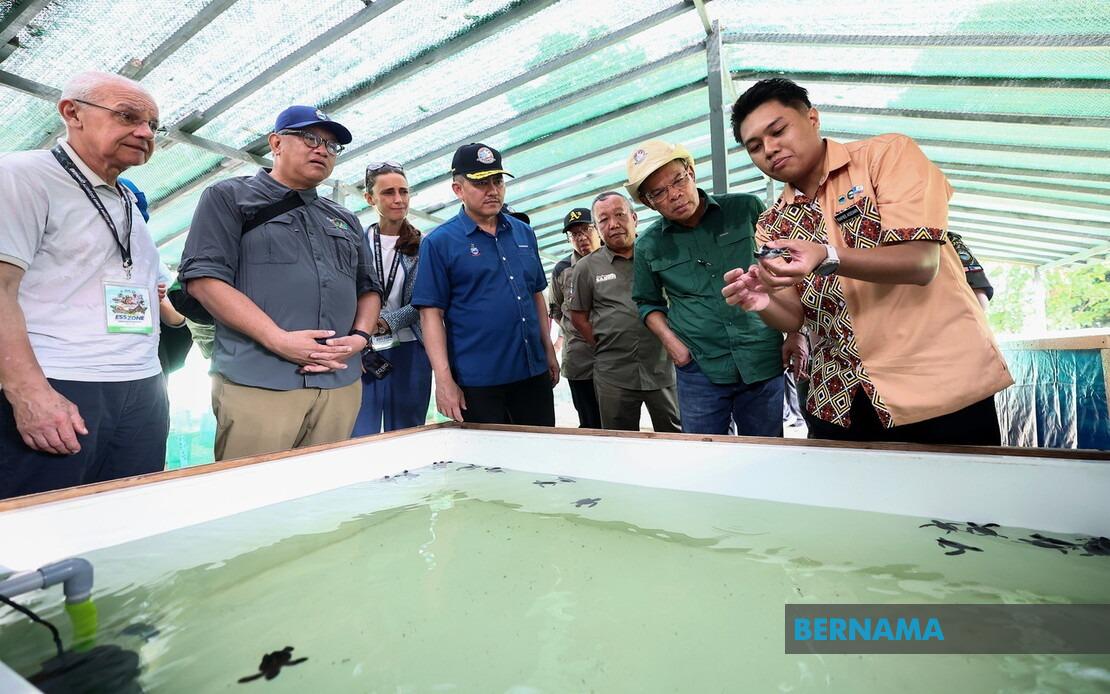
To demonstrate commitment to this repositioning strategy, the government organised a security familiarisation visit involving 14 diplomatic representatives who toured the Eastern Sabah Security Zone. The initiative provided foreign envoys direct exposure to strategic locations and tourism destinations within the region, designed to furnish them with first-hand information for reporting back to their respective capitals. This approach reflects modern security diplomacy practice, wherein perception management operates alongside operational enhancement. By inviting international observers to witness security improvements directly, Malaysia attempts to establish independent credibility for its narrative of improved stability. The success of such initiatives often hinges on whether improvements prove sustained and whether the diplomatic corps perceive engagement as genuine rather than choreographed.
Statistical evidence of security operations in the Eastern Sabah Security Zone provides quantifiable backdrop to these diplomatic efforts. Between January and June 2024, the Eastern Sabah Security Command conducted nearly 900,000 inspections across the region and executed 307 arrests, demonstrating intensive operational activity. Seizures during this six-month window totalled RM23.37 million in value, representing contraband and illicit materials intercepted through coordinated land and maritime controls. These figures, while impressive in magnitude, simultaneously raise questions about what proportion of contraband successfully evades detection and whether enforcement intensity has appreciably improved cross-border security outcomes. For Malaysian readers concerned about regional stability and tourism recovery, these numbers offer some reassurance of active security management, though independent assessment remains difficult.
Govern ment investment in the Eastern Sabah Security Zone has reached RM723 million cumulatively across the Eastern Sabah Security Command's 13-year operational history, encompassing asset acquisition, operational costs, and logistical support. This substantial financial commitment underscores that Malaysia has prioritised security infrastructure development in its eastern maritime border region, an area historically vulnerable to transnational crime and smuggling networks. The scale of this investment reflects both the complexity of securing a sprawling maritime zone and the strategic importance attached to demonstrating state capacity in border regions. However, the existence of significant funding does not automatically guarantee efficient resource deployment or elimination of systemic vulnerabilities, particularly when supply chains and personnel remain subject to corruption or institutional weaknesses.
The timing of these security initiatives intersects with Malaysia's broader regional positioning as a modern economy dependent on international tourism and aviation connectivity. Recent incidents at Malaysian airports directly threaten both objectives by suggesting that the country cannot reliably protect transit passengers or secure restricted areas from determined intruders. For regional competitors and potential investors assessing Malaysia's institutional capabilities, security lapses carry symbolic weight beyond the immediate incidents themselves. They raise broader questions about government effectiveness and the reliability of regulatory frameworks. Consequently, the two-week timeline for submitting the airport security plan reflects not merely technical problem-solving but strategic necessity for reassuring international partners about Malaysia's governing capacity.
The interconnected nature of modern aviation security means that Malaysia's domestic improvements necessarily depend on cooperation with regional and international partners. Airlines operating through Malaysian airports, immigration authorities, customs services, and intelligence agencies all contribute to security outcomes. The comprehensive plan likely must therefore address coordination mechanisms with neighbouring countries and international aviation bodies. Malaysia's ability to implement meaningful improvements will depend partly on resources and political will, but also on whether trading partners and regional allies reciprocate with compatible security protocols and intelligence sharing. The government's diplomatic outreach to nations like Japan and Switzerland suggests awareness that security perception operates at least partly through international conversation and comparative assessment rather than through isolated national measures alone.
Moving forward, the success of the Cabinet's security initiative will be measured against multiple metrics spanning operational, diplomatic, and economic dimensions. Operationally, the government must demonstrate that the new plan produces measurable improvements in detection capabilities and response protocols within reasonable timeframes. Diplomatically, the initiative succeeds if foreign governments progressively relax travel advisories and tourism recovers in affected regions. Economically, security improvements should reduce insurance costs and facilitate smoother passenger flows through Malaysian airports. For Malaysian business interests dependent on aviation connectivity and tourism revenue, particularly in Sabah, these outcomes carry direct financial implications. The two-week deadline for policy submission represents merely the beginning of a longer process of institutional reform, political oversight, and international coordination necessary to restore confidence in Malaysian airport security systems.

