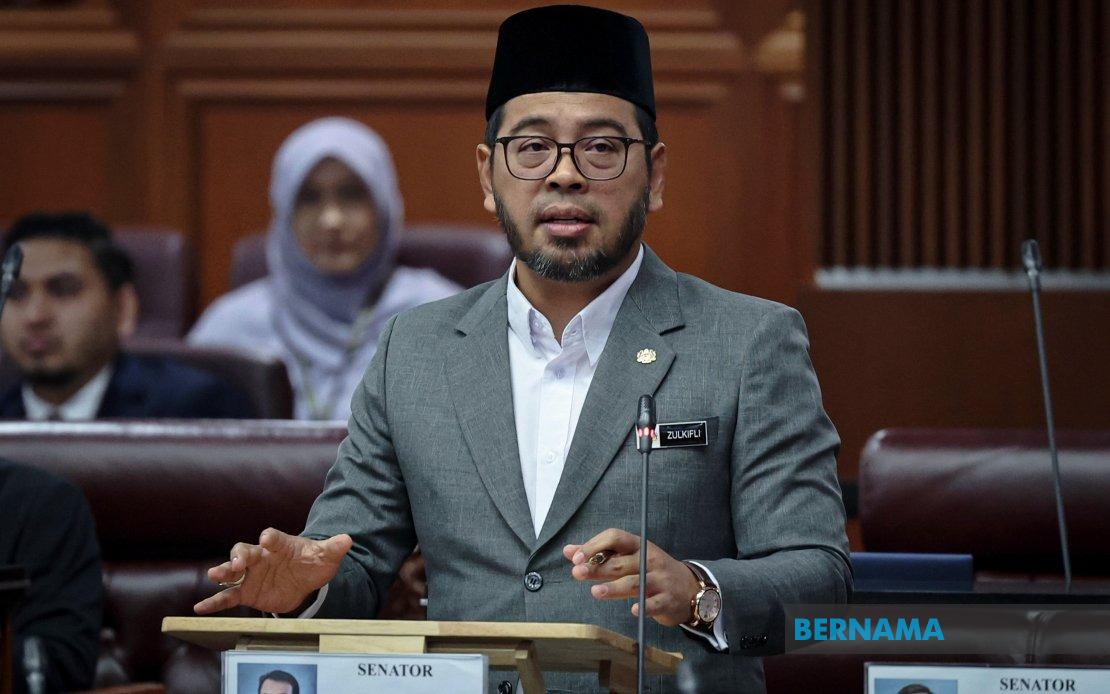
The Malaysian Cabinet is preparing to consider whether the final report of the Royal Commission of Inquiry into Tabung Haji's financial affairs should be disclosed to the public, according to Minister in the Prime Minister's Department (Religious Affairs) Dr Zulkifli Hasan. The government body will weigh the proposal before reaching a determination on the matter, with the minister seeking to clarify misconceptions surrounding how Tabung Haji's assets were handled during the institution's crisis.
Zulkifli moved to address widespread public confusion and allegations that have circulated regarding the sale of Tabung Haji's strategic holdings. Speaking in the Dewan Negara, he firmly rejected characterisations that a former Treasury secretary-general had engaged in improper asset disposal, instead framing the transaction as an emergency intervention designed to prevent institutional collapse. He emphasised that the core problem stemmed from serious fund mismanagement that predated the intervention, with depositors losing confidence in the institution's stability.
The circumstances leading to the 2018 intervention were dire. Official examinations by both the Auditor-General and Bank Negara Malaysia had exposed severe financial deterioration at Tabung Haji, with the organisation facing a deficit between its assets and liabilities of RM10.9 billion. These revelations triggered panic among account holders, who withdrew approximately RM6 billion within weeks, creating an acute liquidity crisis that threatened to spiral into complete institutional failure.
The government's exposure to potential losses was staggering. Had Tabung Haji collapsed at that juncture, Zulkifli explained, federal authorities would have been obligated to cover approximately RM74.5 billion in deposit liabilities, given that the government provides full guarantees on all deposited funds within the institution. This enormous potential obligation formed the economic basis for the Cabinet's collective decision in 2018 to restructure Tabung Haji's holdings by transferring underperforming and problematic assets to Urusharta Jamaah Sdn Bhd, a government-owned special purpose entity established to manage the crisis.
For Malaysian Muslims and the broader Muslim diaspora relying on Tabung Haji for pilgrimage funding, the rescue operation has yielded tangible improvements in institutional health. Deposit balances have recovered substantially from the nadir of the crisis, expanding from approximately RM69.4 billion in 2019 to exceed RM95.1 billion by mid-2025. This restoration of deposits demonstrates that the intervention successfully arrested the downward spiral and restored depositor confidence in the institution's solvency.
Returns on deposited funds have similarly improved markedly. The profit distribution rate, which had collapsed to just 1.25 per cent in 2018 during the height of the financial stress, has recovered to 3.5 per cent for 2025—representing the strongest annual return in eight years. This improvement is particularly significant for retirees and middle-income Malaysians who depend on Tabung Haji distributions for income supplementation.
Cost pressures on pilgrims undertaking the hajj have also been held constant despite inflationary headwinds. The government has maintained the same pricing structure for hajj services across three consecutive years from 2024 through 2026, insulating the faithful from the currency fluctuations and international commodity price movements that would otherwise raise the cost of the pilgrimage. This pricing stability reflects deliberate policy to prevent economic barriers from preventing Malaysians of modest means from fulfilling this central religious obligation.
The decision to make the RCI report public carries substantial political and public trust dimensions. Transparency regarding how state funds were deployed and how systemic financial failures were remedied could strengthen public confidence that the intervention was conducted properly and efficiently. Conversely, the Cabinet's caution in deliberating the release suggests awareness that unredacted disclosure might invite misinterpretation or political criticism regarding specific decisions made during the restructuring process.
For Malaysia's Islamic finance sector more broadly, the Tabung Haji experience offers instructive lessons regarding governance, risk management, and the importance of regulatory oversight in institutions managing hajj deposits. The scale of the fund means that Tabung Haji's stability has significance extending beyond individual depositors to encompass the credibility of Malaysia's Islamic financial architecture internationally. Emerging market investors and foreign banks assessing the health of Malaysia's Islamic banking ecosystem take note of how such crises are managed and resolved.
The timing of the Cabinet discussion arrives amid broader efforts to strengthen institutional accountability and financial transparency across Malaysia's government-linked corporations. Public disclosure of investigation findings aligns with contemporary governance standards emphasizing that taxpayer-backed institutions should operate under public scrutiny proportionate to their societal importance and the public resources at stake.

