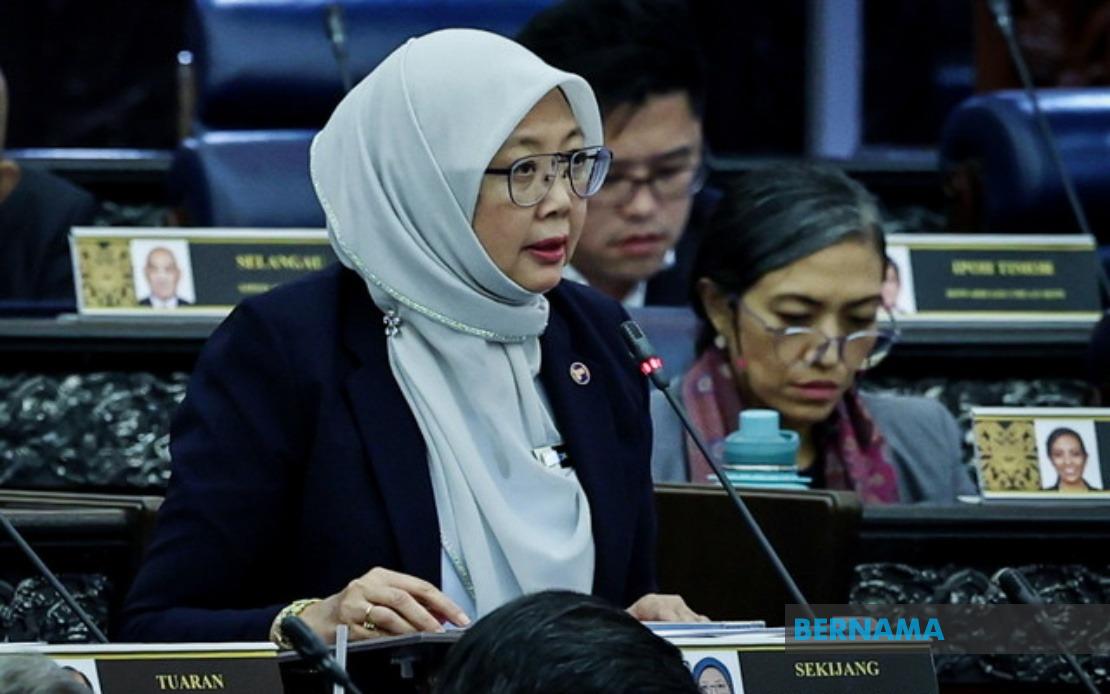
The push for greater transparency around Tabung Haji's reform agenda intensified in parliament on Monday when Datuk Seri Dr Zaliha Mustafa demanded that the government release comprehensive reports detailing both the implementation status of the Royal Commission of Inquiry's 25 recommendations and the ongoing efforts to recover institutional losses. Speaking as chairman of the Government Backbenchers Club and Member of Parliament for Sekijang, Dr Zaliha argued that full disclosure represents an essential step toward rebuilding confidence among the millions of Malaysian Muslims whose savings are entrusted to this pivotal haj pilgrimage fund.
Her intervention underscores the broader crisis of public trust surrounding Tabung Haji, an institution whose primary purpose is safeguarding the religious and financial aspirations of Muslim depositors preparing for the hajj. The timing of her remarks, delivered during a special parliamentary sitting addressing the RCI report, reflects growing pressure from within government ranks to move beyond carefully managed briefings and instead subject the institution's troubled history to fuller legislative and public scrutiny. Dr Zaliha emphasised that partial information and measured announcements have failed to address the scale of public concern, particularly given Tabung Haji's extraordinary significance within Malaysia's Muslim community.
The Royal Commission, established in 2021 and formally constituted on January 20, 2022, spent more than eighteen months investigating management and operational failures spanning 2014 to 2020 before presenting its 211-page report to the Yang di-Pertuan Agong on August 30, 2022. The document remained confidential until only recently, when the government finally released it to public access. By July 30 of this year, Tabung Haji had completed implementation of seventy-five per cent of the commission's recommendations, leaving one-quarter of the reform agenda incomplete or in progress. Dr Zaliha contended that this staggered completion rate necessitates far greater clarity about which specific recommendations have been fully executed, which remain outstanding, and what realistic timelines govern the remaining work.
Crucially, the RCI identified political pressure preceding a general election as a central factor precipitating Tabung Haji's financial crisis. This finding carries profound implications for governance standards across Malaysian public institutions and raises uncomfortable questions about the degree to which electoral considerations have influenced decision-making at entities managing citizens' savings. Dr Zaliha challenged the conventional rhetoric around Muslim unity, suggesting that unity rings hollow when trust is betrayed through institutional mismanagement and when accountability for those decisions remains obscured. Her framing rejects the false choice between communal solidarity and institutional integrity, arguing instead that genuine unity requires honesty about failures and decisive action against those responsible.
The former chairman of Tabung Haji, Datuk Seri Abdul Azeez Abdul Rahim, has become a focal point of parliamentary scrutiny. Despite holding a formally non-executive position, evidence suggests he wielded substantial operational influence, particularly regarding major investment negotiations and decisions. Dr Zaliha specifically raised questions about his simultaneous roles across multiple Tabung Haji subsidiaries and related commercial entities, a structural arrangement that created obvious potential conflicts of interest and blurred accountability lines. She further pressed the government to address unverified allegations that cash holdings in accounts connected to the former chairman once reached RM170 million, a figure whose significance extends beyond mere accounting to suggest extraordinary concentration of financial control within a single individual's sphere.
For Malaysian readers and regional observers alike, the Tabung Haji controversy exemplifies broader governance challenges facing large public institutions across Southeast Asia. The institution manages billions in depositor assets and operates within a framework intended to facilitate religious practice while maintaining financial stewardship. Its mismanagement between 2014 and 2020 damaged not only the institution's reputation but also raised systemic questions about oversight mechanisms, board independence, and the adequacy of existing accountability frameworks. The RCI process represents a formal attempt at institutional reckoning, yet the resistance to full public disclosure of implementation details suggests bureaucratic hesitation about complete transparency.
Dr Zaliha's parliamentary intervention reflects a growing disconnect between official reassurances and public appetite for substantive information. The government's piecemeal approach to disclosure—briefing parliament while keeping detailed recovery reports confidential—leaves depositors and taxpayers unable to assess whether institutional reforms address root causes or merely address symptoms. Transparency serves multiple essential functions: it permits informed public judgment about whether leadership has genuinely learned from past failures, it deters future misconduct by subjecting institutional decisions to ongoing scrutiny, and it enables democratic participation in monitoring how public resources are managed.
The implications extend beyond Tabung Haji itself. Malaysian public institutions of comparable scale and significance to the Muslim community face similar accountability pressures. Whether the government responds positively to demands for comprehensive public reporting on Tabung Haji will establish a benchmark for transparency expectations across the entire public institutional landscape. Precedent matters: institutions that successfully resist disclosure demands may feel emboldened to maintain information asymmetries, while those that embrace transparency set different standards for their peers.
Regional observers also note that the Tabung Haji case occurs within the broader context of Malaysia's democratic renewal following the 2022 general election. The new parliamentary configuration, including a more assertive backbench, has created space for questioning that previous configurations may have constrained. Dr Zaliha's intervention signals that this backbench independence can extend to scrutinising not just partisan opponents but also current government institutions, suggesting a more mature separation between governmental and parliamentary roles than existed previously.
The government's response to Dr Zaliha's specific requests—to publish implementation timelines, detailed recovery strategies, and clarifications regarding former leadership's financial arrangements—will indicate whether the political appetite for accountability extends beyond rhetoric. Full transparency on these matters would position Malaysia as a regional leader in institutional integrity while simultaneously addressing the specific concerns of millions of Muslim depositors whose trust remains fractured. Conversely, continued resistance to disclosure risks deepening public scepticism about whether genuine reform is occurring or whether institutional and political elites remain more committed to protecting reputations than restoring confidence.

