Cambodia is charting an ambitious economic course, moving beyond decades of reliance on garment factories and labor-intensive manufacturing by targeting advanced industrial sectors in partnership with South Korea. Deputy Prime Minister Sun Chanthol spearheaded a high-level investment promotion mission to the country in June, visiting major Korean conglomerates and healthcare institutions in Incheon. The initiative reflects Phnom Penh's determination to upgrade its industrial base and secure deeper integration into regional supply chains, particularly as global manufacturing realigns around electric vehicles and digital technologies.
The timing of Cambodia's overture carries strategic significance for the region. As geopolitical tensions reshape global trade patterns and manufacturers seek alternatives to established Asian hubs, Cambodia is positioning itself as a competitive destination for companies seeking to diversify production networks. By focusing specifically on South Korean investors already operating in Cambodia, the government is seeking to deepen existing relationships and encourage those firms to expand into higher-margin sectors. This targeted approach differs from blanket investment solicitation, instead leveraging proven partnerships to drive sectoral transformation.
During the Incheon-Cambodia Investment Roadshow, Chanthol emphasized that Cambodia's government stands ready to facilitate Korean investment through comprehensive incentive packages, tax benefits, macroeconomic stability, and robust investment protections enshrined in the Kingdom's updated investment law. The delegation's composition—including officials from the Council for the Development of Cambodia, the Ministry of Commerce, the Cambodian ambassador, business associations, and prominent business figures—demonstrated the gravity with which Phnom Penh treats the relationship. This alignment of diplomatic, governmental, and private-sector actors signals that investment promotion is now a central policy priority rather than a peripheral economic activity.
The mission's focus on Daejoo KC Group proved particularly revealing of Cambodia's ambitions. The South Korean conglomerate already operates through two subsidiaries in Cambodia, with Camko Motor assembling Hyundai vehicles and manufacturing automotive wire harnesses for export while employing nearly 500 workers. By meeting with Daejoo KC's management, Chanthol sought to persuade the company to channel additional capital into Cambodia across its existing business divisions—metallurgy, chemicals, logistics, construction, automotive components, and energy. Such expansion would represent a scaling-up of existing operations rather than greenfield investment, potentially accelerating technology transfer and skills development within Cambodia's workforce.
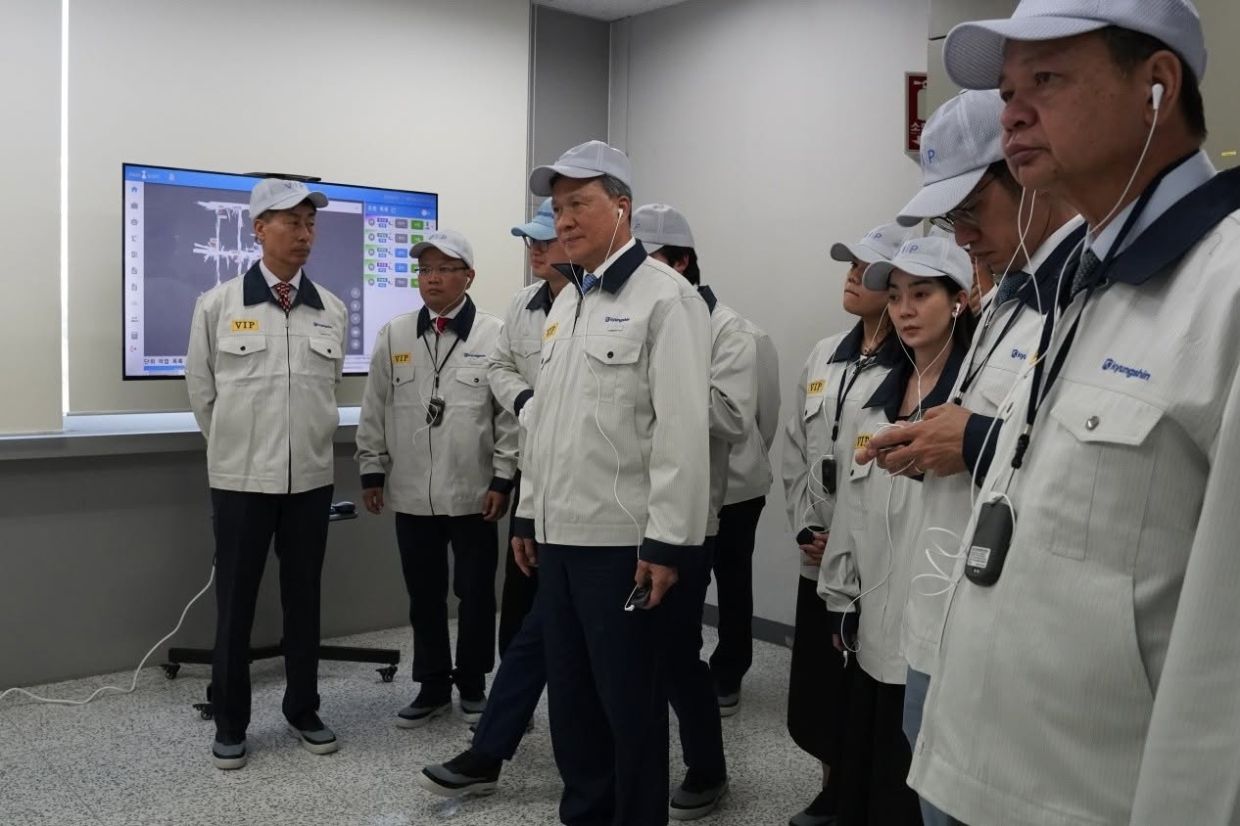
Automotive electronics and components emerged as a clear priority within Cambodia's industrial strategy. The delegation's visit to Kyungshin Co., Ltd., which specializes in automotive electronic components and wire harness manufacturing, underscored Cambodia's interest in capturing segments of the EV supply chain. Kyungshin has maintained operations in Cambodia since 2012 through a facility in Kandal province that employs over 1,400 workers and represents approximately US$20 million in investment capital. The company's decade-long presence and scale of operations demonstrate that Cambodia can already support manufacturing complexity beyond basic garment assembly. By encouraging Kyungshin and similar firms to deepen investment in EV-related technologies, Cambodia aims to position itself as a node in the region's emerging electric vehicle ecosystem.
The inclusion of healthcare and medical technology within the investment mission revealed a less obvious but equally important dimension of Cambodia's diversification strategy. Chanthol's visit to Incheon Baek Hospital, a major South Korean medical institution, focused on advanced medical technologies, digital healthcare management systems, and international-standard hospital operations. The Cambodian government has identified healthcare as a key priority and requested technical assistance and knowledge transfer from Korean institutions. This pivot toward medical technology and digital health systems reflects recognition that Cambodia's future development depends not solely on manufacturing but also on building domestic capability in services sectors that command higher value-added and serve both regional and domestic markets.
Cambodia's industrial diversification carries particular relevance for Southeast Asia as a whole. The region has long struggled with over-specialization in labor-intensive sectors vulnerable to wage competition and automation. By moving into automotive electronics, EV systems, logistics, energy, and healthcare technology, Cambodia is attempting a transformation that could serve as a model—or cautionary tale—for neighboring countries facing similar pressures. The success of Cambodia's Korea mission may influence how other ASEAN members approach foreign direct investment, particularly in deciding whether to pursue high-volume, low-skill manufacturing or attempt rapid upgrading toward technology-intensive sectors.
The garment and footwear sectors remain essential to Cambodia's economy, generating substantial employment and export revenue. Policymakers remain aware that these traditional industries cannot be abandoned or rapidly displaced without risking social instability and unemployment. Instead, the strategy envisages a gradual reorientation of new investment flows toward higher-value sectors while allowing established garment and footwear operations to continue serving their markets. This dual-track approach differs markedly from sudden industrial restructuring, instead seeking to grow the economy into new sectors while maintaining existing employment bases.
South Korea's presence in this equation extends beyond being simply a source of capital. Korean companies operating in Cambodia bring established manufacturing disciplines, quality-control standards, and supply-chain integration that exceed typical local capabilities. Daejoo KC and Kyungshin represent firms with decades of global operations and technological sophistication that can transfer knowhow to Cambodian suppliers, workers, and managers. By targeting Korean rather than Chinese, Vietnamese, or Thai investors, Cambodia is making a deliberate choice about which manufacturing standards and business practices will shape its industrial culture going forward.
The Council for the Development of Cambodia's cooperation with the Incheon Chamber of Commerce and Industry in organizing the roadshow demonstrates institutionalization of investment promotion efforts. Rather than ad hoc diplomatic missions, Cambodia is building formal mechanisms for sustained engagement with Korean business communities. This institutional approach may prove more effective at generating sustained investment flows than episodic high-level visits. The presence of the Korean Chamber of Commerce in Cambodia further suggests establishment of permanent institutional links that can nurture relationships between Korean firms and Cambodian counterparts.
Cambodia's investment mission must navigate significant challenges beyond promotional messaging. The country's infrastructure, though improving, still lags behind Vietnam and Thailand in certain sectors. Skilled workforce availability, particularly in advanced manufacturing and digital healthcare, remains constrained. Regulatory predictability and enforcement of contract rights, while improving, continue to concern some international investors. Nevertheless, Cambodia's lower labor costs, relatively stable macroeconomic conditions, and existing South Korean presence provide tangible advantages that the Chanthol mission sought to leverage and amplify.
Looking forward, the success of Cambodia's diversification strategy depends partly on whether Korean investors respond with expanded commitments. Early signals remain encouraging—companies like Daejoo KC and Kyungshin have already committed significant capital and demonstrated patience with the Cambodian operating environment. The government's updated investment law and publicly stated commitment to facilitation provide a policy foundation. Whether Cambodia can convert diplomatic goodwill and investment roadshows into sustained flows of technology, capital, and expertise toward automotive electronics, EVs, and healthcare technology will ultimately determine whether the nation successfully transitions beyond garment-dependent manufacturing toward a more diversified and resilient economic future.