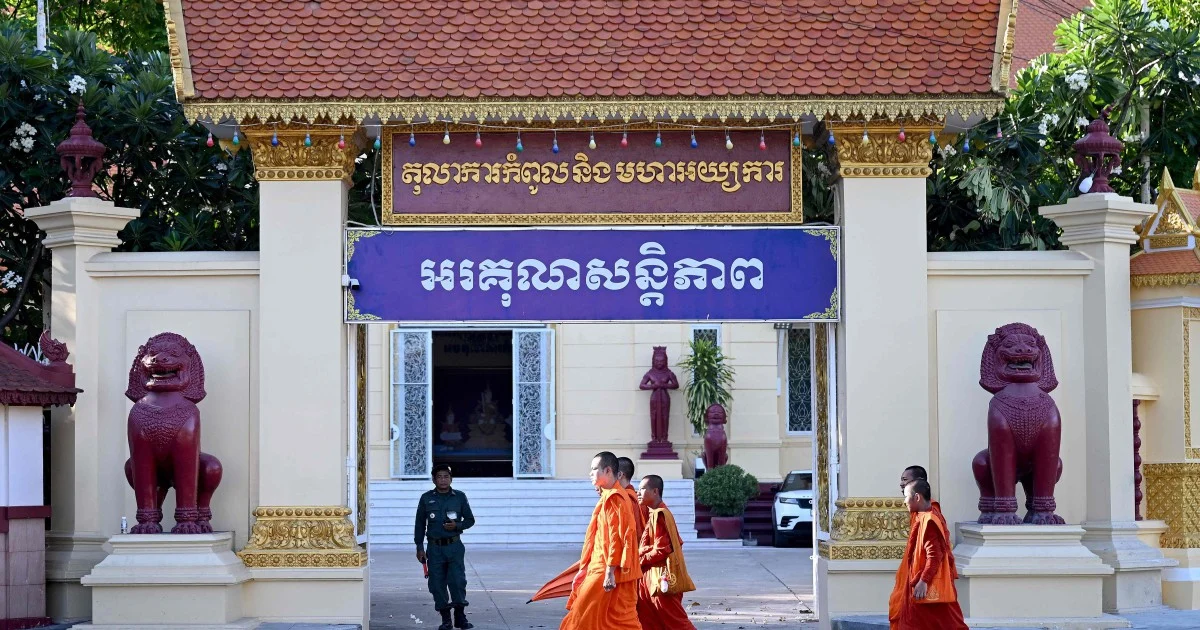
Cambodia's highest court has rejected an appeal by two journalists facing 14-year prison terms for treason, cementing their convictions over a photograph taken in a militarily sensitive region along the Thai border. The Supreme Court's decision, delivered on Thursday, signals a troubling consolidation of Cambodia's approach to national security cases and press freedom, raising concerns about the country's commitment to protecting journalistic inquiry in Southeast Asia.
The two reporters were originally convicted for uploading an image captured within a military-restricted zone in the aftermath of armed clashes between Cambodian and Thai forces. The decision to prosecute them under treason charges—rather than lesser breaches of military protocols—reflects an increasingly stringent interpretation of national security statutes. Their legal team mounted the appeal hoping to secure sentence reductions or acquittals based on procedural irregularities or proportionality arguments, but the court determined the original conviction stood on solid legal ground.
The case unfolds within Cambodia's complex relationship with Thailand, where territorial disputes periodically erupt into military confrontations. Border tensions have long simmered between the two nations, and security restrictions in frontier areas are considered critical to protecting military operations and personnel. However, international media advocacy groups have argued that using treason statutes to prosecute journalists for documenting conditions in restricted zones sets a dangerous precedent for press freedom across the region.
For Malaysian observers, this development carries particular relevance given Southeast Asia's collective challenges with balancing legitimate security concerns and journalistic freedoms. Malaysia itself has navigated contentious terrain around national security laws and their application to media practitioners, making Cambodia's direction a cautionary case study. The conviction of journalists under treason provisions—historically reserved for espionage or acts of sedition—expands the interpretation of what constitutes a threat to national security.
Cambodia's treason statute carries maximum penalties designed for serious crimes involving state betrayal. Using such provisions to prosecute reporters for publishing photographs, even from restricted military areas, represents a significant departure from how comparable jurisdictions address similar breaches. Most democratic nations distinguish between civil military violations and criminal treason, reserving the latter for cases involving collusion with hostile foreign powers or deliberate damage to national defence capabilities. The Cambodian court's endorsement of this approach suggests the country is moving toward a more expansive interpretation of security offences.
The timing of the Supreme Court's decision arrives amid broader concerns about press autonomy in Cambodia under the current government. Independent media outlets have faced increasing regulatory pressure and legal obstacles, with authorities wielding various statutes to constrain critical reporting. This case adds another instrument to that toolkit, effectively chilling investigative journalism around military operations and border affairs—areas where public accountability through reporting is arguably most essential.
The journalists involved now face the prospect of serving lengthy sentences unless extraordinary relief mechanisms become available, such as a potential future pardon or clemency petition to Cambodia's leadership. Their imprisonment would represent a substantial setback for regional press freedom metrics and reinforce perceptions that Southeast Asian governments are increasingly hostile to independent journalism touching on state institutions. International press freedom organisations have condemned the convictions, but such external pressure rarely sways domestic judicial outcomes in Cambodia's centralised system.
For Thailand, whose border clashes precipitated this legal chain of events, the case also raises questions about information management during military conflicts. Regional neighbours face constant tension between transparency regarding cross-border incidents and operational security. How Cambodia handles journalist prosecutions influences calculus in other capitals about balancing these competing interests. The precedent established here may encourage other governments to apply expansive security interpretations against media practitioners.
The broader Southeast Asian context matters significantly. Nations across the region are grappling with how to regulate digital information flows, restrict foreign interference narratives, and maintain public order during security crises. Cambodia's approach—prosecuting journalists under treason statutes for publishing restricted-area photographs—offers an aggressive template that weaker institutional safeguards elsewhere might be tempted to adopt. Malaysia, Indonesia, and the Philippines all maintain security laws that could potentially be interpreted similarly if political will shifts.
Predictably, the Supreme Court's decision will now become a reference point in international assessments of Cambodia's human rights record and media environment. The country already faces scrutiny from United Nations bodies and international NGOs regarding press freedom constraints. This judgment reinforces the documented pattern of legal harassment against independent journalists and outlets that challenge official narratives or cover sensitive institutional matters.
Looking forward, the practical implications extend beyond the individual cases. The conviction and sustained imprisonment of journalists on treason charges will likely discourage reportage on military affairs, border disputes, and security operations across Cambodia's media landscape. Self-censorship becomes a rational response for news organisations facing such severe penalties for publishing factual information from restricted areas. This chilling effect ultimately serves state interests in controlling narratives but undermines public understanding of critical issues affecting national security and bilateral relations.
For the regional press community, particularly in Malaysia where similar tensions between security and journalism exist, Cambodia's Supreme Court judgment stands as a warning about how security statutes can be weaponised against legitimate reporting. The case demonstrates that appeals to higher courts do not guarantee protection for journalists if the underlying legal framework and institutional culture support expansive interpretations of national security offences.

