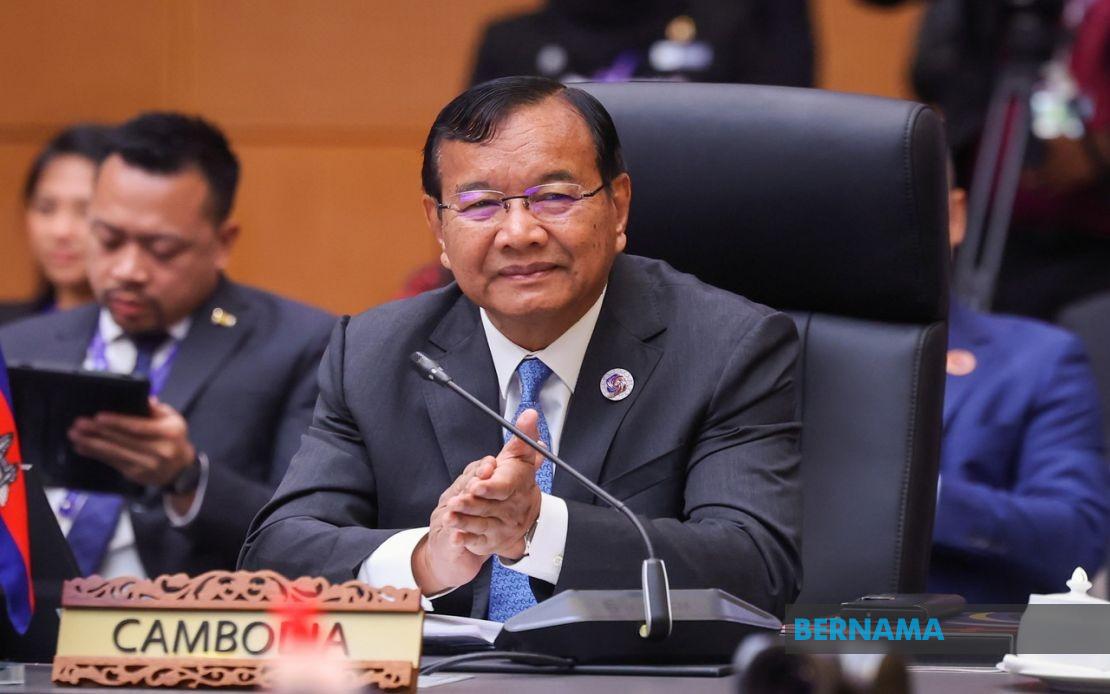
Cambodian Deputy Prime Minister and Foreign Minister Prak Sokhonn touched down at Kuala Lumpur International Airport on August 3 to begin a two-day official visit aimed at strengthening bilateral ties between the two Southeast Asian neighbours. The high-level delegation's arrival at KLIA Terminal 1 marked the latest chapter in intensifying diplomatic engagement, with both nations seeking to deepen economic and political cooperation across multiple sectors. Sokhonn's visit underscores Cambodia's commitment to maintaining strong relationships within the region while reinforcing Malaysia's strategic positioning as a key partner for Phnom Penh.
The Deputy Prime Minister was received by Cambodian Ambassador to Malaysia Ouk Chandara and Datuk Rozainor Ramli, the Malaysian Government's chief ceremony officer, signalling the formal nature of the engagement. Beyond protocol courtesy, the reception reflected the importance both governments attach to this visit, which comes at a time when regional stability and economic interdependence have become increasingly significant for Southeast Asian nations. The presence of senior officials at the airport demonstrated that Malaysia views this exchange as integral to its foreign policy agenda in the region.
Sokhonn's immediate schedule includes a courtesy call on Prime Minister Datuk Seri Anwar Ibrahim, a customary but symbolically important gesture that establishes the visitor's standing within Malaysia's political hierarchy. This meeting will likely set the tone for substantive discussions on broader bilateral matters before the formal mechanisms of cooperation commence. Such preliminary engagements often serve as opportunities for leaders to address strategic concerns and identify priority areas for their respective governments.
The centrepiece of Sokhonn's visit is the 3rd Meeting of the Cambodia-Malaysia Joint Commission for Bilateral Cooperation, scheduled for August 4 in Kuala Lumpur. This institutional framework provides a structured platform for both nations to assess progress on previously agreed initiatives and chart new directions for cooperation. The commission's third iteration reflects an established pattern of engagement, with each iteration building upon foundations laid during earlier meetings. This comprehensive review process ensures that both countries remain aligned on implementation timelines and outcomes.
During the JCBC meeting, officials will conduct an extensive evaluation of how successfully the minutes and bilateral agreements endorsed at the second commission have been executed. Such assessments are crucial for identifying bottlenecks, celebrating achievements, and recalibrating strategies where necessary. The depth of this review demonstrates that Malaysia and Cambodia approach their partnership with seriousness and accountability, characteristics that distinguish productive bilateral relationships from merely ceremonial ones.
Foreign Minister Datuk Seri Mohamad Hasan is expected to conduct bilateral talks with Sokhonn, providing a direct diplomatic channel for addressing issues of mutual concern. These minister-level discussions typically cover trade irritants, security cooperation, cultural exchanges, and regional matters affecting both nations. The willingness to engage at this level reflects the maturity of the relationship and the recognition that consistent high-level dialogue prevents misunderstandings and facilitates problem-solving.
Economic dimensions of the partnership have accelerated significantly. Malaysia and Cambodia recorded remarkable trade growth in 2025, with bilateral commerce surging 27.4 per cent year-on-year to reach RM5 billion, equivalent to USD1.17 billion. This trajectory indicates that commercial interests are driving the relationship forward, with businesses from both nations increasingly recognizing opportunities for mutual benefit. For Malaysian companies, Cambodia represents both a growing market and a sourcing destination, while Cambodian firms find Malaysian expertise and capital instrumental for developing their own capabilities.
Malaysia's investment footprint in Cambodia underscores the economic depth of their engagement. As of 2024, Malaysian cumulative investments in Cambodia totalled USD3.20 billion across 162 registered projects, establishing Malaysia as the third-largest foreign investor in the Kingdom. This substantial financial commitment reflects confidence in Cambodia's economic trajectory and business environment. Malaysian investors have diversified their portfolios across sectors including manufacturing, agriculture, services, and infrastructure, anchoring their presence in the Cambodian economy.
The significance of Malaysia's position as Cambodia's third-largest foreign investor cannot be overstated within Southeast Asian economic dynamics. This ranking places Malaysia ahead of many traditional investors and demonstrates the region's preference for intra-ASEAN investment partnerships. Such intra-regional capital flows strengthen the bloc's collective economic resilience and reduce dependency on external actors. For Cambodia, Malaysian investment has contributed to employment generation, technology transfer, and integration into regional value chains.
The timing of Sokhonn's visit reflects broader strategic considerations within Southeast Asia. As geopolitical competition intensifies globally, regional nations are reinforcing partnerships that promise stability and mutual prosperity. Cambodia and Malaysia, despite different governance systems and strategic alignments, have maintained pragmatic relationships focused on concrete economic benefits and non-interference in internal affairs. This approach has proven sustainable across political transitions and external pressures.
Sokhonn's tenure as Foreign Minister gives him significant influence over Cambodia's international positioning. His visit to Malaysia signals that Phnom Penh values this bilateral relationship sufficiently to merit high-level diplomatic attention. Conversely, Malaysia's reception of such visits demonstrates its commitment to maintaining robust relationships throughout Southeast Asia, regardless of temporary political fluctuations. These consistent exchanges form the connective tissue holding ASEAN together.
Looking forward, the outcomes of the JCBC meeting will likely include renewed commitments on trade facilitation, investment promotion, and people-to-people exchanges. Both nations may identify new areas for cooperation, particularly in addressing climate change, digital economy development, and human resource development. Such forward-looking agendas ensure that bilateral relationships remain dynamic and responsive to emerging challenges and opportunities.
The visit ultimately represents the continuity and progressive deepening of Malaysia-Cambodia relations. By institutionalizing regular high-level exchanges and subjecting bilateral cooperation to systematic review, both nations demonstrate maturity in managing their partnership. For Malaysian readers, this engagement affirms their country's continued relevance as a significant economic partner and diplomatic player within Southeast Asia, while highlighting opportunities for businesses to expand into Cambodia's growing market.

