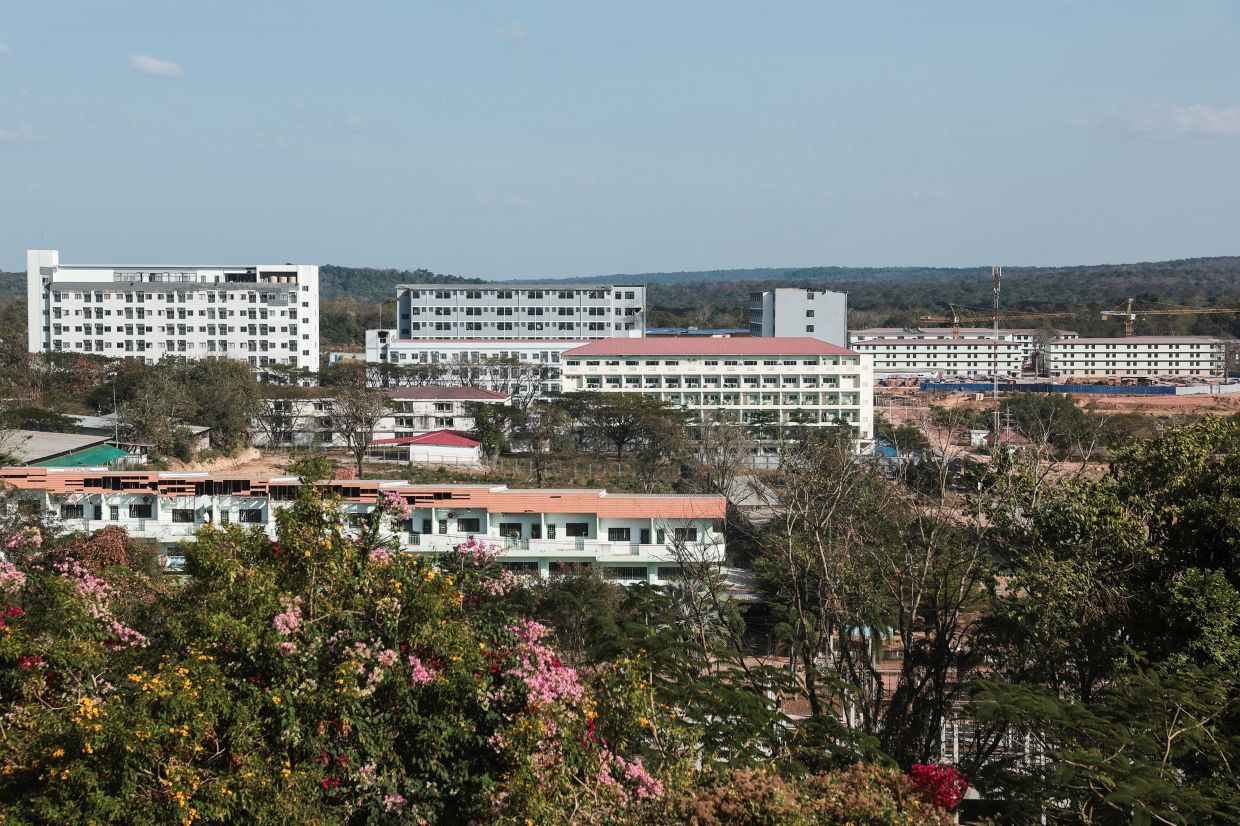
A sweeping Reuters investigation has uncovered disturbing connections between one of Cambodia's most powerful business empires and a sprawling scam operation based in a border casino, raising uncomfortable questions about complicity and the role of Cambodia's elite in facilitating transnational crime. The Lim Heng Group, which controls a gambling empire spanning the Thai-Cambodian frontier, leased multiple structures at its Royal Hill casino complex to operators running what appears to be an industrial-scale fraud factory, according to rental agreements and testimony from workers and regional security officials. The discovery marks the first public documentation of direct commercial ties between a major Cambodian businessperson and the physical infrastructure of international cybercrime operations that have extracted billions of dollars from victims across the globe.
Documentation reviewed by Reuters, including a lease agreement dated March 2024, shows that Royal Hill charged the operators US$200,000 monthly for three buildings within its compound—a sum vastly exceeding comparable commercial real estate rates in Cambodia's capital. The same space in Phnom Penh's most upscale neighbourhoods typically commands less than one-eighth of that price, revealing either extraordinary overpricing or a transaction carefully structured to obscure the true nature of the arrangement. The buildings themselves had been methodically transformed into elaborate stages for international fraud, complete with replicated police stations and bank offices designed to deceive victims in multiple countries into transferring money to scammers posing as law enforcement or financial institutions. Multiple witnesses, including Thai military personnel and individuals who worked inside the compound, corroborated that these fake institutional backdrops were the operational core of the scam network.
The Lim Heng Group did not dispute ownership or its leasing arrangement, instead remaining silent when contacted by Reuters through multiple channels. Royal Hill similarly declined to respond to telephone calls, emails, or registered post inquiries about its knowledge of criminal activities occurring at the property. That silence is significant because Cambodian law permits prosecutors to charge landlords with complicity if evidence establishes they knew about criminal use of their premises and consciously permitted it to continue. Lim Heng Group received explicit notice that troubling activities were occurring at Royal Hill by September 2024, when its representatives filed legal complaints against two Cambodian news publishers whose reporting had detailed the confinement of foreign nationals within the casino compound. Rather than directly refuting the claims, the legal filings invoked vague charges of incitement to discrimination, a procedural maneuver that obscured which specific allegations Lim Heng objected to and avoided creating a clear evidentiary record.
The broader context of these findings points to a systemic vulnerability in Cambodia's governance and its relationship with organised crime. Southeast Asia has become notorious as a geographic centre for what security analysts term "scam factories"—compounds where criminal syndicates, predominantly led by Chinese nationals, confine trafficking victims under brutal conditions and coerce them into perpetrating romance scams and police-impersonation frauds against targets worldwide. The United States government has estimated that American citizens alone lost US$10 billion to perpetrators operating from the region in 2024, suggesting the actual global toll is substantially higher. These operations require not just criminal expertise but also access to legitimate commercial infrastructure, which is where Cambodia's casino industry becomes critical. Many casino owners provide the criminal organisations with laundering pathways and physical space, creating symbiotic relationships that enable both gambling enterprises and fraud networks to operate with reduced interference from authorities.
Lim Heng himself epitomises the intersection of political power, commercial wealth, and opaque governance that characterises Cambodia's modern elite. He holds a royal title equivalent to a dukedom, has been photographed at official gatherings alongside senior military generals, and donated US$20,000 to Cambodia's armed forces within the past year. According to academic analysis by Sophal Ear of Arizona State University, Cambodian casino operators are typically individuals with substantial political connections, allowing them to operate with a degree of autonomy that would be impossible in more transparent regulatory environments. Thailand's own investigations, documented in multiple security agency reports from 2024, have established Lim Heng's ownership of the Royal Hill site and its role in harbouring fraud operations. Yet despite this international documentation of criminal activity, the Cambodian government has persistently characterised Royal Hill as merely a hotel, even as global media outlets broadcast imagery of the fabricated police stations and bank offices discovered within the compound.
Amnesty International's investigation into Cambodia's casino sector, drawing on gambling regulator records and witness testimony, found that casino owners were in "direct control" of at least a dozen scam centres throughout the country. While Reuters has not independently verified those specific figures, the pattern they suggest—of an intimate linkage between legitimate gambling enterprises and criminal fraud infrastructure—is corroborated by physical evidence at Royal Hill and testimony from individuals who worked there. One trafficking victim, Pornpen Aimhun, a Thai woman who described her detention and coercion into scam work at Royal Hill, provided firsthand account of the conditions. Thai security forces, which occupies the compound following a brief December border conflict with Cambodia, invited Reuters to visit the site in February and March specifically to display evidence of its scam operations. The Thai military indicated it had targeted the facility during that conflict because Cambodian forces had allegedly commandeered the casino buildings for military purposes, including drone and sniper positions.
The legal culpability of Lim Heng Group and Royal Hill management remains unresolved, though Piseth Duch, a Phnom Penh attorney specialising in business and human rights law, confirmed that landlords can face criminal charges if prosecutors establish they possessed knowledge of illegal activities and permitted them to continue. Reuters found no evidence that Lim Heng Group directly participated in the trafficking or fraud operations themselves—a critical distinction, since managing a criminal enterprise carries far heavier penalties than knowingly leasing space to criminals. However, the distinction may prove immaterial if evidence demonstrates conscious facilitation. The lease agreement itself suggests remarkable sophistication in structuring the arrangement: it was signed by Seng Chanthy, identified as a Royal Hill employee at the time, and a Chinese national whose identity Reuters could not independently verify. The astronomical monthly rental figure of US$200,000 strains credibility as a standard commercial transaction, implying instead a carefully constructed arrangement designed to generate revenue while maintaining plausible deniability.
Cambodia's government has pledged publicly to eradicate scam centres and has taken some visible enforcement actions, including the extradition of casino owner and alleged scamming kingpin Chen Zhi to China and passage of legislation directly targeting fraudsters. Chhay Sinarith, a senior minister tasked with combating online fraud, told Reuters that the government remains committed to international cooperation and is investigating alleged fraud operations in the Royal Hill vicinity. However, he notably deflected responsibility by suggesting that Thai security forces should return control of the seized locations to Cambodia to facilitate investigations—a position that conveniently transfers accountability while leaving the original question unresolved: why did Cambodia's regulators permit Royal Hill to lease space to apparent criminals for months before Thai military intervention?
The Royal Hill compound itself presents a remarkable architectural contradiction. The main casino structure features faded neoclassical columns and gold-rimmed spires, its grandeur degraded by disrepair and isolation, situated mere metres from the Thai border. Adjacent buildings, enclosed by high razor-wire-topped fencing, contained the scam operations infrastructure. According to Thai security officials and worker testimony, at least four of the fenced structures were utilised for criminal activities, though the precise operational hierarchy and division of labour among them remains unclear. The high fencing and security measures, ostensibly designed to protect casino assets, also served to conceal the fraudulent activity occurring within, a parallel security function that further suggests intentional awareness among management of what transpired inside.
The implications for Malaysia and broader Southeast Asia are substantial. As a region with significant legitimate financial services, tourism, and technology sectors, Southeast Asia's reputation faces ongoing damage from revelations that major commercial enterprises knowingly facilitate transnational crime. The Lim Heng case illustrates how political connections and wealth can create immunity from scrutiny, a pattern replicated across the region. Malaysian regulators and law enforcement agencies monitoring cross-border financial flows, particularly those involving Cambodia and Thailand, should consider whether existing mechanisms for detecting suspicious transactions are equipped to identify the financial structures supporting scam operations. Furthermore, the gap between public anti-crime commitments and behind-the-scenes tolerance of organised crime—demonstrated by Cambodia's continued characterisation of Royal Hill as a hotel despite overwhelming contrary evidence—suggests that bilateral and multilateral enforcement cooperation remains limited by political constraints.
The wider question animating this investigation concerns the future trajectory of Cambodia's governance. As economic development accelerates and Cambodia seeks greater international legitimacy, will authorities genuinely confront the symbiotic relationships between political elites and criminal enterprises, or will visible crackdowns against peripheral operators mask continued tolerance for well-connected figures? The Lim Heng Group's apparent impunity despite documented involvement in facilitating major transnational crime suggests the answer. Until Cambodia's government demonstrates willingness to pursue cases that implicate powerful businesspeople with military and royal connections, declarations to eradicate scam centres will remain performative gestures, and international confidence in regional governance will continue eroding.

