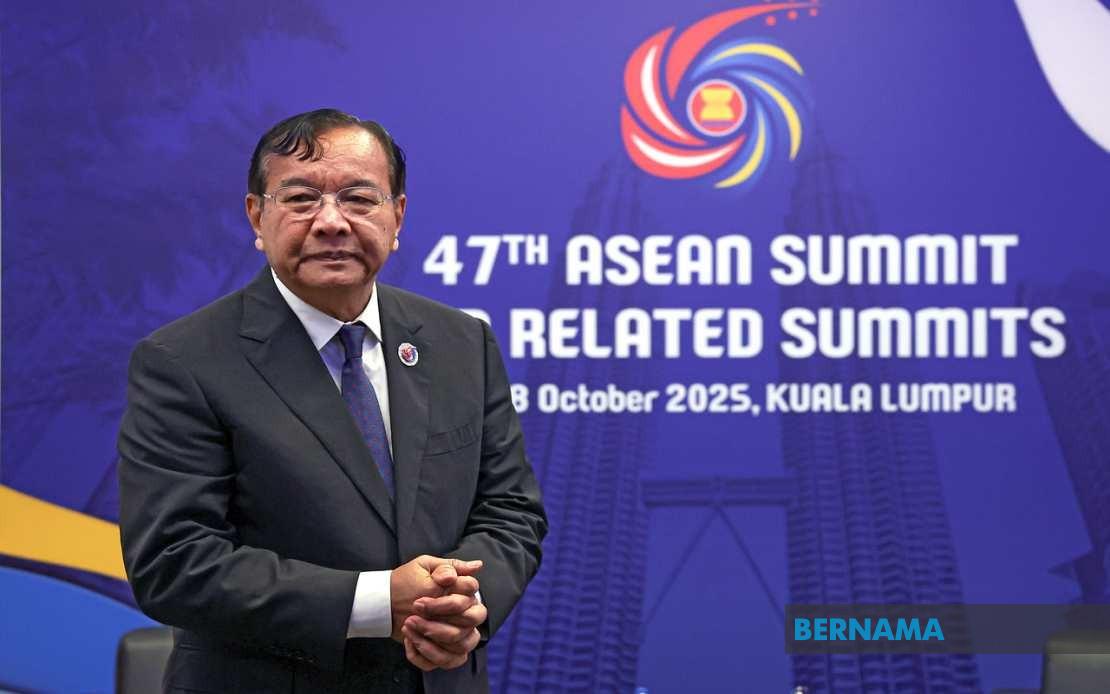
Cambodia's Deputy Prime Minister and Foreign Minister Prak Sokhonn arrived in Malaysia this week for a significant two-day official visit that marks a watershed moment in the two nations' bilateral relationship. The centrepiece of his engagement is the third Malaysia-Cambodia Joint Commission for Bilateral Cooperation (JCBC) meeting, which will be co-chaired alongside Malaysia's Foreign Minister Datuk Seri Mohamad Hasan. This represents the formal resumption of a mechanism that has lain dormant for two decades, signalling renewed political will from both governments to deepen their partnership at a time of shifting regional dynamics.
The last JCBC meeting took place in Siem Reap in 2006, a gap that underscores how Malaysia-Cambodia relations had cooled over the intervening period. The revival of this high-level bilateral commission demonstrates a deliberate effort by both governments to reset and reinvigorate their engagement after years of minimal institutional contact at the ministerial level. For Malaysia, this visit comes at a moment when it is seeking to strengthen ties across Southeast Asia and reassert its regional diplomatic presence. For Cambodia, it reflects a broader openness to deepening relations with key trading partners and investors in the region.
During his stay, Prak Sokhonn was scheduled to meet with Prime Minister Datuk Seri Anwar Ibrahim, where both leaders would reaffirm the enduring nature of their bilateral partnership and discuss pressing issues of mutual concern. These courtesy calls at the highest political level are vital for establishing personal rapport and demonstrating the strategic importance both capitals attach to the relationship. Such meetings typically set the tone for lower-level negotiations and help smooth the path for substantive cooperation in the months and years ahead.
The timing of this visit is deliberately symbolic. Malaysia and Cambodia will mark the 70th anniversary of their diplomatic relations in 2027, and both governments are using the period leading up to this milestone to lay fresh groundwork for cooperation. By reviving the JCBC now, they are positioning themselves to enter that celebratory year with a strengthened institutional framework and renewed momentum. The Foreign Ministry statement emphasised this forward-looking dimension, stressing the commitment of both nations to what it termed the "close and enduring partnership" between them.
At the conclusion of the third JCBC meeting, both foreign ministers are expected to sign Agreed Minutes documenting the outcomes of their discussions and outlining priority areas for future bilateral cooperation. This formal document will serve as a roadmap for government agencies and private sector entities seeking to deepen their engagement across trade, investment, cultural, and security dimensions. The signing of such minutes is ceremonial in importance but substantive in effect, as it creates an official record of commitments and cooperative frameworks that both sides have pledged to pursue.
The economic dimensions of the Malaysia-Cambodia relationship provide compelling reasons for this diplomatic reset. Malaysian investors have significant exposure in Cambodia, with cumulative foreign direct investment reaching US$3.20 billion across 162 registered projects as of 2024, making Malaysia the third-largest foreign investor in the kingdom after China and Vietnam. This substantial investment footprint gives Malaysia considerable stakes in Cambodia's economic stability and development trajectory, and provides a natural foundation for deepening bilateral relations beyond the purely diplomatic sphere.
Trade flows between the two countries have accelerated markedly, with bilateral commerce reaching RM5 billion in 2025, representing a robust 27.4 per cent year-on-year increase. Malaysia's exports to Cambodia totalled RM4.13 billion, while imports from Cambodia amounted to RM880 million, indicating an export-heavy trade relationship that benefits Malaysian manufacturing and service sectors. These figures suggest strong complementarities between the two economies, with Malaysian goods and services finding ready markets in Cambodia's growing middle class and business community, while Cambodian raw materials and processed goods supply Malaysian downstream industries.
The revival of the JCBC also carries implications for regional architecture. Southeast Asia faces intensifying great power competition, climate challenges, and the need for coordinated responses to transnational issues ranging from human trafficking to terrorism financing. By strengthening bilateral mechanisms with neighbours, Malaysia is building a denser network of institutional relationships that can facilitate rapid information-sharing and coordinated action on regional challenges. Cambodia, for its part, benefits from maintaining strong relationships with multiple ASEAN partners to preserve its diplomatic flexibility and ensure that its development needs receive sustained attention from the region's more industrialised economies.
The commission's work will likely cover multiple sectors. Trade and investment facilitation, labour mobility, cultural exchanges, and security cooperation are all areas where Malaysia and Cambodia have identified common interests. The machinery of the JCBC allows both governments to move beyond periodic summit meetings and establish working-level groups that can monitor progress, identify obstacles, and propose solutions to practical problems affecting businesses and citizens on both sides. This institutional depth is particularly valuable in addressing issues like skills development, which both countries recognise as critical to their competitiveness in an increasingly knowledge-driven regional economy.
For Malaysian stakeholders, this diplomatic initiative carries tangible benefits. Companies operating in Cambodia gain clearer signals that their home government is committed to protecting their interests and facilitating their operations through improved bilateral coordination. Workers and students moving between the two countries benefit from clearer frameworks governing their rights and obligations. Academic institutions and cultural organisations gain renewed support for exchanges and collaborative projects that strengthen people-to-people linkages, often regarded as the foundation of durable bilateral relationships.
The two-decade hiatus in JCBC meetings, while significant, was not unusual in regional diplomacy, where the rhythm of high-level engagement often reflects broader fluctuations in bilateral relations and shifting political priorities. The resumption signals that both Malaysia and Cambodia have reasons to believe their renewed engagement will be more durable and productive than their engagement during the intervening period. With each country bringing clear economic and strategic interests to the table, and with institutional mechanisms now in place to manage the relationship systematically, the prospects for sustained cooperation appear promising.

