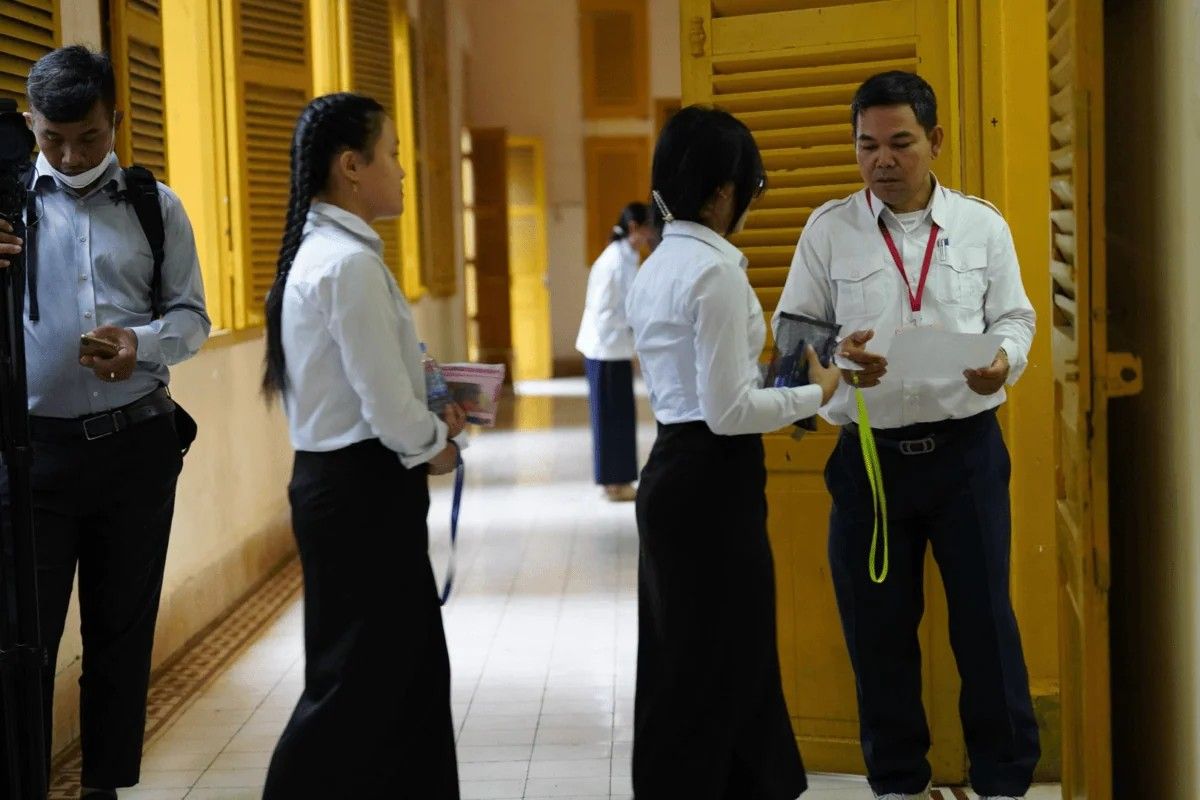
Cambodia's Grade 12 graduation examinations opened on August 10, welcoming more than 150,000 students across the kingdom, even as an unresolved border dispute continues to disrupt education in frontier communities. The milestone event proceeded under improved conditions compared to the previous year, when similar examinations took place just weeks after armed conflict erupted between Cambodian and Thai forces along their shared frontier. Education Minister Hang Chuon Naron presided over the opening ceremony in Phnom Penh, acknowledging both the academic progress students have achieved and the challenges that some communities continue to face.
The examination cohort represents a substantial cross-section of Cambodia's secondary school population, divided between two academic tracks. Science-stream candidates numbered just over 37,000, while the social science pathway attracted more than 130,000 participants, reflecting the country's traditional emphasis on humanities education. These figures underscore the scale of Cambodia's annual examination process and the logistical complexity involved in administering standardised testing across provincial and municipal centres nationwide. The diversity of candidates also reflects Cambodia's ongoing efforts to expand access to quality secondary education following decades of educational disruption.
Last year's examination administration occurred in circumstances marked by active military tension. The August 28, 2025 sitting took place precisely one month after initial armed skirmishes along the Cambodia-Thailand border escalated beyond routine border patrol incidents. Minister Hang Chuon Naron drew particular attention to the resilience demonstrated by students who sat those examinations despite the security situation. He recounted meeting one student from Oddar Meanchey province whose family had been forced to flee their home during Thai military operations, yet who continued studying using improvised outdoor spaces and achieved an A grade, subsequently gaining admission to a prestigious higher education institution. Such narratives, while inspiring, also highlight the genuine educational disruption experienced by vulnerable communities in border zones.
The persistent closure of 25 schools in border provinces represents the most visible ongoing consequence of last year's military confrontation. These facilities remain inaccessible to their regular student populations because Thai military forces continue to occupy the territories where they are located. The situation underscores how military standoffs create cascading effects on civilian infrastructure and disrupts the foundational assumption that students can attend school in their home communities. Oddar Meanchey province, which bore the brunt of military activity, has been particularly affected, with multiple educational institutions displaced from their normal operations. The Royal Cambodian Government has formally demanded that Thailand permit the reopening of these schools and the return of students to their home classrooms, but diplomatic efforts have not yet resolved the underlying territorial dispute.
Currently, only one school—Banteay Mean Rith Lower Secondary School in Oddar Meanchey—has implemented a partial solution by operating temporary satellite classrooms where displaced students can continue their education. This arrangement, while better than complete cessation of schooling, nevertheless represents a significant deviation from normal educational practice. Students must travel to these temporary sites, learning environments are improvised and likely lack standard facilities and resources, and the psychological impact of displacement affects concentration and academic engagement. Minister Hang Chuon Naron indicated that the government views this interim measure as insufficient and continues pressing for the restoration of full classroom access in the affected border areas.
The examination administration this year has incorporated strengthened anti-corruption measures in response to documented problems during the previous year's sitting. Examination papers for mathematics were leaked before the official sitting last year, compromising the integrity of that subject's assessment and necessitating an institutional review of security protocols. The Anti-Corruption Unit deployed more than 4,000 trained observers stationed throughout examination centres across the kingdom to monitor test administration, maintain secure handling of question papers, and deter irregularities. This observer presence remains consistent with previous years' deployment levels, reflecting a commitment to systematic rather than ad-hoc oversight.
Minister Hang Chuon Naron publicly emphasised that this year's examination process would operate under conditions of strict organisation, rigorous procedural enforcement, and transparent multi-stakeholder participation in oversight activities. The involvement of observers representing various institutional interests—government education agencies, civil society organisations, and independent monitors—is intended to distribute responsibility for examination integrity across multiple parties, reducing the likelihood that any single corrupt actor could compromise the system. Such transparency mechanisms have become standard practice in Southeast Asia's high-stakes examination systems, reflecting broader demands for accountable governance.
The 2025 examination experience, disrupted though it was by military tensions, provided important lessons in maintaining educational continuity under stress. That students could perform academically despite genuine hardship demonstrated both individual determination and the capacity of Cambodia's education system to adapt to adverse circumstances. The current year's examinations occur in a more stable security environment, allowing administrators and students to focus on academic preparation rather than also managing immediate security threats. This relative stability should theoretically facilitate improved examination outcomes and reduced stress for participants.
However, the underlying border dispute with Thailand remains fundamentally unresolved, meaning that conditions could theoretically deteriorate again. The diplomatic standoff affects not only the 25 closed schools but also student communities' broader sense of security and stability. Families in border provinces continue to weigh the risks of maintaining residence in conflict-prone areas against the practical necessity of remaining where their livelihoods are located. Educational disruption compounds other dimensions of displacement and uncertainty, potentially affecting long-term school enrollment rates and completion outcomes in frontier communities.
For Malaysia and other Southeast Asian observers, Cambodia's examination administration challenges illustrate how transnational disputes create domestic educational consequences that extend far beyond immediate conflict zones. The closure of schools serving rural border communities risks widening development gaps between frontier regions and better-connected urban and central areas. Cambodia's education system, while substantially rebuilt since the 1990s, remains vulnerable to disruption because institutional resilience and resource availability are still developing. The situation also underscores the importance of regional diplomatic mechanisms for resolving territorial disputes promptly, as protracted standoffs impose humanitarian costs including educational deprivation for vulnerable student populations.

