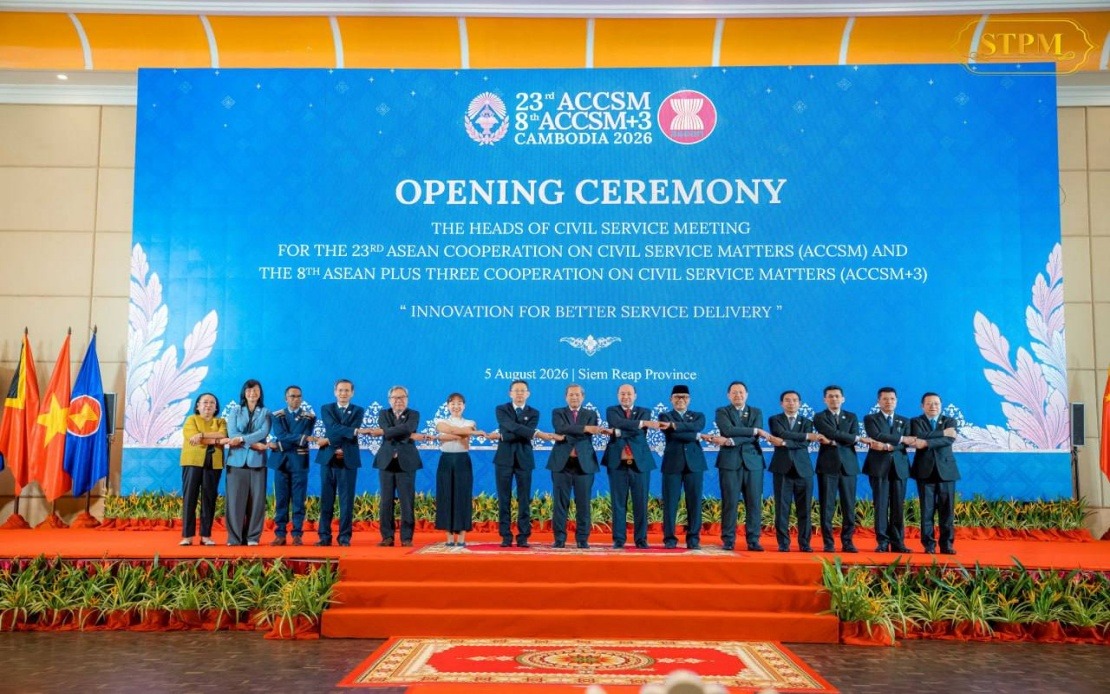
Cambodian Prime Minister Hun Manet has urged ASEAN member states to leverage artificial intelligence and digital transformation as tools for delivering superior public services, ultimately improving living standards and reducing development disparities throughout Southeast Asia. Speaking at the 23rd ASEAN Cooperation on Civil Service Matters (ACCSM) held in Siem Reap from August 3 to 5, Hun Manet outlined a vision for technology adoption grounded in people-centred principles rather than simply pursuing innovation for its own sake. His intervention reflects growing recognition across the region that digital modernisation must align with the practical needs and capacities of individual ASEAN nations.
The prime minister emphasised that technological advancement cannot succeed without solid institutional foundations and adequate human resources to support implementation. This observation carries particular weight given ASEAN's heterogeneous development landscape, where member states range from highly industrialised economies to developing nations still building basic digital infrastructure. Hun Manet stressed that each country should adopt new technologies, particularly artificial intelligence systems, at a measured pace suited to its own circumstances rather than adhering to a uniform regional timeline that could overwhelm less-developed nations. This calibrated approach reflects pragmatism about the challenges involved in large-scale digital transformation across Southeast Asia.
The conference, held under the theme "Innovation for Better Service Delivery," brought together civil service officials and policymakers from ASEAN and participating Plus Three nations to discuss governance modernisation. Hun Manet's remarks arrive as regional governments accelerate efforts to digitise public administration, streamline bureaucratic processes, and enhance operational efficiency through technological means. The timing highlights shared concerns about competitiveness and service quality in an increasingly technology-driven global economy where digital capabilities influence both citizen satisfaction and economic performance.
Beyond internal government efficiency, Hun Manet argued that innovation must strengthen ASEAN's collective ability to address transnational challenges that transcend individual borders. The region confronts multifaceted pressures including climate-induced disasters, uneven economic development, and persistent poverty that demand coordinated responses. No single country possesses sufficient resources or expertise to tackle these interconnected problems independently, making regional collaboration essential. This perspective positions digital innovation and institutional modernisation as components of broader regional resilience-building rather than merely administrative upgrades.
The prime minister highlighted knowledge sharing and policy harmonisation as critical elements of ASEAN's innovation agenda. Through platforms like ACCSM, member states can exchange successful practices, learn from others' experiences, and build shared capacity to confront common challenges. This collaborative framework enables smaller or less-developed ASEAN nations to benefit from innovations pioneered elsewhere rather than investing years developing solutions independently. Such cooperation also facilitates the development of compatible systems across borders, reducing friction and improving coordination on regional issues.
For Malaysia, Hun Manet's emphasis on sustainable, inclusive innovation carries strategic implications. As a middle-income nation with more advanced digital infrastructure than some ASEAN neighbours but facing distinct developmental challenges, Malaysia can position itself as both an innovator and a bridge-builder helping less-developed members implement technology effectively. Malaysian expertise in areas like fintech, e-government systems, and digital infrastructure could be valuable assets within regional cooperation frameworks, potentially generating economic and diplomatic returns.
The ACCSM platform represents an underutilised mechanism for promoting not just technical cooperation but also policy convergence on governance standards. By establishing common principles for AI deployment, data protection, and digital service delivery, ASEAN could reduce regulatory fragmentation and create more seamless regional business environments. This harmonisation also addresses citizen concerns about transparency, fairness, and accountability in AI-driven government systems, which increasingly influence public trust in institutions across Southeast Asia.
Hun Manet's framing of innovation as a tool for narrowing development gaps within ASEAN signals potential shifts in how regional organisations approach capacity building. Rather than imposing standardised solutions, this approach acknowledges that meaningful progress requires tailored strategies recognising each country's unique context. This philosophy could extend beyond digital transformation to other policy areas where ASEAN seeks coordinated action, establishing precedent for more flexible, context-sensitive regional frameworks.
The challenge ahead involves translating these principles into concrete programmes and financial commitments. Developing countries within ASEAN will require significant investment and technical assistance to build the institutional capacity, infrastructure, and skilled workforce necessary for effective AI integration. More advanced economies must balance their own innovation agendas with willingness to support less-developed members, recognising that regional prosperity depends partly on reducing development gaps. Successful execution of Hun Manet's vision therefore depends on sustained political will and resource allocation beyond rhetoric.
As ASEAN navigates technological change amid intensifying great power competition, the region's ability to adopt AI and digital innovation strategically—maintaining autonomy while closing development disparities—will substantially influence its geopolitical positioning and economic trajectory over coming decades.

