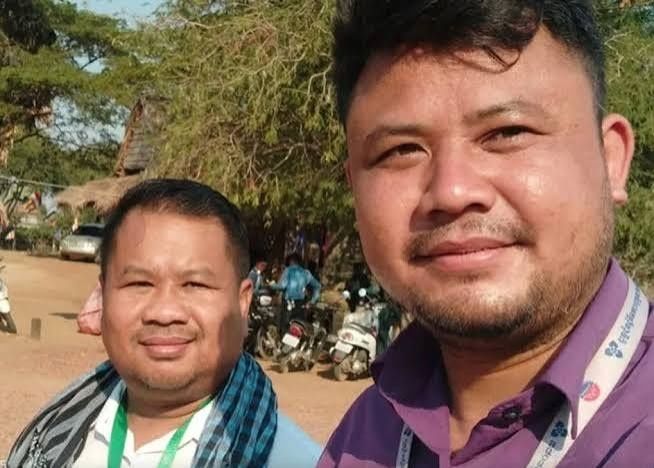
Cambodia's Supreme Court was preparing to deliver its verdict on the appeal of two journalists whose convictions for treason have become a focal point in scrutinising the independence of the country's judiciary. Phorn Sopheap of Battambang Post TV Online and Pheap Pheara of TSP 68 TV Online are challenging 14-year prison sentences imposed after they were found guilty of supplying information prejudicial to national defence. The decision, which was expected on 25 June, arrives at a moment when Cambodia's commitment to press freedom and judicial autonomy has come under renewed international scrutiny.
The case began in July of last year when the two reporters were apprehended upon returning from an assignment covering military operations near the Cambodian-Thai frontier. Authorities accused them of uploading photographs taken within a restricted defence zone to Facebook without proper clearance. The journalists have consistently maintained their innocence, asserting that they possessed authorisation to access the area where they conducted their reporting. Both men are seeking the Supreme Court to annul their convictions and release them from their sentences.
The photographs in question ignited significant diplomatic tension between Phnom Penh and Bangkok. One particular image depicting land mines was extensively circulated by Thai news organisations and strengthened Thailand's assertion that Cambodia had deployed fresh mine ordnance along the shared border, resulting in casualties among Thai military patrols. Cambodia's government categorically refuted these allegations, maintaining its adherence to international protocols prohibiting land mine production and deployment, while suggesting that any ordnance discovered may have originated from lingering munitions leftover from the country's decades of civil strife that concluded in the late 1990s.
The underlying border tensions have proven volatile and destabilising for the entire region. During July and December of last year, military engagements between Cambodian and Thai forces displaced hundreds of thousands of civilians on both sides of the frontier and resulted in approximately 100 deaths among military personnel and non-combatants. Although a ceasefire took hold in December, the underlying friction between the two nations persists, and the handling of the journalists' case has become intertwined with broader questions about Cambodia's treatment of sensitive national security matters.
The December conviction handed down by Siem Reap Provincial Court relied on charges framed under Cambodia's expansive national security legislation. The court determined that the act of sharing photographs constituted supplying adversarial information to a foreign government in violation of defence statutes. When a lower appellate court upheld the convictions in March, international media organisations and human rights bodies began raising alarms about the implications for investigative journalism in Cambodia. The Committee to Protect Journalists based in New York issued statements characterising Cambodia's approach as weaponising vague national security provisions to criminalise ordinary journalistic work.
The journalists' case exists within a troubling pattern of legal proceedings that observers view as silencing dissent. Just days before the Supreme Court hearing, the same court upheld the conviction of Rong Chhun, a prominent opposition figure aged 56, on incitement charges stemming from his meetings with communities displaced by government construction initiatives. Rights activists widely interpreted that decision as another example of Cambodia's ruling authorities deploying the courts to neutralise political opposition and suppress civil society voices. Human Rights Watch issued a statement declaring that the pattern of rulings demonstrated Cambodia's courts lack independence from the governing party apparatus, a characterisation the government strongly disputed by asserting the judiciary operates with full autonomy.
Understanding contemporary Cambodia requires recognising the transition that occurred in August 2023, when Hun Manet succeeded his father Hun Sen as Prime Minister. The elder Hun Sen presided over nearly four decades of authoritarian governance marked by documented instances of widespread human rights violations, suppression of speech, and restrictions on freedom of association. International observers held expectations that Hun Manet, who received education in the United States, might introduce political reforms and strengthen democratic institutions. However, substantive signs of liberalisation have not materialised, and judicial processes continue mirroring patterns established during his father's tenure.
The international journalism community has mobilised in response to the original convictions. More than a dozen domestic and transnational press freedom organisations signed a joint communication to Cambodia's government requesting withdrawal of the prosecution following the lower appellate court's March decision upholding the guilty verdicts. These collective appeals reflect concern among global media watchdogs that Cambodia is establishing dangerous precedents by converting journalistic activities into criminal conduct through stretched interpretations of national security doctrine.
Cambodia's standing in global press freedom assessments underscores the seriousness of concerns raised by international observers. The Paris-headquartered Reporters Without Borders organisation ranked Cambodia at position 161 among 180 countries in its 2025 World Press Freedom Index, placing the nation in a category where press freedom conditions are classified as profoundly troubled. This standing reflects cumulative concerns about governmental restrictions on media operations, self-censorship driven by legal uncertainty, and the use of criminal prosecutions against reporting activities deemed politically sensitive.
For Malaysian and broader Southeast Asian audiences, the Cambodia situation carries significance as a cautionary example. The region encompasses diverse approaches to balancing national security with press freedom, and Cambodia's trajectory demonstrates how security legislation designed with legitimate intent can transform into instruments for suppressing legitimate reporting and dissent. The journalists' appeal outcome will signal whether Cambodia's new administration intends to break from inherited patterns of judicial instrumentalisation or continue utilising the courts to constrain independent voices. The ruling also carries implications for how other regional governments might contemplate similar security-based prosecutions, as international reaction will likely influence the broader regional approach to managing sensitive information and protecting journalistic activity.

