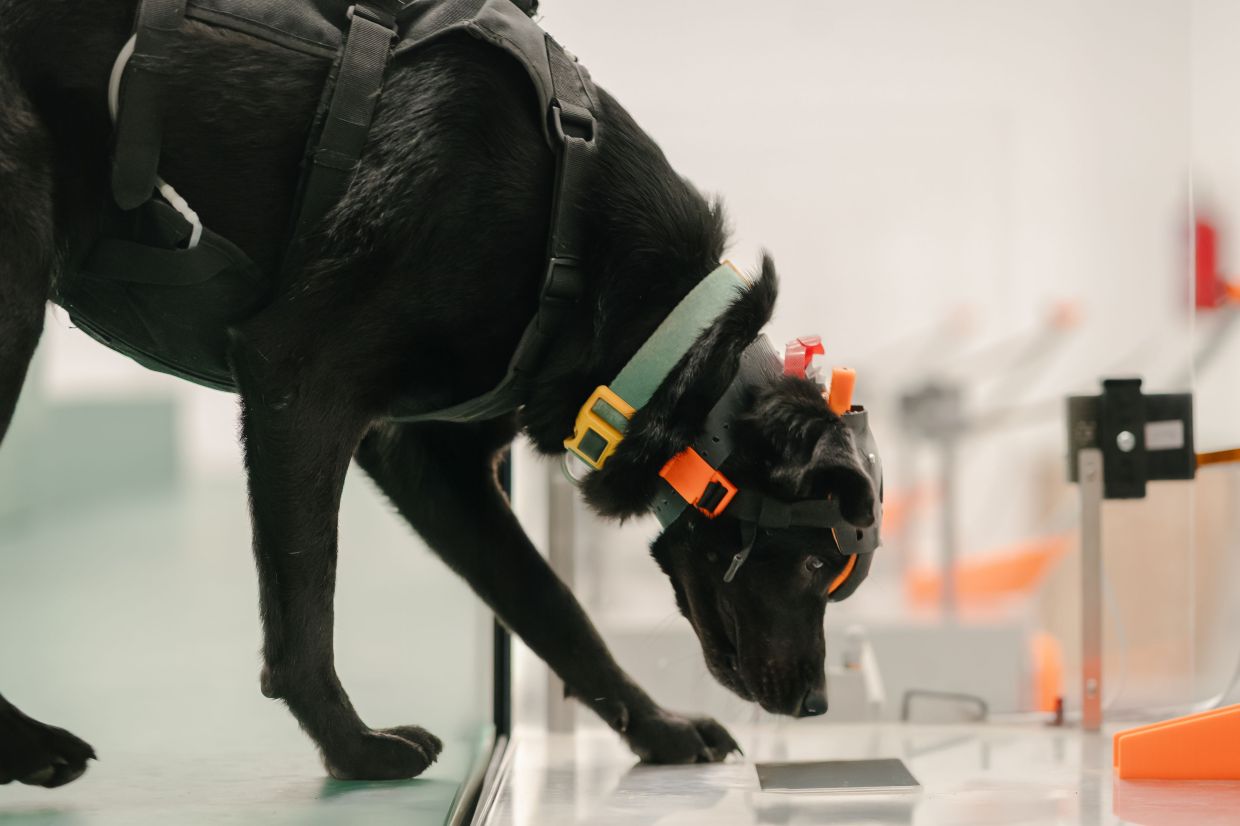
On a working farm near Bengaluru, a pack of dogs has taken on an unconventional occupation. Billy, Jessie, Banu and their canine colleagues spend their days detecting traces of cancer in human breath samples—a task that leverages their remarkable sensory capabilities in service of a public health challenge facing millions across India and Southeast Asia. The two-year-old startup Dognosis has emerged as a notable player in a nascent field that harnesses dogs' olfactory prowess for medical diagnostics, transforming a skill traditionally employed in drug and explosives detection into a platform for accessible disease screening.
The mechanics of Dognosis's approach are deceptively elegant. Patients provide breath samples by breathing into specially designed masks, which are then delivered to the company's laboratory facility. There, trained dogs are exposed to these samples and their reactions—captured through sensors monitoring movement, respiration, brain activity and body language—are interpreted by artificial intelligence algorithms to identify potential cancer markers. This non-invasive methodology eliminates the need for imaging scans, blood tests or tissue biopsies, processes that remain expensive, time-consuming and inaccessible to much of India's population.
The scientific evidence underpinning this approach is compelling. In a Phase 2 study published in the Journal of Clinical Oncology, Dognosis demonstrated approximately 90 percent sensitivity for detecting early-stage cancers across seven broad disease categories encompassing more than twenty cancer types, including breast cancer. Perhaps more remarkably, the research indicated that dogs trained to identify ten cancer types exhibited the capacity to recognise an eleventh variant they had never previously encountered, suggesting a degree of olfactory generalization that could have substantial implications for broader applicability. These results, while promising, represent the controlled laboratory environment where such studies are conducted.
India's cancer burden provides the urgent context for this innovation. According to the International Agency for Research on Cancer, the nation ranks third globally in new cancer incidence, with approximately 1.5 million new cases and over 900,000 deaths recorded in 2024 alone. Roughly one in ten Indians face the risk of developing cancer before reaching age seventy-five, with breast cancer representing the most frequently diagnosed variety, followed by malignancies of the lip, oral cavity, lung and cervix. Yet these alarming epidemiological realities exist alongside a screening landscape that remains starkly inadequate: only 1.9 percent of Indian women surveyed between 2019 and 2021 reported ever undergoing cervical cancer screening, whilst just 0.9 percent had been examined for breast or oral cancers. Among men, merely 1.2 percent reported oral cancer screening.
Dognosis's commercial trajectory reflects growing investor confidence in the model's potential. The startup has secured funding from early-stage backers including Accel India and San Francisco-based Caffeinated Capital, raising US$1.5 million through a pre-seed round in 2024, followed by an additional undisclosed investment. These resources should sustain operations for approximately two years if the company adheres to its planned expansion strategy, according to co-founder Akash Kulgod. The capital deployment suggests that despite the unconventional nature of canine-assisted diagnostics, venture investors perceive genuine commercial viability in addressing India's screening deficit.
The operational reality at Dognosis's facility demonstrates how the company integrates animal welfare with commercial objectives. The beagles, labradors, Dutch shepherds and other trained dogs live together on the farm and engage with the detection samples through a gamified platform that limits their work to thirty minutes to an hour daily. Motivation derives not from coercion but from treats offered as positive reinforcement. During observed sessions, individual dogs like two-year-old beagle Whiskey navigate through multiple samples, demonstrating the distinctive behaviors—pausing, sniffing, circling and returning—that the AI system has learned to interpret as indicators of cancer presence.
The pathway from clinical validation to commercial deployment now demands substantially more challenging proof. Dognosis initiated its Phase 3 trial in April, enrolling ten hospitals across India with projected recruitment of approximately 10,000 participants over twelve months. This study will evaluate asymptomatic individuals at elevated cancer risk and survivors vulnerable to recurrence, with those flagged for positive results receiving conventional follow-up assessment including imaging and biopsy. The scale and diversity required by Phase 3 testing represent the critical juncture where laboratory promise must translate into real-world efficacy across varied populations and operational conditions.
The company's commercial ambitions extend across multiple geographies and timelines. Dognosis plans to launch an at-home multi-cancer prescreening test in India next year at a price point measured in thousands of rupees, deliberately positioning it within the financial reach of substantially broader demographics than conventional diagnostic pathways. The startup aspires to process one million tests annually whilst doubling its canine workforce to thirty dogs and reducing turnaround times to a single week. International expansion represents a parallel objective, with Kulgod indicating that opening a United States facility by late 2027 or early 2028 remains on the strategic roadmap. These aspirations reflect confidence in the scalability of the canine-plus-AI model, though significant operational and logistical challenges remain.
Regulatory positioning has emerged as a strategically important dimension of Dognosis's India strategy. Kulgod has stated that the company's testing platform does not require Indian regulatory approval insofar as it functions as a prescreening tool rather than a formal diagnostic device, with only the latter category subject to regulatory oversight in India. This regulatory classification provides substantial advantages in terms of speed-to-market and operational flexibility, though it simultaneously constrains how the company can market its services and raises questions about quality assurance standards. The distinction between prescreening and diagnostic assessment, whilst formally important, may become blurred in the minds of patients and healthcare providers seeking clarity about the reliability and clinical utility of the technology.
The broader medical and scientific community views such innovations with cautious optimism tempered by legitimate concerns. Pankaj Chaturvedi, deputy director of the Centre for Cancer Epidemiology at Tata Memorial Centre in Mumbai, has emphasised that emerging technologies like canine-assisted screening should strengthen rather than replace existing cancer prevention and detection programmes. This perspective reflects understanding that even sophisticated new tools cannot substitute for the comprehensive architecture of cancer control that includes prevention, early detection, treatment access and survivorship support. The integration challenge—how to position Dognosis's screening capability within India's existing healthcare infrastructure—remains substantial, particularly given variations in diagnostic capacity and screening awareness across states and population segments.
Other organisations pursuing similar technological pathways provide relevant comparative context. New Jersey-based startup SpotitEarly has reported comparable results from canine cancer-detection trials, suggesting that this represents a genuine emergent field rather than an isolated experiment. However, the absence of commercialised canine-based testing to date underscores the substantial distance separating clinical validation from market deployment. The construction of supply chains capable of reliably moving and processing breath samples at scale, the development of training protocols that can be replicated across multiple canine cohorts, and the cultivation of patient and clinician trust in an unconventional diagnostic approach all demand sustained investment and institutional innovation.
The fundamental bottleneck that Dognosis is attempting to address extends beyond the mere existence of canine olfactory capacity to detect cancer. Instead, the challenge involves standardisation and scalability—translating individual dog capabilities into a reproducible, reliable system suitable for integration into large-scale screening operations. Should Dognosis succeed in its Phase 3 trial and subsequent commercial rollout across India, the implications would extend beyond one company's business success to represent a meaningful expansion of cancer screening accessibility across a population of 1.4 billion people where such services remain severely constrained by cost, geography and awareness. The next eighteen to twenty-four months will determine whether innovation in biomedical screening has genuinely found a partner in humanity's oldest domesticated animal.

