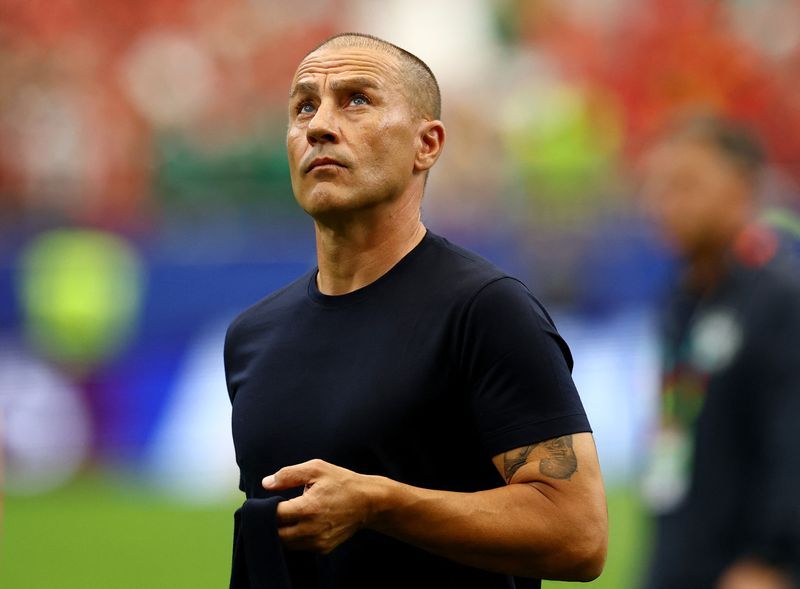
Uzbekistan's World Cup debut has turned into a nightmare, with coach Fabio Cannavaro taking full responsibility for his team's crushing 5-0 loss to Portugal in a Group K encounter in Houston. The Italian tactician, who lifted the World Cup with Italy in 2006, refused to blame his players for the rout, instead shouldering the burden himself and pointing to tactical decisions made during the match. Despite the severity of the scoreline, Cannavaro maintained that his squad—competing in their first-ever World Cup—could still salvage their campaign, though the mathematical path to survival has become considerably narrower.
With this defeat compounding an earlier 3-1 reverse against Colombia, Uzbekistan's chances of advancing to the round of 32 rest entirely on victory in their final group fixture against the Democratic Republic of Congo on Saturday. The Central Asian nation now faces genuine elimination pressure, having accumulated just zero points from two matches while their opponents have begun accumulating victories. For a football program still finding its feet on the world's grandest stage, the tournament has become a test of character and resilience rather than genuine advancement prospects. Cannavaro's willingness to absorb criticism publicly reflects his experience at elite levels, where accepting accountability can preserve team morale during difficult periods.
The coach's philosophy of taking responsibility extended directly to shielding his players from external pressure. Cannavaro articulated a clear message to reporters that any strategic or tactical failures lay squarely with his management decisions rather than individual player performances. This approach stems from his conviction that young, inexperienced international squads require confidence and freedom to express themselves rather than fear of punishment for mistakes. By claiming ownership of the defeat himself, Cannavaro provided psychological protection to his players, allowing them to mentally reset and approach their remaining match without the additional burden of perceived blame.
A critical moment in the Portugal match proved pivotal to the psychological impact on Uzbekistan's performance. A well-executed goal by Azizjon Ganiev was disallowed for a foul adjudged in the buildup when the scoreline stood at 2-0. Cannavaro acknowledged that this decision significantly undermined his team's confidence and momentum at a crucial juncture. The goal's cancellation apparently coincided with a collapse in discipline and defensive organization, as Portugal subsequently scored three additional goals to impose a humiliating final margin. Had the goal stood and Uzbekistan reduced the deficit to 2-1, the psychological narrative of the match might have shifted considerably, potentially reshaping the team's confidence heading into their final group game.
Despite the grimness of their situation, Cannavaro articulated an optimistic long-term perspective on Uzbekistan's World Cup experience. He emphasized that participating in the tournament, even without advancing, represents invaluable development for a football program still establishing itself among global elites. The coach spoke of using defeat as a teaching tool, noting that players could learn more from such intense competitive experiences than from comfortable victories in lesser competitions. This mentality—viewing early World Cup exits as part of a developmental journey—has become increasingly common among coaches of smaller nations trying to build sustainable programs rather than pursuing singular tournament outcomes.
The coach's directive to his players centered on encouraging boldness and willingness to take risks in possession. Cannavaro acknowledged that he had explicitly asked his squad to play with courage and creativity rather than retreating into defensive conservatism. This attacking philosophy, while leaving them vulnerable to Portugal's superior quality, aligned with Cannavaro's belief that young teams develop faster when given permission to attack and make mistakes. The contrast between his approach and more cautious tactics employed by some coaches managing inexperienced squads illustrates different philosophies about developing international football talent.
Cannavaro drew parallels to Uzbekistan's earlier match against Colombia, noting that his team had demonstrated similar attacking intent before the psychological blow of conceding goals and facing an uphill task. This consistency in approach suggested that the coach's tactical framework—emphasizing possession-based football and attacking opportunities—remained unchanged despite the disappointing results. For Malaysian and Southeast Asian observers watching Uzbekistan's development, this commitment to a playing style regardless of outcomes reflects a growing sophistication in how developing nations approach international football rather than simply adopting defensive approaches against superior opponents.
The road to the Democratic Republic of Congo match represents what Cannavaro himself might privately acknowledge as a must-win scenario, though his public statements maintained careful language about mathematical possibility. In reality, Uzbekistan's tournament likely depends on an upset victory against a team that may also be motivated by their own advancement hopes. The coach's insistence that players should continue to believe "until we mathematically cannot go through" provided necessary psychological scaffolding for a team facing elimination.
Cannavaro's background as a World Cup-winning player brought credibility to his message about learning from defeat. His 2006 triumph with Italy stood as testament to building resilience through tournament experiences, and his current role with Uzbekistan represents a different chapter where nurturing a football culture takes precedence over immediate results. For regional football observers assessing how coaches prepare emerging nations for major tournaments, Cannavaro's approach offers lessons about balancing short-term disappointment with long-term development objectives.

