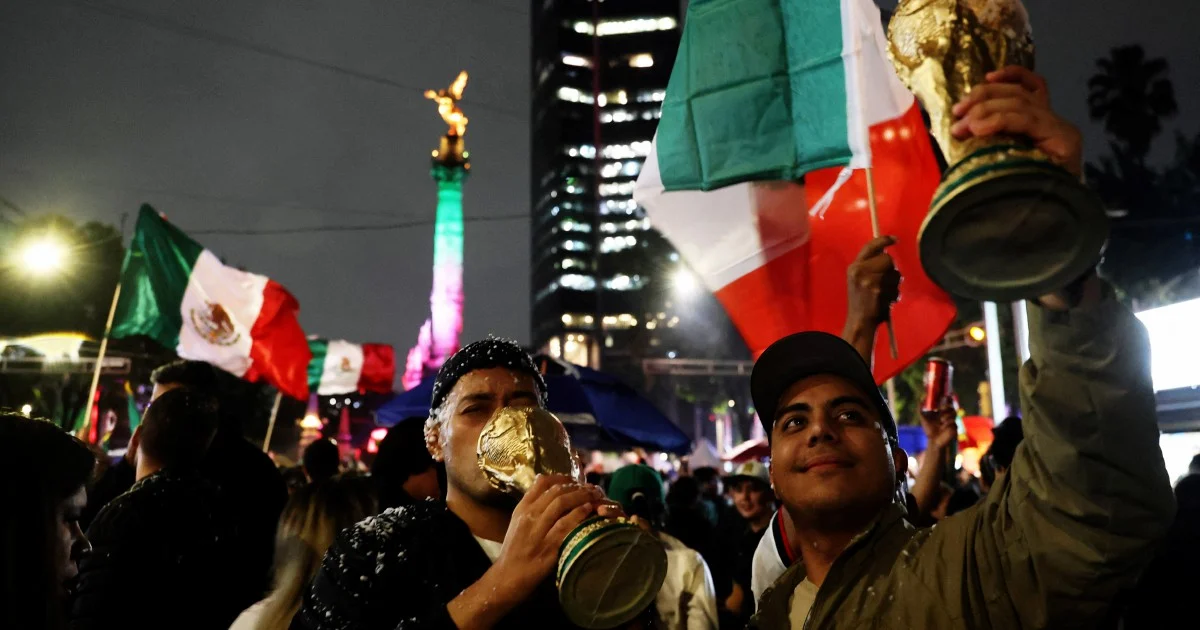
A festive gathering turned tragic in the coastal resort town of Cabo San Lucas when a black vehicle suddenly accelerated into a throng of Mexico national team supporters on Wednesday evening. The incident, which authorities have described as an attack, resulted in 17 people requiring immediate medical treatment, according to the municipal administration. Among those injured was the driver himself, who was apprehended by local law enforcement immediately following the collision.
The incident unfolded as fans assembled to celebrate Mexico's victory in a World Cup fixture, transforming what began as jubilant commemoration into scenes of chaos and injury. Witnesses reported that the vehicle, surrounded initially by supporters wearing Mexico national team merchandise, suddenly surged forward with apparent acceleration, sending multiple spectators flying through the air before the car struck a line of protective bollards designed to manage foot traffic in the area. The crash momentum and violence of the impact left numerous individuals sprawled on the pavement.
Social media footage verified by international news agencies depicts the moment the vehicle struck the crowd, capturing the sudden movement of the car and the immediate aftermath with injured persons scattered across the street. Additional video recordings show bystanders extracting an individual from the vehicle's interior while other injured supporters lay bleeding on the ground. The exact motivations behind the driver's actions remain under investigation by local authorities, though the deliberate nature of the acceleration has raised questions about whether the incident was intentional or resulted from vehicle malfunction.
Cabo San Lucas, situated at the southern tip of the Baja California Peninsula where the Pacific Ocean meets the Gulf of California, serves as a premier destination for international tourism and hosts significant Mexican expatriate communities. The resort's beaches, marinas, and entertainment venues regularly draw visitors during major sporting events, making it a natural gathering point for football enthusiasts. The incident highlights how celebratory public events, despite their positive intention, can become vulnerable to unexpected violence or accidents in crowded urban settings.
The response from emergency services appears to have been swift, with medical personnel arriving to treat the injured and transport the most severely affected to nearby healthcare facilities. The detention of the driver has initiated formal investigation procedures, with authorities examining surveillance footage and interviewing witnesses to reconstruct the precise sequence of events. Whether the incident stemmed from deliberate action, mechanical failure, or impaired driving remains a critical question that will shape both the legal charges and public understanding of what occurred.
For the broader Mexican community, the incident strikes a discordant note at a moment when national pride typically peaks around international football competition. World Cup celebrations have long been central to Mexican cultural expression, with public gatherings becoming spaces where citizens from diverse backgrounds unite around shared sporting passion. The sudden violence disrupts this narrative and raises concerns about public safety during large spontaneous assemblies.
Cabo San Lucas authorities and state-level law enforcement have not yet released comprehensive details regarding the driver's identity, background, or any statements he may have provided. The investigation will likely examine multiple factors including whether substances or mental health issues played a role, whether the vehicle experienced mechanical problems, or whether premeditated intent motivated the driver's actions. Each scenario carries different implications for prosecutorial strategy and community trust in public safety.
The incident also reflects broader challenges facing Mexico's tourism infrastructure, particularly the balance between welcoming visitors and maintaining security protocols at popular gathering points. Bollard systems like those struck in this incident have become standard globally, yet they proved insufficient to prevent significant casualties. Urban planners and security officials may need to reassess crowd management strategies at high-traffic entertainment zones, particularly during periods of heightened public congregation.
International media attention to the incident underscores how such dramatic events, particularly those involving violence and large crowds, rapidly circulate through digital channels before authorities can provide complete factual narratives. The reliance on social media footage for information gathering—though invaluable for documentation—also contributes to speculation and partial narratives that can outpace official investigation findings. For Malaysian readers tracking international news, the event exemplifies how sporting celebrations worldwide remain vulnerable to unexpected tragedy, regardless of geographic location or national context.

