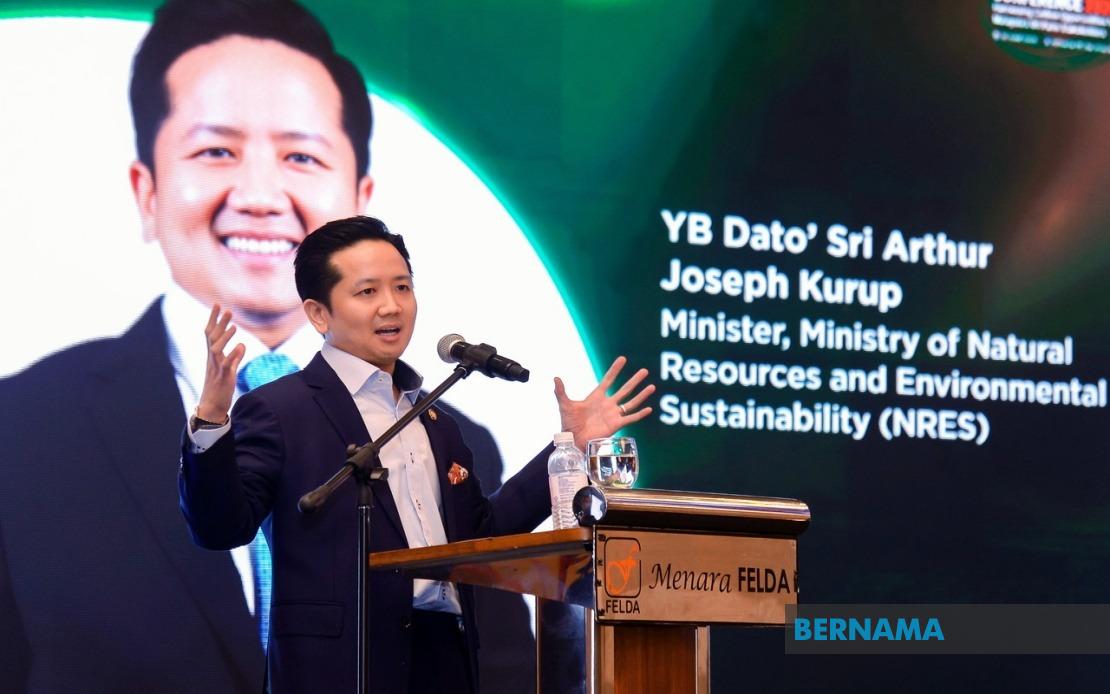
Malaysia's proposed carbon tax framework continues to undergo refinement as the government carefully calibrates its approach to environmental policy, Natural Resources and Environmental Sustainability Minister Datuk Seri Arthur Joseph Kurup indicated this week. Speaking at the Malaysia Palm Carbon Conference (MPC) 2026 in Kuala Lumpur, the minister stressed that while the tax would ultimately be implemented, officials remain focused on determining the appropriate timing and ensuring the policy aligns with industry capabilities and the government's evolving regulatory structure.
The cautious approach reflects mounting complexity in implementing a carbon pricing mechanism across Malaysia's diverse economic landscape. Rather than rushing forward with a rigid implementation schedule, policymakers are examining how such a tax could be deployed without creating unnecessary hardship for businesses or consumers already contending with global economic headwinds. The minister's remarks came approximately two months after the government signalled in late April that it would reassess the carbon tax timeline, citing concerns about the energy supply situation and broader geopolitical tensions that might amplify the burden on key industrial sectors.
Originally, the government had targeted introducing the carbon tax this year, with initial coverage focusing on emissions-intensive industries including steel production, cement manufacturing, and the construction sector. This selective approach was designed to phase in the mechanism gradually rather than impose sweeping charges across the entire economy. However, the decision to pause and reconsider reflects recognition that precipitous implementation could undermine industrial competitiveness at a moment when Malaysian manufacturers face increasing international pressure. By allowing more time for preparation, the government aims to ensure that affected businesses can genuinely transition toward cleaner practices rather than simply passing costs downstream to consumers.
Crucially, Minister Arthur framed the carbon tax not as a punitive measure designed to penalise polluters through punishing levies, but rather as an incentive structure intended to motivate investment in environmentally friendly technologies and processes. This positioning is significant for Malaysia's business community, as it signals the government's intent to support rather than simply constrain industrial activity. The framing also suggests that the tax design itself will emphasise positive reinforcement—potentially through rebates, exemptions, or preferential treatment for early adopters of low-carbon methods—rather than relying primarily on deterrent-based financial penalties.
A critical element of the emerging policy framework involves determining how revenue generated from the carbon tax would be allocated. The minister indicated that the government is actively exploring mechanisms to channel collected funds toward climate adaptation initiatives, forest conservation programmes, and sustainable land management practices. This revenue recycling approach would theoretically create a circular dynamic where emissions-reducing economic activity directly funds environmental restoration and resilience-building efforts. For Malaysia, a nation facing increasing vulnerability to climate impacts including extreme weather events and coastal erosion, dedicating carbon tax revenues to adaptation measures represents a pragmatic approach to building long-term environmental security while addressing present-day economic concerns.
The strategic deployment of carbon tax revenues also serves to strengthen Malaysia's climate governance architecture at a moment when global pressure to address greenhouse gas emissions continues mounting. By channelling funds into forest conservation—particularly relevant given Malaysia's extensive palm oil and timber industries—the government can address deforestation concerns while simultaneously supporting rural livelihoods and biodiversity protection. Similarly, investments in sustainable land management help position Malaysia as a responsible steward of its natural resources, an increasingly important consideration for international investors and trading partners emphasising environmental, social, and governance criteria.
Paralleling the carbon tax refinement process, the government is advancing broader climate legislation. Minister Arthur indicated that the National Climate Change Bill is expected to be introduced in the Dewan Rakyat during the current parliamentary session. This legislative framework will establish the foundational governance structures through which Malaysia addresses climate challenges and coordinates nationwide emissions reduction efforts. The bill's passage would represent a significant institutional strengthening, providing legal clarity and operational mechanisms for implementing climate policy across government agencies and regulated sectors.
The synchronisation of the carbon tax development with advancement of the National Climate Change Bill suggests the government is pursuing a comprehensive rather than piecemeal approach to climate governance. Rather than introducing isolated policies, Malaysian authorities appear committed to building an integrated framework within which various instruments—carbon pricing, legislative authority, revenue allocation mechanisms—function together coherently. This holistic approach increases the likelihood that climate policies will achieve intended environmental outcomes while maintaining economic balance and policy credibility.
For Malaysia's business community, particularly export-oriented manufacturers competing in increasingly carbon-conscious global markets, the gradual refinement of carbon tax policy offers both opportunities and imperatives. Companies that proactively invest in emissions reduction technologies and sustainable production methods will likely gain competitive advantage when the tax eventually takes effect, positioning themselves ahead of competitors forced to make rapid compliance adjustments. Simultaneously, the extended timeline provides breathing room for industry associations and individual firms to engage in policy dialogue, share implementation concerns, and contribute technical expertise to policy design.
The regional implications of Malaysia's carbon tax approach merit attention as well. As Southeast Asia's largest economies grapple with climate commitments and economic development imperatives, Malaysia's experience developing carbon pricing mechanisms will influence how other nations structure similar policies. Should the Malaysian model successfully balance environmental objectives with industrial competitiveness, it could provide a template for regional peers. Conversely, implementation difficulties would offer cautionary lessons about the complexities of carbon pricing in developing and middle-income economies where manufacturing sectors remain critical to employment and growth.
Looking ahead, the critical test lies in translating policy intentions into operational reality. The government must ultimately decide on a specific implementation date, finalise technical details about which sectors and emissions sources will be covered, establish the actual carbon price level, and create the administrative infrastructure necessary for tax collection and revenue management. Each of these decisions will involve trade-offs between environmental ambition and economic acceptability. By maintaining flexibility in its current refinement phase rather than committing prematurely to a fixed schedule, the Malaysian government preserves its capacity to calibrate these trade-offs based on evolving economic conditions and industry feedback.