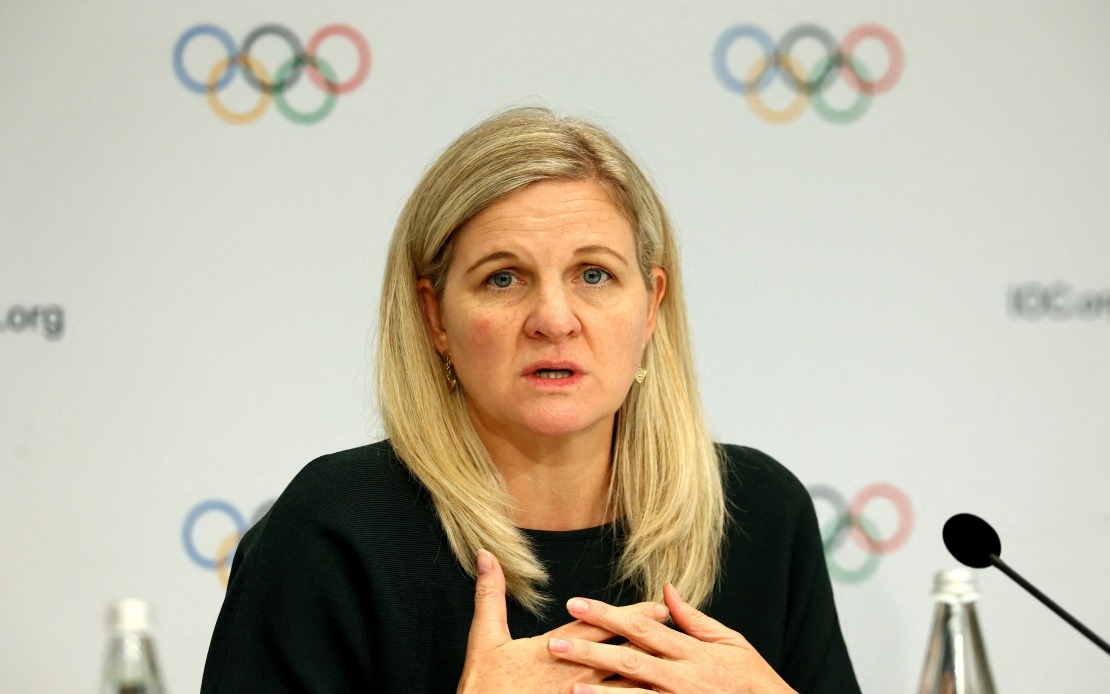
The International Olympic Committee's governing body is preparing for the possibility that United States President Donald Trump might seek to influence Olympic affairs during the 2028 Los Angeles Games, with IOC President Kirsty Coventry indicating that established legal frameworks exist to manage such scenarios. Speaking at a press conference in Moscow on Tuesday, Coventry outlined how the organisation plans to protect the integrity of the Games should any governmental intervention occur.
The IOC President's comments reveal the extent to which Olympic governance bodies are attuned to contemporary political risks. Rather than dismissing the prospect of executive interference as unlikely, the world's premier sports authority has already designated responsibility for handling such disputes to specialised divisions within the Court of Arbitration for Sport. This proactive stance underscores the complex relationship between international sport and geopolitical considerations that now characterise the modern Olympic movement.
Coventry explained that the Court of Arbitration for Sport operates dedicated legal panels that function specifically during Games periods. These temporary and ad hoc divisions are specifically designed to resolve disputes that emerge in real time, ensuring that organisers can address challenges without lengthy delays that might otherwise compromise competition schedules or athlete participation. The existence of these mechanisms reflects decades of accumulated experience in managing unexpected legal and administrative crises.
The IOC's preparedness for potential Trump intervention follows a revealing incident during recent international football competition. On July 5, FIFA's disciplinary committee suspended the red card issued to United States national team player Folarin Balogun, effectively reversing his match ban. Trump subsequently announced that he had personally contacted FIFA regarding Balogun's situation and publicly praised the organisation for what he characterised as correcting a grave injustice through the card reversal.
This episode demonstrated how directly political figures can attempt to influence sporting outcomes and highlighted the vulnerability of sports bodies to pressure from powerful government leaders. The US national team went on to face Belgium in a Round of 16 match, with Balogun's participation facilitated by FIFA's disciplinary reversal. Despite Belgium's official protest against Balogun's participation, the match proceeded as scheduled, concluding with Belgium securing a commanding 4-1 victory.
For Southeast Asian observers and sports administrators, these developments carry significant implications. The region's Olympic delegations and sports organisations increasingly operate within a complex geopolitical landscape where major powers seek to leverage international sporting events for diplomatic purposes. Malaysia and its ASEAN neighbours must understand that Olympic governance structures now explicitly contemplate scenarios where heads of state attempt to manipulate competition outcomes or institutional decisions.
The potential for presidential interference in Olympic matters represents a departure from earlier eras when international sports organisations could operate with greater insulation from direct governmental pressure. The Trump precedent suggests that sitting heads of state may not regard Olympic neutrality as inviolable, viewing sports institutions instead as appropriate venues for advancing national interests. This calculus could extend to decisions about athlete eligibility, medal disputes, opening ceremony protocols, or security arrangements.
The CAS's existence and expanding mandate reflects the global sports community's acknowledgement that such conflicts require specialised judicial mechanisms operating outside traditional national court systems. The ad hoc divisions established during Games periods provide rapid dispute resolution without depending on local judicial systems that might themselves be subject to political pressure. For hosting cities like Los Angeles in 2028, this framework offers reassurance that the IOC possesses institutional safeguards against executive overreach.
Coventry's remarks also implicitly acknowledge that preventing interference entirely remains impossible. Rather than promising to eliminate such threats, the IOC instead emphasised its capacity to manage and legally contest any interventions should they occur. This pragmatic stance recognises modern political realities while seeking to preserve sport's regulatory independence through procedural mechanisms rather than naive appeals to political restraint.
For Malaysian stakeholders with interests in Olympic participation or governance, the lesson extends beyond the specific scenario of American presidential interference. The principle that international sports bodies must maintain independence from governmental manipulation applies universally. As nations increasingly regard Olympic participation and success as components of national brand-building and soft power, the pressure on institutional neutrality will likely intensify globally, not merely in Western contexts.
The CAS framework that Coventry highlighted represents an evolution in Olympic governance reflecting contemporary challenges. These judicial structures attempt to balance respect for national sovereignty with protection of sport's fundamental principles. Whether such mechanisms can genuinely withstand determined political pressure from powerful states remains an open question, particularly when interference concerns allies of influential IOC member nations.
Looking toward 2028, the IOC's transparent acknowledgement that it has prepared for potential Trump interference signals both institutional maturity and underlying anxiety about the Games' vulnerability. Los Angeles will host an Olympics under conditions of heightened political scrutiny, with both the US government and the IOC acutely aware that legal disputes and integrity challenges could emerge. The presence of CAS divisions ready to adjudicate such matters provides some assurance, though the ultimate effectiveness of these mechanisms will depend on their actual application under real political pressure.

