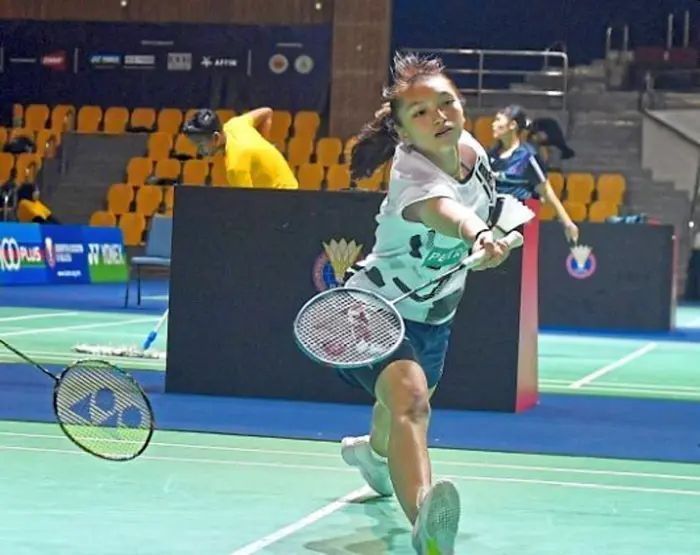
Malaysia's 19-year-old badminton prospect Noraqilah Maisarah Ramdan possesses the raw talent and on-court versatility to potentially scale greater heights in the sport, yet her mixed doubles coach Nova Widianto contends that psychological resilience and personal discipline may ultimately prove more decisive than technical prowess alone in determining her trajectory towards sustained excellence.
Widianto, speaking from his vantage point as coaching staff overseeing Noraqilah's mixed doubles development, emphasises that while her instrumental abilities are beyond question, the National coaching team remains mindful of the psychological pressures that accompany early recognition and praise. The coach's concern reflects a broader understanding within Malaysian badminton circles that premature expectations and external validation can unsettle young athletes whose mental frameworks remain comparatively underdeveloped relative to their athletic capabilities.
The rationale underpinning Widianto's emphasis on character cultivation stems from decades of observing badminton talent cycles across the region. He notes that Malaysia's talent pipeline produces numerous technically gifted players annually, yet only a fraction transition into consistent international performers. The differentiating factor, he suggests, lies not in raw ability but in a player's capacity to maintain composure, accept constructive criticism, and navigate the psychological volatility inherent to professional sport without allowing external adulation to compromise focus and humility.
Noraqilah's recent achievements demonstrate the breadth of her capabilities across multiple disciplines. Partnering with Low Zi Yu in women's doubles, she reached the Australian Open quarter-finals, a result that propelled the pairing to a career-high world ranking of number 70. Simultaneously, her mixed doubles partnership with Loo Bing Kun produced a quarter-final run in Sydney, though this pairing currently occupies a more modest world ranking of number 115. Additionally, she secured a women's doubles title at the second leg of the Under-21 National Championship in Kuantan through a scratch partnership with Ong Xin Yee, illustrating her capacity to perform effectively with different partners under varied circumstances.
This adaptability across multiple partnerships and formats speaks to Noraqilah's technical foundations and game intelligence. Her ability to transition between doubles variants and adjust to different partner dynamics suggests a player with solid fundamentals and tactical awareness beyond her chronological age. For Malaysian badminton, which has historically struggled to develop consistent mixed doubles pairings at the elite level, Noraqilah's early mixed doubles performances represent a potential avenue for future national team contributions in Olympic and World Championship formats.
Yet Widianto's caution against rushing her progression reflects pragmatic consideration of how previous Malaysian talents have managed the transition from junior success to senior consolidation. The coaching team's resistance to accelerating her timeline, despite evident potential, suggests deliberate strategy to allow her maturation curve to develop naturally rather than being artificially compressed by premature international commitments or domestic expectations. This measured approach acknowledges that player burnout and performance plateaus frequently emerge when talented athletes are pushed beyond their developmental readiness.
The question of competing across multiple disciplines remains unresolved in Noraqilah's career trajectory. Widianto concedes that maintaining parallel excellence in both women's and mixed doubles indefinitely presents mounting logistical and physical demands. Professional badminton at the elite level increasingly requires specialised training regimens, partnership continuity, and strategic focus on specific formats and opponents. The computational complexity of managing two distinct competitive pathways simultaneously tends to compound as players advance through tournament hierarchies and face increasingly sophisticated opponents.
Widianto articulates that while juggling multiple disciplines remains tenable during the developmental phase, aspirations of Olympic qualification or World Championship medals would necessitate eventual consolidation. This represents a critical strategic decision point that typically emerges between ages 20 and 23 for most elite badminton players. The coach's frank assessment suggests that Noraqilah, assuming continued progression, will face this bifurcation sooner than she might anticipate, requiring both athlete and coaching staff to make deliberate choices about resource allocation and competitive focus.
The broader context involves Malaysia's position within Asia's badminton hierarchy and the specific structural challenges facing the nation's women's doubles and mixed doubles programmes. Indonesia's dominance across these categories, combined with China's emerging strength in women's doubles, creates intensifying competition for ranking points and tournament podiums. For Malaysian players like Noraqilah to establish sustainable international presence, they must develop not merely technical superiority but exceptional mental toughness and capacity for incremental improvement across extended career horizons.
Widianto's emphasis on character and groundedness also implicitly addresses the ecosystemic factors surrounding young athletes in Malaysia's media environment. Domestic badminton success, particularly from players competing in prestigious international tournaments, generates media attention and public recognition that can distort athlete perceptions and create psychological fragility. Maintaining appropriate perspective on competitive outcomes, resilience in defeat, and humility in success represents precisely the psychological infrastructure that distinguishes athletes who sustain excellence from those who experience precipitous decline following initial breakthrough results.
The coaching perspective advanced by Widianto suggests a philosophical alignment with player development paradigms increasingly prevalent across Asian badminton programmes, where holistic athlete development encompasses psychological conditioning, emotional intelligence, and character formation as coequal components alongside technical and tactical instruction. This represents evolution from earlier developmental models that prioritised technical mastery above psychological dimensions, recognising that international competitiveness at elite levels demands integrated excellence across multiple performance domains.
Noraqilah's immediate pathway forward involves continuing to accumulate international ranking points through consistent performances across both women's and mixed doubles formats whilst simultaneously internalising the psychological lessons and character formation principles that her coaching team emphasises. The coming 12 to 24 months will prove crucial in establishing whether she possesses not merely the talent but the mental fortitude and personal discipline necessary to translate promise into sustained international achievement. Her trajectory will likely serve as instructive precedent for other emerging Malaysian badminton prospects navigating comparable developmental intersections.

