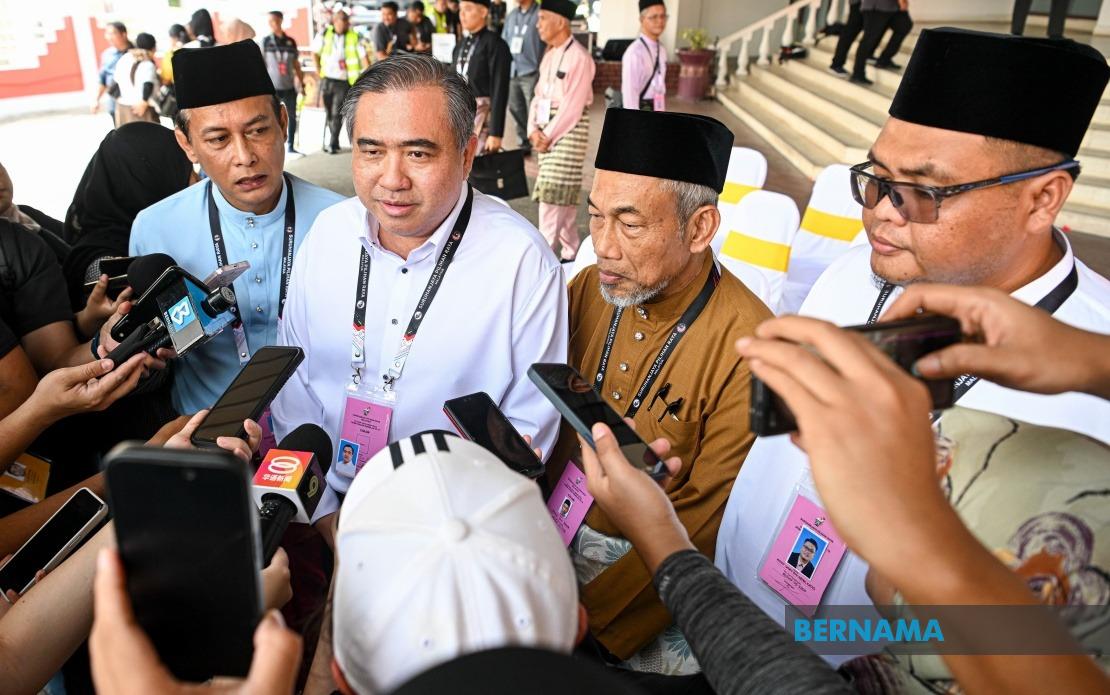
The Chennah state seat represents a strategic battleground in Pakatan Harapan's campaign to secure a fresh mandate to govern Negeri Sembilan, according to incumbent Transport Minister Anthony Loke, who underscored its significance alongside three other constituencies within the broader Jelebu parliamentary area during nomination proceedings held at Dewan Besar Kuala Klawang.
Loke's emphasis on Chennah reflects the coalition's recognition that specific electoral hotspots will determine whether the ruling coalition can extend its tenure beyond two consecutive terms in the state administration. The Transport Minister framed the upcoming contest as a straightforward two-way race, projecting confidence rooted in what PH characterizes as demonstrable governance achievements spanning the past six years since the 2018 political watershed.
The government's development record and service delivery form the cornerstone of PH's electoral argument for Negeri Sembilan. Party strategists have evidently calculated that voter satisfaction with infrastructure improvements, administrative efficiency, and policy initiatives across the state provides sufficient foundation to persuade electors to renew their confidence in the coalition's stewardship.
Historical precedent amplifies Chennah's electoral importance within the Jelebu parliamentary zone. During the 2018 general election, both Chennah and Kelawang state constituencies delivered critical support that enabled PH to first secure sufficient seats for government formation in Negeri Sembilan. This historical correlation between these specific seat victories and overall state control means that losing either would significantly complicate coalition prospects for maintaining the executive.
The straight contest format announced by Jelebu Parliamentary returning officer Abdul Rahim A Aziz sets up a direct engagement between Loke and Barisan Nasional nominee Siow Kong Choon. This binary matchup eliminates potential vote-splitting dynamics that might otherwise fragment the anti-incumbent vote, creating a clearer test of voter sentiment between the ruling coalition and the main opposition bloc.
For Malaysian voters in peninsular states particularly, the Negeri Sembilan contest carries implications extending beyond the state's 2.8 million population. Results here will signal regional trends regarding voter appetite for continuity versus change, offering early indicators ahead of any potential federal elections. The constituency dynamics observed in Jelebu may echo across similar territories where PH holds slender majorities built on specific swing constituencies.
Loke's public identification of Chennah as pivotal arguably represents tactically candid communication, essentially acknowledging to both party workers and observers that PH cannot afford to lose this seat without facing substantially reduced prospects for overall state control. Such transparency, while potentially energizing party machinery to concentrate resources here, also signals that opposition strategists will view Chennah as a priority battleground warranting intensive campaigning.
The Transport Minister's governing record in his ministerial portfolio provides both assets and potential vulnerabilities in his personal candidacy within Chennah. His presence in the federal cabinet suggests that voters here see him as an important conduit for channelling state-level concerns to the national government. Simultaneously, any public dissatisfaction with federal transportation policy could generate secondary effects impacting his local electoral performance.
Negeri Sembilan's political complexion matters considerably within peninsular Malaysian politics given the state's swing constituency status. Unlike strongly entrenched states, Negeri Sembilan remains genuinely competitive territory where both PH and BN mount serious campaigns reflecting realistic victory prospects for either side. The state's historical tendency to shift allegiances makes careful constituency-level analysis vital for understanding shifting voter preferences.
The emphasis on Chennah's role within Jelebu parliamentary zone also illuminates how state-level politics increasingly turns on specific geographic clusters rather than monolithic swings across entire constituencies. Loke's strategic framing suggests that PH's internal analysis has identified certain state seats as disproportionately influential in determining which coalition forms government, allowing more focused resource allocation than would be possible if treating all constituencies equally.
PH's two-term tenure provides incumbent advantage through demonstrated administrative continuity, though such benefit carries inverse risk if voters perceive governance complacency or believe alternative leadership merits a trial. In Chennah specifically, voter willingness to reaffirm PH dominance will likely hinge on tangible local development outcomes, service delivery responsiveness, and whether Siow Kong Choon presents a compelling alternative vision sufficiently attractive to swing decisive numbers of persuadable voters.
The electoral mathematics confronting PH in Negeri Sembilan demand not merely plurality support but specific geographic distribution of winning margins. Concentrations of support in urban areas prove insufficient without adequate performance across rural and peri-urban constituencies. Chennah's identity as one of four priority seats suggests sophisticated analysis indicating that these particular constituencies function as bellwethers for broader state-level sentiment.

