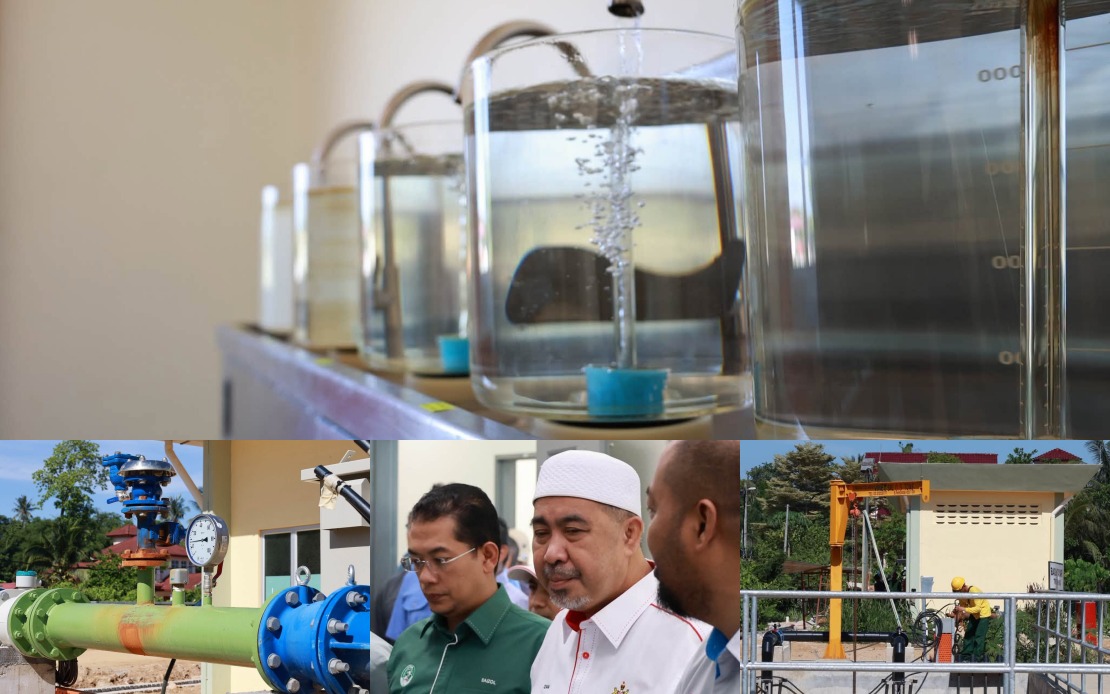
Kelantan is poised to unlock a major expansion of its water infrastructure when the Chicha 2 Water Treatment Plant becomes operational this September. The facility, located in Pasir Hor near Kota Bharu, represents a significant step forward in addressing the northeastern state's water security challenges, which have plagued residents and businesses for years. According to Datuk Dr Izani Husin, chairman of the State Public Works, Infrastructure, Water and Rural Development Committee, the project has reached 97 per cent completion and is on track to commence supply operations within the stipulated timeframe.
The RM54.98 million project, which began construction in 2024, is engineered to deliver 20 million litres of treated water daily—a substantial boost to current supply capacity in the region. The plant will serve communities across Pasir Hor, Telipot, Kota Seribong, Mulong and Tunjong, directly benefitting more than 13,000 active consumers. Beyond these immediate users, the completion of Chicha 2 holds equally important implications for thousands of residents currently without water access: approximately 10,000 inactive consumer accounts in the area are expected to be reactivated once the treatment facility goes live, effectively doubling the water service footprint in this part of Kelantan.
The technical approach employed at Chicha 2 underscores a sophisticated understanding of the state's hydrogeological conditions. The plant harnesses groundwater accessed through a 100-metre-deep excavation, then processes it through an aeration system—a method that removes dissolved gases and oxidises impurities to produce high-quality drinking water. Dr Izani emphasised that this aeration-based treatment represents the first installation of its kind in Kelantan and demonstrates innovation within the state's water sector. The methodology's proven effectiveness suggests it could become a blueprint for future treatment plants across the state, potentially accelerating solutions to persistent water shortages.
Kelantan's water crisis has deeper structural roots than simple supply deficits. The state battles a non-revenue water rate exceeding 50 per cent, meaning more than half of treated water is lost before reaching consumers. This staggering loss stems from multiple infrastructure challenges: ageing pipes corroded by decades of use, underground pipe bursts triggered by soil subsidence and ground shifts, and widespread water meter damage that prevents accurate measurement and billing. These systemic issues mean that even when water treatment capacity is increased, significant volumes are wasted in the distribution network. Addressing this problem requires parallel investment in pipe replacement and network rehabilitation alongside new treatment facilities.
The state government has acknowledged the urgency and scale of these challenges by committing to comprehensive resolution by 2030. This ten-year timeline reflects the magnitude of work required across multiple fronts simultaneously. Rather than attempting an immediate overhaul, which would be economically and logistically unfeasible, authorities plan a phased approach that sequences projects strategically. The Chicha 2 plant represents one component within a broader portfolio of major infrastructure initiatives and additional water treatment plants slated for development across Kelantan.
For Malaysian consumers accustomed to reliable piped water supply in urban centres, Kelantan's struggles present a stark reminder of regional disparity in water service quality. Parts of the state experience acute water shortages during dry seasons and frequent supply interruptions even during wet months. The situation has spawned entire cottage industries around water storage and alternative supply, placing additional financial burden on households and businesses. Resolving these challenges carries implications beyond water security alone—it directly affects public health outcomes, industrial productivity, and the state's attractiveness to investors and skilled workers.
The specific geography and hydrogeology of Kelantan further complicate water management. Unlike states with access to abundant surface water from major rivers or reservoirs, Kelantan's reliance on groundwater requires careful extraction planning to avoid depleting aquifers. The 100-metre depth specification for Chicha 2's borewells indicates the plant is accessing deeper, more stable aquifer layers—a strategy that balances immediate needs against long-term sustainability. However, groundwater-dependent systems require ongoing monitoring to ensure extraction rates remain within renewable limits.
For Kelantan residents and businesses, September's commencement of Chicha 2 operations will bring tangible improvement to daily life. Those currently without water access will gain the ability to maintain basic hygiene, water livestock, irrigate gardens, and support small-scale commercial activities. For the 10,000 reactivated accounts, reconnection to the formal water supply network represents a shift from informal, often contaminated private sources back to regulated, treated water with health safeguards. Service providers like restaurants, laundries, and food processing facilities will benefit from more predictable supply, supporting economic activity.
The broader context of Malaysia's water sector development suggests that Kelantan's experience, while acute, reflects challenges common across several states lacking modern water infrastructure. The country's rush to industrialise and urbanise during past decades concentrated infrastructure investment in economic heartlands, leaving peripheral regions with ageing systems designed for smaller populations. Chicha 2 and similar projects represent belated but necessary corrections to these historical imbalances.
Dr Izani's appeal for public patience reflects the political challenge of managing expectations during extended infrastructure development cycles. Residents accustomed to water scarcity may view promises of 2030 completion dates with scepticism, particularly given historical delays in Malaysian infrastructure projects. Building trust requires transparent communication about progress milestones, honest acknowledgment of challenges, and visible delivery of completed phases. The near-completion of Chicha 2 provides an opportunity to demonstrate commitment and rebuild confidence in the state's capacity to address systemic problems.
Looking beyond Kelantan, the Chicha 2 project illustrates broader lessons for Malaysia's water sector transformation. Climate variability, ageing infrastructure, population growth, and industrial demand collectively strain water resources nationwide. States must simultaneously expand treatment capacity, rehabilitate distribution networks, reduce non-revenue losses, and ensure environmental sustainability. The aeration technology pioneered at Chicha 2, if successfully deployed across multiple facilities, could become a valuable tool in Malaysia's water security toolkit.
The September launch of the Chicha 2 Water Treatment Plant marks a measurable step toward resolving Kelantan's water challenges, but it represents the beginning rather than the completion of necessary reforms. Sustained investment in network rehabilitation, continued technological innovation, and disciplined project implementation across the broader 2030 timeline will ultimately determine whether the state achieves water security. For now, residents awaiting improved supply have concrete progress to point to and a specific date to anticipate.

