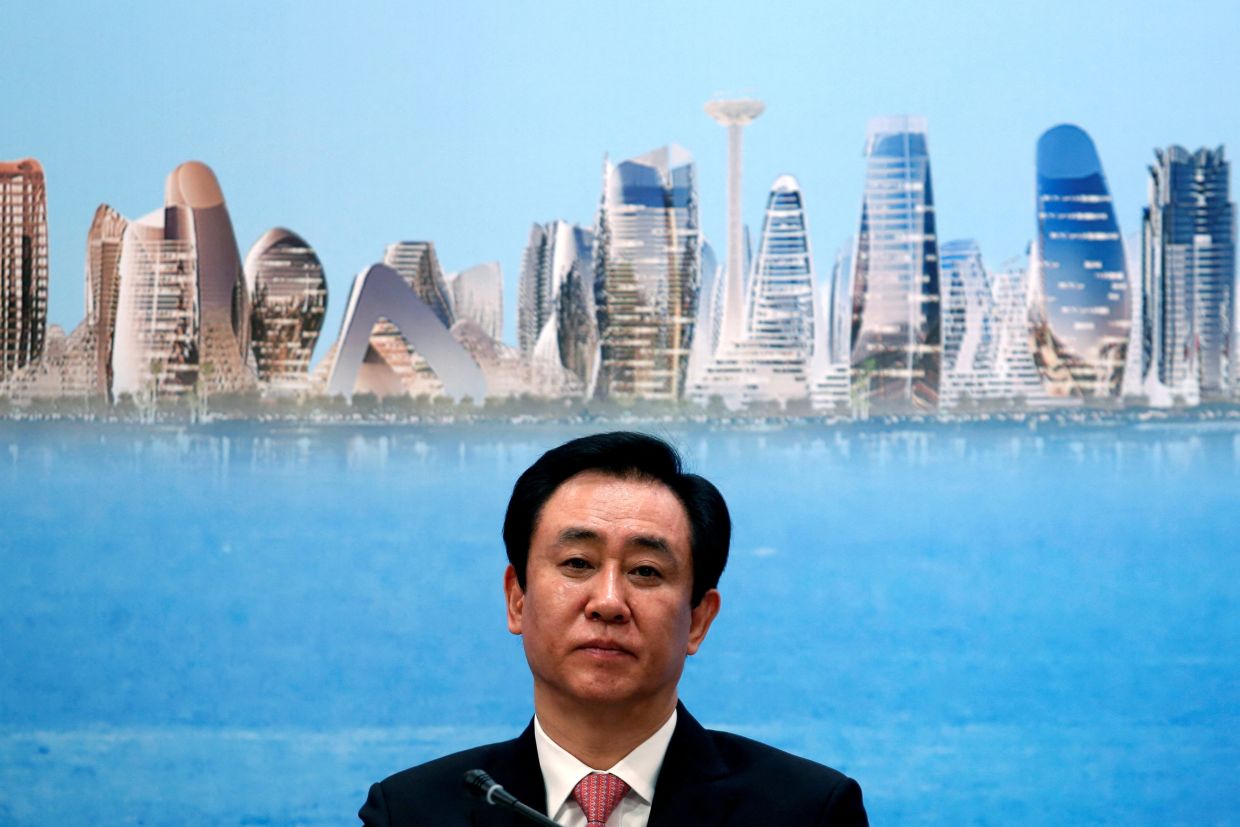
Hui Ka Yan, the man who built China Evergrande Group into the world's most heavily indebted property developer before its spectacular collapse, has been sentenced to life imprisonment by a Shenzhen court. The 67-year-old founder, once considered Asia's wealthiest individual, received the verdict on Thursday following guilty pleas to eight charges spanning misuse of funds, fraudulent fundraising, illegal deposit-taking, unlicensed lending, securities fraud, and bribery. The sentence included the confiscation of all his personal assets, drawing an extraordinary arc from rural poverty to billionaire status to lifetime incarceration.
The Evergrande debacle represents one of the most consequential corporate failures in modern history, with ripple effects that extend far beyond China's borders and continue reshaping the global financial landscape. The developer's struggles with over $300 billion in liabilities have persisted for five years, fundamentally exposing weaknesses in China's property sector that economists widely blame for dampening growth across the world's second-largest economy. This sentencing represents a symbolic but limited form of closure for millions of Chinese investors and international creditors who have suffered substantial losses.
Hui's journey from obscurity to the top of Asia's wealth rankings underscores both the extraordinary opportunities and systemic risks embedded in China's real estate boom. Originally trained as a steel technician and raised by his grandmother in a poor rural village in Henan province, he founded Evergrande in 1996 and transformed it through aggressive debt accumulation into the nation's largest property developer by contracted sales. By 2017, Forbes calculated his personal net worth at $45.3 billion, making him the wealthiest person across Asia and symbolizing the wealth creation possibilities in China's economic transformation.
The court's statement emphasised the gravity of crimes perpetrated through Evergrande and its main subsidiary Hengda Real Estate, describing them as involving "particularly huge amounts" with "egregious circumstances" that "caused particularly significant economic losses and caused particularly serious social harm." Beyond Hui's life sentence, courts handed down sentences ranging from six to eighteen years to five other senior executives, with state media reporting that fifty-six individuals connected to Evergrande received criminal sentences on the same day. The developer itself faced a combined fine exceeding 15 billion yuan ($2.31 billion).
The human cost underlying these legal outcomes cannot be overstated. Evergrande's catastrophic failure to repay billions of dollars locked into wealth-management products triggered nationwide protests that authorities recognized as threatening social stability. Many Chinese households of modest means had invested retirement savings and property down payments into these schemes, believing they were tapping into the developer's seemingly invincible growth trajectory. Social media commentary from affected homeowners reflected a mixture of frustration and despair, with residents questioning whether criminal penalties truly address their losses and cynically noting that imprisonment might paradoxically protect Hui from physical retribution by desperate investors.
The practical mechanics of recovering creditor losses remain deeply problematic despite this sentencing. A Hong Kong court authorized Evergrande's liquidation in 2024, and the Hong Kong Stock Exchange delisted the company the previous year, formally terminating its public status after an tumultuous descent from flagship status. Yet the liquidation process has proceeded at what administrators describe as a glacial pace, with only approximately $255 million in assets monetized as of August 2024 against outstanding creditor claims totalling $45 billion. This vast gap between liabilities and recoverable value means even aggressive asset seizure provides minimal compensation to those holding claims against the enterprise.
International recovery efforts face additional complications as liquidators pursue court action to freeze offshore assets held by Hui and his former spouse. These cross-border legal battles specifically target roughly $6 billion in dividends and executive compensation that flowed to the founder and other senior officials during the company's peak years, funds that liquidators argue should be recovered for distribution to creditors. Simultaneously, China's securities regulator concluded a separate investigation in 2024 that produced a $6.6 million fine against Hui and a lifetime ban from participating in securities markets, based on findings that Evergrande's flagship unit had systematically inflated financial results and engaged in securities fraud.
The ramifications of Evergrande's failure extend throughout Southeast Asia and beyond, affecting regional economies through multiple transmission channels. Chinese property developers that expanded aggressively into Southeast Asian markets borrowed substantially using Evergrande's growth model as validation, while international investment funds with significant Evergrande exposure suffered portfolio damage that reverberated through global financial networks. Malaysian investors with direct or indirect exposure through funds or financial products face losses, while Malaysian developers and construction firms that supplied materials or services to Evergrande projects encountered payment defaults.
This case delivers pointed lessons about moral hazard and regulatory gaps that remain relevant for policymakers across the region. Evergrande's rise depended on continuous access to both domestic and offshore debt markets, supported by widespread assumptions about state-backed protection and consistent growth. The developer's executives extracted substantial personal wealth during boom years through dividend payments and compensation structures that received implicit approval from oversight bodies. When the model inevitably fractured under the weight of overextension, ordinary depositors bore the overwhelming share of losses while top management faced prosecution only years later.
The property sector crisis that Evergrande epitomizes continues constraining China's economic performance and casting shadows across regional development. Subsequent rounds of government support for Chinese real estate have produced only modest stabilization, with completion rates remaining depressed and consumer confidence in property investments substantially eroded. This persistent weakness creates ongoing headwinds for suppliers of building materials and services across Southeast Asia, including Malaysia, where exports to Chinese construction sectors have declined materially.
For foreign and domestic creditors holding claims against Evergrande, Hui's life sentence provides limited practical benefit despite its symbolic significance. Creditor recoveries will remain determined by the glacially-paced liquidation process rather than criminal penalties, meaning that investors who committed funds to Evergrande bonds or wealth products will likely recover only a fraction of their principal. The broader question of whether criminal accountability can meaningfully address systemic governance failures in property development remains contested among Chinese policymakers and international observers.
Moving forward, regulators across Asia are grappling with how to strengthen oversight mechanisms to prevent similar concentrated vulnerabilities in real estate finance. Malaysia's own property market, while scaled differently than China's, faces scrutiny regarding overleveraged developers and deposit-taking structures that lack transparency. Hui's conviction and imprisonment, while necessary for justice, ultimately illuminates gaps in real-time supervision that permitted the accumulation of $300 billion in liabilities and the systematic defrauding of millions of small investors across years of regulatory blindness.

