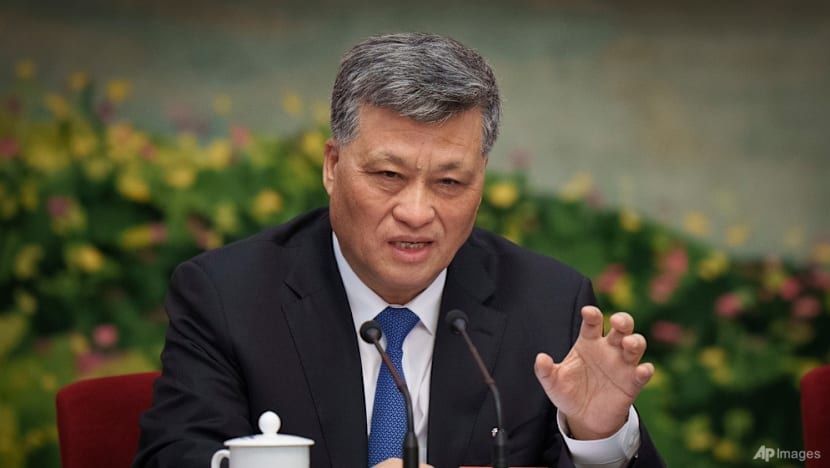
China's ruling Communist Party has taken decisive action against one of its most senior figures, expelling Ma Xingrui from its ranks and stripping him of all official positions following a comprehensive corruption investigation. The 66-year-old former official, who held membership in the Politburo—the party's paramount decision-making body chaired by President Xi Jinping—faces a damaging catalogue of misconduct allegations that the party's anti-corruption apparatus found sufficiently grave to warrant his complete removal from power structures.
Ma's expulsion, officially approved by the Politburo on Tuesday, represents a watershed moment in Xi Jinping's sustained anti-corruption campaign, which has served both as a genuine accountability mechanism and as a consolidation tool for presidential authority. The formal investigation into Ma had commenced in April, setting in motion the bureaucratic machinery that would ultimately lead to his downfall. State news agency Xinhua detailed the findings of the party's Central Commission for Discipline Inspection, the anti-corruption watchdog tasked with policing Communist Party members' conduct.
The roster of allegations against Ma reveals a pattern of personal enrichment and abuse of official position across multiple dimensions. Investigations uncovered evidence that Ma had manipulated real estate transactions to benefit his family members, arranging property purchases at prices substantially below prevailing market rates—a classic form of hidden bribery particularly prevalent among Chinese officials. Beyond these financial irregularities, the anti-corruption findings documented involvement in transactional sexual relationships, described in party terminology as "power-for-sex and money-for-sex transactions," indicating exchanges of favours or cash for sexual services.
Further compounding these personal misconduct charges, investigators found that Ma had permitted family members to leverage his political influence for commercial advantage, enabling them to accumulate considerable wealth through business dealings that would not have materialised without access to his official authority. The scope of his illicit enrichment extended to accepting substantial sums of money and valuable goods in exchange for providing business assistance, facilitating major construction contracts, and securing promotional opportunities for others seeking advancement within government and party hierarchies. The party's assessment characterized his transgressions as "particularly serious," language reserved for the most egregious violations of party discipline.
Ma's tenure as the paramount authority in Xinjiang, stretching from 2021 until 2025, placed him at the helm during a period of intense geopolitical scrutiny regarding Beijing's governance of the vast northwestern region. His jurisdiction encompassed implementation of policies that have generated international controversy and condemnation from human rights bodies worldwide. The region's history preceding his appointment involved cycles of violence and instability, with authorities in Beijing attributing deadly civilian attacks occurring through the mid-2010s to armed separatist and Islamist organizations operating among the region's populations.
Following these earlier disturbances, Chinese central authorities instituted comprehensive security measures characterised as counter-terrorism operations, though international observers have raised fundamental questions about their scope, methodology and impact on civilian populations. The crackdown has disproportionately affected Xinjiang's Uyghur Muslim inhabitants, who represent the region's largest ethnic minority. Chinese officials have justified the intensive security apparatus as necessary counter-terrorism work, while maintaining that policies serve developmental and integration objectives benefiting all populations under their administration.
This official narrative has encountered sustained resistance from international human rights organizations, which have issued detailed documentation alleging systematic violations amounting to persecution. The scrutiny intensified significantly following a 2022 investigation by Michelle Bachelet, then serving as the United Nations high commissioner for human rights, whose report raised the possibility that Chinese practices in Xinjiang could constitute "crimes against humanity" under international legal frameworks. Bachelet's findings, based on extensive research and testimony, suggested that the scale and character of restrictions placed on Uyghur populations merited investigation under the most serious category of international crimes.
Ma's removal from power occurs within this contested geopolitical context, though party announcements have focused exclusively on personal corruption rather than addressing governance questions related to Xinjiang policy implementation during his tenure. His expulsion nonetheless signals that Xi Jinping's leadership continues prioritizing discipline among top officials, particularly those overseeing sensitive regions or portfolios. The anti-corruption campaign, now more than a decade in progress, has toppled numerous high-ranking figures and reshaped power distributions throughout party and state structures.
For Malaysia and other Southeast Asian nations, developments within China's highest echelons warrant close attention given Beijing's outsized economic and geopolitical influence throughout the region. Transitions within Chinese leadership affect bilateral relationships, investment flows, infrastructure initiatives, and strategic calculations across multiple domains. Ma's downfall underscores both the opaque nature of Communist Party succession mechanisms and the continued centralization of authority under Xi Jinping, factors that observers throughout Asia monitor for implications regarding China's future direction and regional behaviour.

