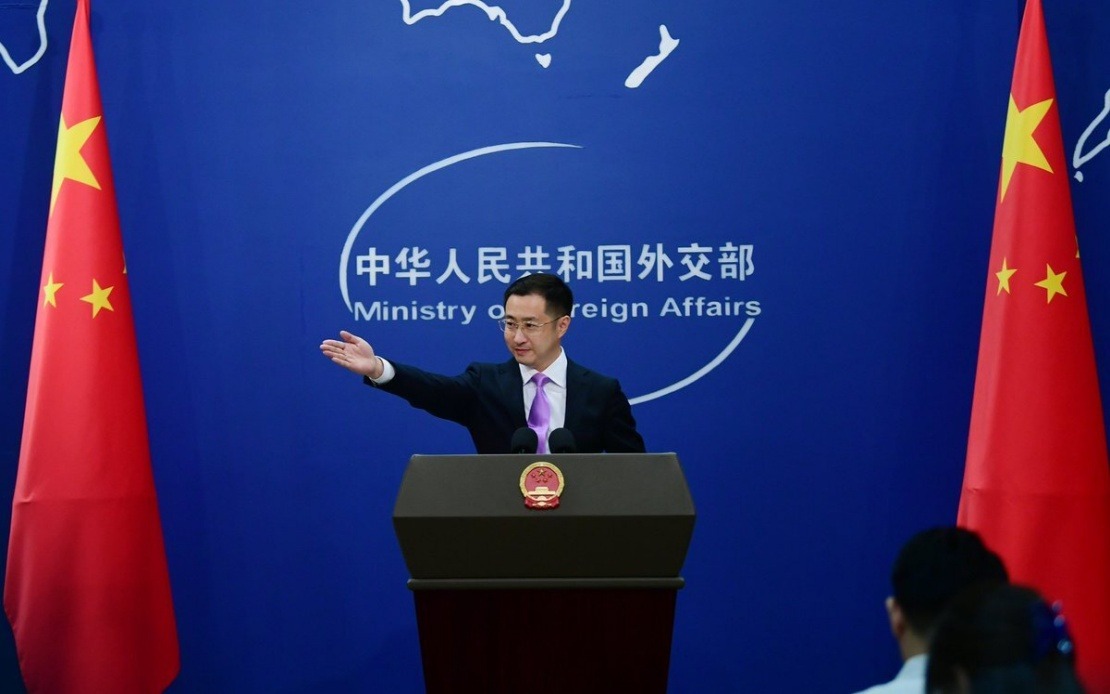
China's Foreign Ministry has formally acknowledged Malaysian Prime Minister Datuk Seri Anwar Ibrahim's recent statements affirming Malaysia's commitment to the one-China principle, signalling Beijing's satisfaction with Kuala Lumpur's diplomatic positioning on the sensitive Taiwan question. The ministry's public commendation, posted through official channels on Wednesday, underscores how Beijing closely monitors statements from Southeast Asian leaders on this core sovereignty issue and uses positive diplomatic messaging to reinforce regional alignment with Chinese policy objectives.
In his recent remarks to international media, Anwar Ibrahim stated unequivocally that Taiwan constitutes part of China, framing the position as a universally acknowledged reality rather than a contested political stance. The Malaysian Prime Minister's characterisation of this as an accepted principle across the international community reflects Malaysia's longstanding diplomatic position, though his explicit public articulation carries particular weight given Malaysia's significant regional influence and its careful balancing act between major powers.
Chinese Foreign Ministry spokesperson Lin Jian elaborated on Beijing's response during a regular press briefing in the capital, emphasising that supporting the one-China principle aligns with both historical inevitability and moral correctness. Lin's framing presents China's reunification not as a political goal subject to negotiation, but as an unstoppable process that reflects deeper currents of history and justice. This rhetorical positioning attempts to elevate the issue beyond conventional diplomacy into the realm of civilisational destiny, a strategy Beijing frequently employs when discussing Taiwan with international audiences.
The explicit declaration that Taiwan constitutes an inalienable part of Chinese territory represents Beijing's foundational position, one that it maintains with unwavering consistency across all diplomatic interactions. For Malaysian policymakers, acknowledging this principle has become virtually obligatory in formal relations with China, reflecting both the historical one-China policy that Malaysia adopted upon establishing diplomatic ties with the People's Republic in 1974 and the current geopolitical realities of the region.
Malaysia's continued reaffirmation of the one-China principle serves multiple strategic functions within its broader foreign policy framework. The country maintains complex relationships across the Indo-Pacific region, including with the United States and its allies, making explicit statements on Taiwan a delicate matter requiring careful calibration. However, Malaysia's economic interdependence with China and Beijing's role as a major trading partner and investment source create structural incentives for maintaining harmonious relations and avoiding positions perceived as challenging to Chinese core interests.
Anwar Ibrahim's public statements on this matter reflect the pragmatic approach that has characterised Malaysian diplomacy under his leadership. Rather than attempting to maintain ambiguity or deflect questions, the Prime Minister provides clear, affirmative responses that satisfy Beijing's expectations while remaining consistent with Malaysia's established diplomatic record. This straightforward approach contrasts with some other regional leaders who attempt to navigate these waters with greater rhetorical complexity.
Beijing's public appreciation of Anwar's remarks serves purposes beyond simple diplomatic courtesy. By highlighting Malaysia's support, China reinforces the notion that commitment to the one-China principle represents the mainstream international position, leveraging Malaysia's credibility as a significant Southeast Asian democracy and Muslim-majority nation. Such endorsements become valuable in Beijing's broader international narrative-building around Taiwan, particularly as China seeks to demonstrate regional consensus on this issue.
The timing and manner of China's response also reflects the premium Beijing places on managing regional perceptions of its intentions. Rather than issuing stern warnings or confrontational statements about Taiwan, the ministry chose to celebrate Malaysian support publicly, projecting an image of Beijing as a beneficiary of voluntary international agreement rather than a power seeking to impose its will. This softer diplomatic approach proves effective in maintaining relationships with countries like Malaysia that value both stability with China and operational autonomy in foreign policy.
For Malaysia specifically, the one-China principle represents a foundational element of its diplomatic architecture that cannot reasonably be challenged without creating fundamental ruptures in bilateral relations with Beijing. Malaysian officials have therefore made the strategic choice to affirm this position consistently and without equivocation, recognising that attempts at ambiguity would likely generate criticism rather than provide diplomatic cover. Anwar Ibrahim's approach of providing straightforward public affirmations aligns with this established pattern.
The broader regional context underscores why Beijing considers such statements particularly significant. Southeast Asia remains an arena where multiple powers compete for influence, and China views clear reaffirmations of the one-China principle from major regional voices as essential counterweights to perceived pressure from other actors. Malaysia's explicit positioning thus gains importance beyond bilateral relations, becoming part of the regional equilibrium that Beijing monitors and seeks to shape.
Looking forward, Malaysia's continued adherence to the one-China principle will likely remain a stable feature of its diplomatic relations with China, barring major shifts in either country's strategic position. The costs of deviation would far exceed any conceivable benefits for Malaysian policymakers, while the affirmation costs nothing in practical terms given Malaysia's established position. Beijing will continue to appreciate such statements as reinforcement of the international consensus that it seeks to construct around Taiwan, even as the underlying political and military tensions in the Taiwan Strait remain among the world's most consequential flashpoints.

