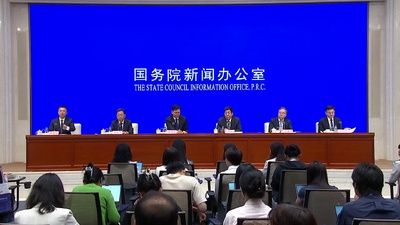
Beijing has moved swiftly to counter mounting international criticism over labour practices in Xinjiang, with Chen Ruifeng, the country's Minister of the National Ethnic Affairs Commission, issuing a forceful denial on Wednesday that any form of coerced employment exists in the western autonomous region. The statement represents an official rebuttal to sustained accusations from Western governments, human rights organisations, and independent media outlets, which have documented concerns about the treatment of Uyghur workers and other ethnic minorities in the region. Chen characterised such allegations as fundamentally misleading and without factual basis.
At the core of Beijing's defence lies its constitutional framework and legal architecture, which Chen emphasised explicitly forbids all varieties of forced labour across Chinese territory. This assertion underscores the government's position that domestic law already provides comprehensive safeguards against coercion in employment relationships. To reinforce this protection regime, China enacted the Law on Promoting Ethnic Unity and Progress on March 12, with implementation scheduled for July 1. According to official briefings, this legislation introduces enhanced protections specifically designed for workers moving between regions, establishing clearer mechanisms for legal assistance and rights protection that apply uniformly to labourers from all ethnic backgrounds.
The government's narrative frames cross-regional employment as an organic economic process driven by personal ambition rather than state compulsion. Chen asserted that Xinjiang residents seeking work outside their home region do so entirely of their own volition, motivated by the fundamental human desire to improve family circumstances and acquire new skills. This characterisation reflects Beijing's broader development narrative, which positions labour mobility as a pathway to individual prosperity and economic advancement. By emphasising voluntary participation, Chinese officials aim to distinguish their policy approach from the coercion narrative advanced by international critics.
To substantiate claims of voluntary participation, Chinese authorities have highlighted substantial economic metrics from the past five years. The Xinjiang region has reportedly generated more than 2.39 million new urban employment positions through state-directed initiatives, demonstrating what officials frame as genuine economic opportunity creation. The agricultural workforce has undertaken approximately 16.1 million work-related journeys outside their home towns during this period, indicating extensive cross-regional labour circulation. These figures, whether as voluntary movements or policy-driven outcomes, underscore the scale of employment activity occurring within the region.
Income growth patterns offer another dimension to Beijing's economic argument. Officials cite average annual increases of 5.3 per cent in urban per capita disposable income and 8.1 per cent in rural income over the same five-year timeframe. Such statistics, if accurate, would suggest material improvements in resident living standards and purchasing power. For Malaysian observers accustomed to tracking regional economic development, these growth rates appear competitive with broader Southeast Asian performance, potentially lending credibility to claims that employment initiatives have generated tangible welfare improvements.
The regulatory framework highlighted by Chen reveals Beijing's strategy of appearing to address international concerns through institutional design. By establishing what officials describe as a fair employment policy system coupled with labour rights protection mechanisms, Chinese authorities suggest they have constructed mechanisms capable of preventing abuse. The stated objective is to safeguard legal entitlements while maximising voluntary participation in employment activities. This institutional apparatus purportedly operates across all ethnic communities without discrimination, a claim that would address international concerns about targeting of specific groups.
However, the international context surrounding these assertions remains complex. Multiple jurisdictions, including the United States and European Union member states, have implemented trade restrictions and targeted sanctions based on alleged labour rights violations in Xinjiang. Independent investigations by journalist networks and human rights organisations have presented evidence suggesting state involvement in labour allocation and worker movement restrictions. This external scrutiny creates significant pressure on Beijing to justify its policies through economic statistics and legal declarations.
For Southeast Asian policymakers and business communities, this dispute carries practical implications. Several nations in the region maintain trade relationships with Xinjiang enterprises and may face pressure from Western trading partners to reassess supply chain vulnerabilities. Malaysian companies with connections to Chinese manufacturing or resource extraction operations could find themselves navigating heightened due diligence requirements regarding labour practices. The dispute underscores how geopolitical tensions over labour rights increasingly intersect with regional trade relationships and corporate governance standards.
Chen's framing of criticism as "extremely absurd and ridiculous" reflects Beijing's confidence in its legal framework while dismissing external perspectives as uninformed or ideologically motivated. This rhetorical stance signals limited flexibility in Chinese policy positions despite international pressure. The simultaneous introduction of new protective legislation suggests an attempt to demonstrate responsiveness to global labour standards without fundamentally altering employment practices or granting independent verification mechanisms.
The introduction of the Law on Promoting Ethnic Unity and Progress represents a tactical legislative response designed to address specific international criticism whilst maintaining central authority over labour management. By embedding worker protections within a broader law framed around ethnic harmony, Chinese authorities intertwine employment rights with national stability narratives, potentially complicating external efforts to isolate labour issues from broader geopolitical considerations. This legislative architecture enables Beijing to claim progressive policy measures whilst resisting external pressure for independent monitoring or verification.
The divergence between Beijing's official narrative and international allegations reflects fundamental disagreements about employment autonomy, state involvement in labour allocation, and adequate verification mechanisms. Rather than converging toward shared understanding, the two perspectives appear to have entrenched further, with each side interpreting evidence through opposing analytical frameworks. For Malaysia and its regional partners, navigating these geopolitical and commercial complexities will require careful assessment of available information and consideration of economic, legal, and ethical dimensions when evaluating supply chain participation.

