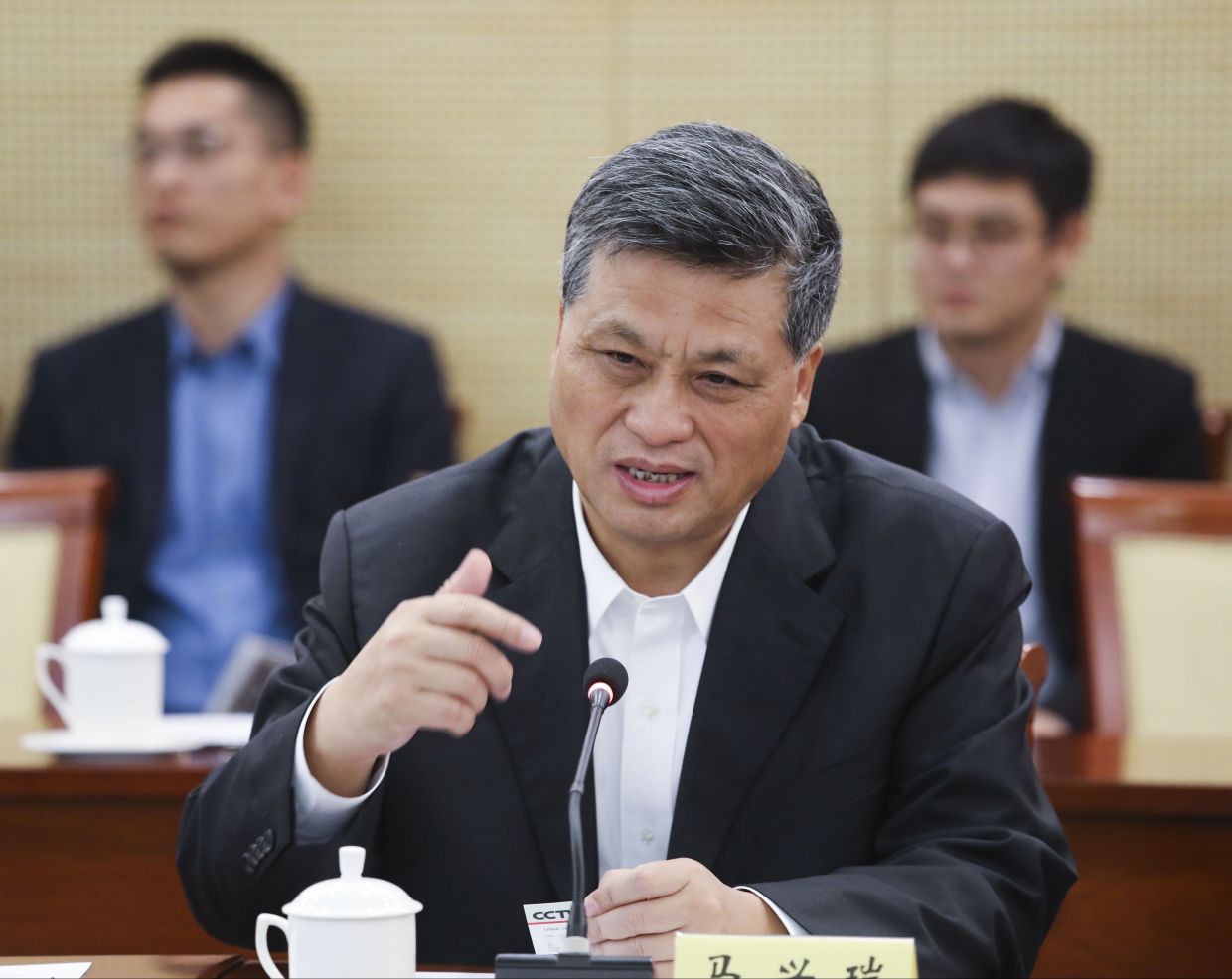
China's disciplinary authorities have formally concluded their investigation into Ma Xingrui, 67, the former party secretary of Xinjiang, concluding that he engaged in widespread corruption involving improper acceptance of gifts and money, facilitated discounted property purchases for relatives, and participated in illicit sexual transactions linked to his official position. The Politburo's approval of the Central Commission for Discipline Inspection's findings on June 30 represents a watershed moment for the country's anti-corruption campaign, positioning Ma as the third senior Politburo member to come under formal investigation during the current political term that commenced in 2022—an occurrence that has not taken place within living memory of the Chinese Communist Party's modern institutional history.
Ma's trajectory through the upper echelons of China's political structure illuminates both his influence and the breadth of alleged misconduct. Before his appointment to lead Xinjiang in 2021, he accumulated considerable experience across multiple high-profile positions. He initially served as deputy party secretary of Guangdong province beginning in 2013, following a stint at the Ministry of Industry and Information Technology. His administrative responsibilities expanded to encompass the role of party secretary in Shenzhen, subsequently advancing to provincial vice-governor and ultimately governor of Guangdong before his assignment to the sensitive western autonomous region. His selection to lead Xinjiang represented a significant political position, tasked with overseeing governance in a strategically important yet administratively challenging territory.
Prior to his administrative career, Ma developed substantial expertise in China's aerospace sector, serving as general manager of the China Aerospace Science and Technology Corporation between 2007 and 2013. During this period, he held dual leadership responsibilities as deputy commander-in-chief of China's manned space programme and commander-in-chief of the new-generation carrier rocket project. This technical background positioned him as a rare combination of aerospace specialist and political administrator, though investigators determined that his tenure in aerospace also exposed systemic vulnerabilities to corruption, with several former subordinates from this period subsequently caught in anti-corruption enforcement operations.
The allegations against Ma paint a detailed portrait of systematic abuse of official authority for personal enrichment. Beyond the acceptance of improper gifts and monetary payments, disciplinary authorities determined that Ma actively leveraged his governmental position to enable family members to purchase residential properties at substantially reduced prices—a practice that represents one of the most visible manifestations of elite privilege in contemporary China. The investigation uncovered what officials characterized as "power-for-sex and money-for-sex transactions," suggesting exploitation of his official status to facilitate sexual relationships contingent on transactional benefits. Most damning in the assessment of his misconduct was the determination that Ma cultivated what investigators termed "rampant corruption across his family," indicating that relatives systematically profited from his political influence.
Investigators determined that Ma systematically transformed public authority into a personal wealth-accumulation mechanism, instrumentalizing his governmental position to obtain business advantages, contract opportunities, and employment promotions for associates and relatives. Through various intermediaries and family members, he accumulated substantial undisclosed financial assets and property holdings, raising fundamental questions about the origins and magnitude of his personal wealth. The scope of his family's enrichment extended to supervisory failures on Ma's part—investigators concluded that he deliberately neglected to prevent or manage serious disciplinary violations and suspected criminal conduct perpetrated by officials under his supervision, thereby enabling broader institutional corruption within his administrative hierarchies.
Particularly troubling to authorities was Ma's conduct concerning personnel decisions and cadre appointments. He reportedly intervened inappropriately in positions of authority to secure advantages for third parties, including direct family members, during the critical process of selecting and promoting officials throughout his administrative jurisdictions. This dimension of his alleged misconduct strikes at institutional integrity, as manipulation of personnel systems undermines meritocratic advancement and creates networks of obligation and dependency within governance structures. The disciplinary commission further noted that Ma failed to provide truthful confessions during initial questioning, indicating either continued obstruction or inadequate remorse—a factor that typically influences severity of penalties within China's political accountability mechanisms.
The timing of Ma's continued misconduct proved particularly significant to investigators. His violations persisted well beyond the 18th party congress, the moment when President Xi Jinping launched his sweeping anti-corruption campaign and implemented stricter official conduct regulations. This continuation suggested either contempt for the leadership's stated priorities or confidence in his political protections—both interpretations reflect poorly on institutional discipline. The disciplinary commission characterized Ma's behavior as "extremely serious in nature" with "extremely bad influence," language that signals the authorities' assessment that his conduct represented not merely individual malfeasance but institutional contamination requiring severe remedial measures.
The investigation into Ma commenced formally in April following preliminary inquiries, with the Politburo's endorsement of the disciplinary commission's conclusions on June 30 effectively terminating his official status. Authorities announced plans to confiscate his ill-gotten gains and transfer Ma to the judiciary for criminal prosecution, positioning him for potential imprisonment and further sanctions. His removal reduces the Politburo to twenty-one members, reflecting the extraordinary turnover in China's elite political structure during the current term.
Ma's case exists within a broader pattern of accountability among officials with Xinjiang administrative experience. The investigation and removal of Chen Weijun, the former executive vice-chairman of Xinjiang, was announced in December, while Li Xu, former deputy commander of the Xinjiang Production and Construction Corps, became subject of investigation announced in January. This concentration of corruption cases among Xinjiang officials suggests either particularly severe institutional problems within that autonomous region's governance structure, or alternatively, heightened scrutiny and enforcement directed toward that territory's administrative apparatus.
The unprecedented frequency of Politburo member investigations during the current political term raises significant questions about institutional stability and factional dynamics within China's elite. Concurrent with Ma's investigation and the earlier expulsion of He Weidong, a former vice-chairman of the Central Military Commission removed in October, the party confronts simultaneous challenges in both civilian and military leadership. For Malaysian and Southeast Asian observers monitoring China's internal political developments, these cascading investigations signal either a thoroughgoing institutional cleansing or potential power consolidation struggles at the apex of Chinese governance. The implications extend beyond Beijing, potentially affecting China's regional posture, strategic decision-making, and diplomatic priorities during a period of significant geopolitical tension and realignment throughout Asia-Pacific.

