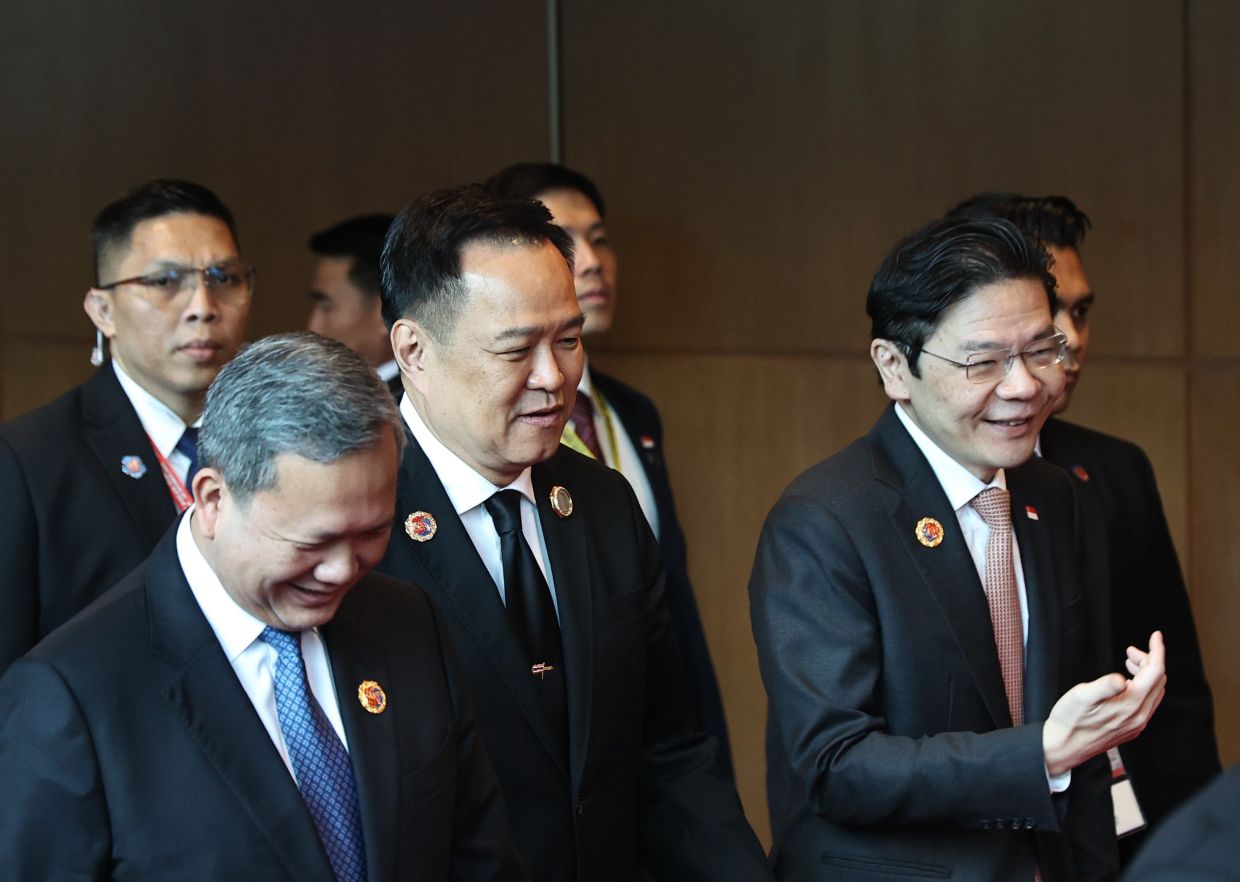
Regional tensions between Cambodia and Thailand along their shared frontier appear to be drawing China into a potential diplomatic role, with both neighbouring countries' leaders currently in Beijing and openly discussing the possibility of Chinese involvement in resolving the dispute. Prime Minister Hun Manet used his meeting with Chinese Premier Li Qiang on July 16 to provide an updated briefing on the border situation, marking one of the most significant high-level discussions Cambodia has formally held with China regarding the issue since hostilities intensified last year. Meanwhile, Thai Prime Minister Anutin Charnvirakul, also attending the same conference in the Chinese capital, indicated that Bangkok would not reject an offer of mediation from Beijing if the opportunity arose.
The simultaneous presence of both Southeast Asian leaders at China's 2026 World Artificial Intelligence Conference has fuelled growing speculation about Beijing's willingness to play a more active diplomatic role. Hun Manet used the occasion to underscore Phnom Penh's commitment to peaceful resolution, telling Li that Cambodia remains dedicated to settling the border question "peacefully, based on international law and in accordance with the conventions, treaties and existing agreements between Cambodia and Thailand." Beijing's response through its Premier reinforced the language of "ironclad friendship" that typically characterises the China-Cambodia relationship, signalling strong bilateral ties without explicitly endorsing a mediation mandate.
Thailand's diplomatic posture has been notably more cautious yet still receptive. Anutin's comments to the Thai media indicated that while Bangkok had not formally requested Chinese involvement, it was keeping all diplomatic channels open. "We have not asked China to mediate, but we are not closing the door if China wishes to help reduce tensions," he stated, before emphasising that Thailand's preference remained resolving differences through direct bilateral engagement with Phnom Penh. This carefully calibrated language reflects Thailand's desire to maintain flexibility without appearing to defer its sovereignty to Beijing or signal weakness in negotiations with Cambodia.
China's potential mediation role has deeper historical roots. Last year, Chinese Foreign Minister Wang Yi explicitly stated Beijing's willingness to support peaceful coexistence between the two countries during separate conversations with their respective foreign ministers at the Asean Foreign Ministers' Meeting. Wang emphasised China's commitment to regional stability and urged dialogue, effectively keeping the door open for a more expansive diplomatic engagement. Since that initial positioning, Beijing has not formally launched any mediation initiative but has hosted trilateral meetings with both nations and assisted in implementing ceasefire arrangements, demonstrating a pattern of behind-the-scenes engagement without formal mediation status.
The border dispute itself has simmered below the surface of major international attention despite periodic flare-ups that have caused casualties and displaced civilians from contested areas. Cambodia has pursued a strategy of broadening international involvement, welcoming Asean observer missions and leveraging international law mechanisms to support its negotiating position. This approach suggests that Phnom Penh sees value in engaging multiple stakeholders, including powerful external actors like China, to strengthen its diplomatic footing while maintaining the framework of peaceful resolution.
For Malaysia and other ASEAN members, China's potential deeper involvement in a bilateral Southeast Asian dispute carries significant implications. A successful Chinese mediation role could reshape regional diplomatic dynamics by establishing Beijing as an indispensable player in resolving intra-ASEAN conflicts. Conversely, if mediation falters or appears to favour one party, it could undermine ASEAN cohesion and reinforce perceptions that China leverages its economic and strategic weight to advance particular interests within the bloc. The question of how ASEAN as a collective body responds to third-party mediation in member-to-member disputes also matters for the organisation's future credibility and independence.
Neither Cambodia nor Thailand has formally requested Chinese mediation, and Beijing has stopped short of formally offering such a role. However, the careful diplomatic language from all three parties suggests an unfolding process rather than a settled arrangement. Hun Manet's personal briefing of Premier Li demonstrates Phnom Penh's effort to ensure its closest strategic partner remains fully informed and invested in the resolution process. This move reflects Cambodia's confidence in the China relationship while simultaneously attempting to activate Beijing's potential influence as a pressure point on Bangkok.
The absence of a scheduled bilateral meeting between Hun Manet and Anutin during their overlapping Beijing visits is notable, though not necessarily indicative of diplomatic hostility. Both leaders' simultaneous attendance at the WAIC indicates continued international engagement and suggests that despite border tensions, neither country has opted for complete isolationism. The focus on technology and artificial intelligence conferences, rather than security or military gatherings, also signals that both nations are attempting to move beyond the border dispute in their broader development agendas.
What remains uncertain is whether Beijing will ultimately formalise a mediation role or continue its current pattern of quiet facilitation. China has demonstrated considerable skill at maintaining flexibility in its regional diplomacy, offering support and infrastructure for dialogue without appearing to impose solutions. This approach allows Beijing to preserve relationships with both parties while avoiding the public commitment and potential failure risks associated with formal mediation. For regional observers, the real test will come if the Cambodia-Thailand dispute escalates significantly, forcing China to choose between maintaining its balancing act and taking a more definitive position that could alienate one or both parties.

