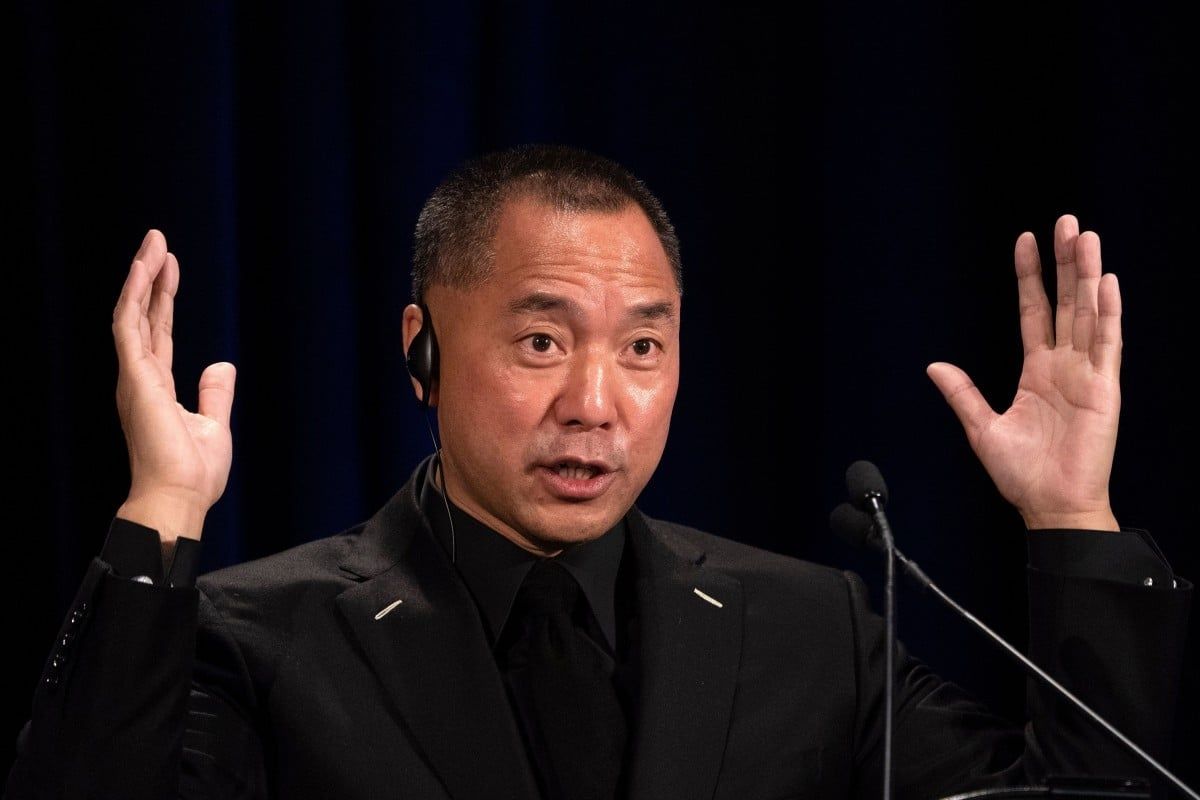
NEW YORK — A self-exiled Chinese billionaire who reinvented himself as a prominent democracy advocate and Communist Party critic was sentenced to 30 years in federal prison on Monday for orchestrating one of the largest fraud operations to target diaspora communities and political dissidents. Guo Wengui, who fled China a decade ago and became known for alleging corruption within Beijing's elite, exploited the trust of thousands of investors through a byzantine web of shell companies and fraudulent schemes that generated over US$1 billion in ill-gotten gains between 2018 and 2023.
Manhattan Federal Judge Analisa Torres handed down the lengthy sentence after hearing testimony from numerous victims whose losses ranged from their life savings to retirement funds. The judge characterised Guo's predatory conduct as particularly egregious because he specifically targeted people committed to democratic reform in China, weaponising their political aspirations to finance an extravagant lifestyle marked by penthouse apartments overlooking Central Park, luxury yachts, sports cars, and designer collections. Torres noted in her ruling that Guo "takes no responsibility for his actions" and has instead sought to intimidate and harass those who dared speak against him, a pattern prosecutors described as part of a broader strategy to maintain control over his victims and suppress dissent within his inner circle.
The sentencing capped a dramatic seven-week trial in which prosecutors presented evidence of Guo's systematic deception across multiple fraudulent ventures. His primary vehicles for swindling investors included GTV Media Group, a purportedly independent news organisation meant to challenge Beijing's media dominance; the Himalaya Farm Alliance, presented as an agricultural investment opportunity; and the Himalaya Exchange, promoted as a financial platform. Federal prosecutors successfully proved nine of twelve criminal charges, demonstrating how Guo leveraged his reputation as a persecuted dissident and articulate critic of the Communist Party to establish credibility with potential investors, many of whom were diaspora members seeking to contribute to anti-Beijing causes.
Guo's conviction and sentencing represent a significant rupture with his earlier position within American conservative political circles. Prior to his arrest three years ago without bail, he had cultivated close relationships with prominent figures including Steve Bannon, the former Trump strategist with whom he jointly announced a 2020 initiative ostensibly aimed at engineering regime change in China. These connections provided him with a veneer of legitimacy and access to influential networks that he exploited to attract investors. His membership at President Donald Trump's Mar-a-Lago golf club in Florida further enhanced his standing, allowing him to position himself as a serious political player rather than a common swindler.
During Monday's sentencing hearing, Guo displayed the defiant demeanour that has characterised his public persona, arriving at court in apparent physical distress and disputing prosecutors' characterisation of him as a malingerer. He claimed he had been taken to hospital that morning and suffered repeated nausea, though he offered no medical documentation to support these assertions. When given the opportunity to address the court, rather than expressing remorse or acknowledging the devastation his actions caused, Guo pivoted to discussing his purported mission against the Chinese Communist Party, asserting that his move to the United States had been motivated entirely by ideological opposition to Beijing. This demonstration of indifference to victim suffering reinforced the judge's assessment of his complete lack of contrition.
The human cost of Guo's scheme emerged vividly through victim testimony and written statements that Judge Torres reviewed before sentencing. Wei Chen, one of the victims who testified, described how the fraud had "destroyed my life" and that of her entire family. Letters from other victims painted a portrait of financial ruin, psychological trauma, fractured family relationships, and acute shame stemming from having invested in what they believed were principled anti-communist ventures. Many investors had liquidated retirement accounts, mortgaged homes, or depleted inheritance to participate in what Guo had presented as both financially rewarding and politically meaningful opportunities.
The judge ordered Guo to forfeit US$889 million in restitution, though prosecutors acknowledged that recovering these funds remains uncertain given the complexity of asset tracing and Guo's sophisticated financial structures. The sentencing also reflects judicial concern about patterns of harassment and intimidation. As Guo exited the courtroom following his conviction, supporters applauded and shouted encouragement, suggesting that despite the verdict, he retains a devoted following that views him as a martyr to anti-communist causes rather than a common criminal.
Guo's defence team mounted arguments centring on his alleged persecution by the Chinese government, claiming that his brother's emergence as the largest shareholder in one of China's major securities firms had made him a target for official retaliation. They presented evidence of physical scars and disfigurements they attributed to torture endured during previous detention in China, along with surgical repairs undertaken between 1993 and 2022. The defence characterised the fraud prosecution as a continuation of Beijing's campaign against him, arguing that a lengthy sentence would vindicate Chinese propaganda narratives about Guo being a dangerous criminal. They pointed to sentencing precedents in comparable financial fraud cases where defendants received substantially shorter prison terms of two to four years, framing the 30-year sentence as disproportionate punishment influenced by political considerations.
China's Ministry of Foreign Affairs issued a statement acknowledging the sentencing, emphasising that Guo remains wanted in China on charges including rape, kidnapping, and bribery—allegations that Guo has consistently denied as politically motivated fabrications. Beijing has maintained an Interpol Red Notice against him, the highest-level international alert requesting law enforcement cooperation for his arrest pending extradition. Chinese officials have long characterised Guo as a fugitive and fraud artist rather than a legitimate dissident, a narrative that the American conviction now reinforces despite the differing legal and political contexts separating the two systems.
For Southeast Asian observers, the Guo case offers cautionary lessons about the vulnerabilities of diaspora communities to sophisticated financial schemes that weaponise political legitimacy. Regional business communities and investment networks, particularly those with significant Chinese and Hong Kong populations, should strengthen due diligence protocols and investor protection mechanisms. The case also illuminates the complex intersection between genuine political asylum and financial predation—individuals fleeing legitimate persecution can simultaneously perpetrate serious crimes against vulnerable populations. Malaysian authorities and regional regulators have increasing incentives to monitor cross-border investment schemes that exploit anti-establishment narratives, particularly where operators claim political persecution as justification for opacity and accountability avoidance.

