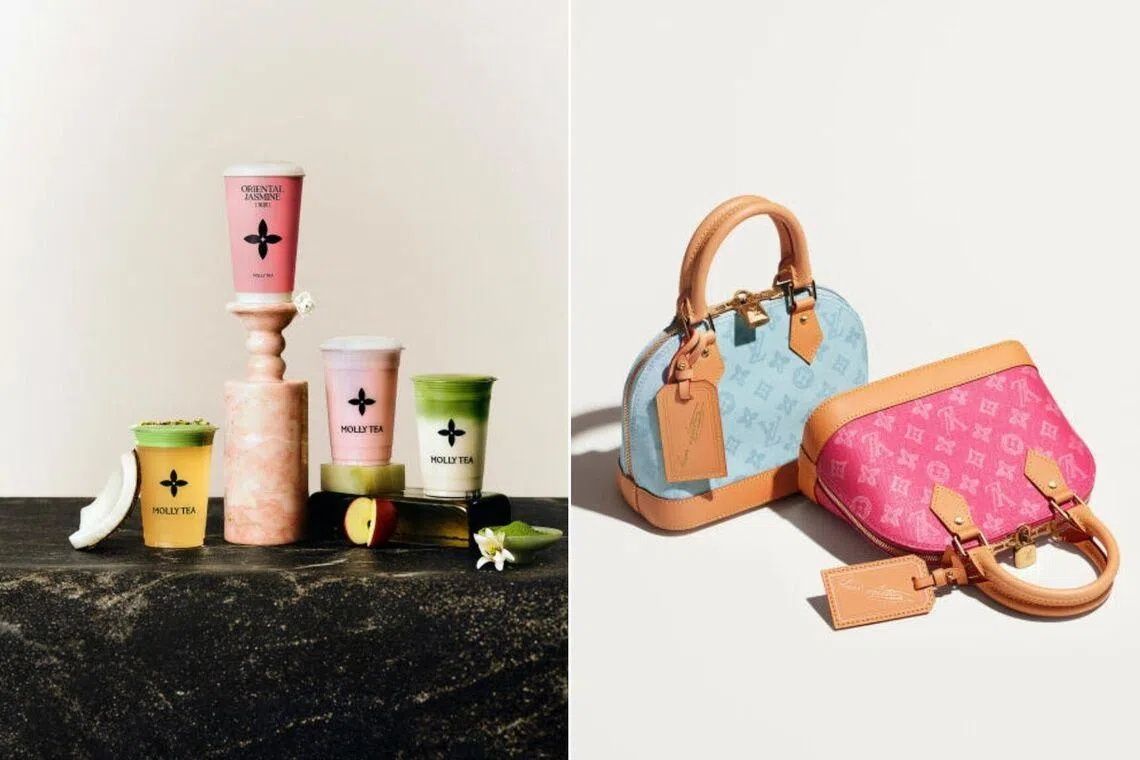
The Suzhou Intermediate People's Court in Jiangsu province has handed down a significant intellectual property ruling, ordering Molly Tea, a Shenzhen-based milk tea company, to pay 10.3 million yuan (US$1.5 million) to French luxury giant Louis Vuitton after finding trademark infringement. The judgment, delivered on June 29 following a lawsuit initiated by Louis Vuitton in May 2025, has reignited a contentious debate across China about the appropriate boundaries between protecting established intellectual property and permitting the use of traditional cultural elements in commercial branding.
The court determined that Molly Tea and a franchise outlet in Suzhou's Wuzhong district had infringed upon seven registered four-petal flower graphic trademarks belonging to the French luxury house. Beyond the substantial financial penalty, the milk tea chain must cease using the contested design and issue a formal public apology. The company has already signalled its intention to pursue an appeal to a higher court, indicating that the legal tussle is far from resolution and may ultimately test the boundaries of how Chinese courts interpret trademark law in culturally sensitive cases.
The trademark dispute centres on the visual similarity between Molly Tea's brand emblem—a four-petal flower design—and Louis Vuitton's internationally recognised monogram patterns that have become synonymous with the luxury brand's visual identity. Molly Tea began filing multiple trademark applications with the China National Intellectual Property Administration from March 2024 onwards, submitting designs featuring various floral motifs intended to cover restaurant and accommodation services, advertising, and convenience food sectors. However, most of these applications faced rejection, with only the trademark incorporating the Chinese characters for "Molly Tea" securing successful registration, suggesting that intellectual property examiners had already identified potential conflicts with pre-existing protected marks.
The ruling has generated unprecedented public engagement on Chinese social media platforms, reflecting broader societal concerns about intellectual property enforcement and cultural appropriation in commerce. A hashtag discussing "Louis Vuitton sues Molly Tea for 10.3 million yuan in damages" accumulated over 360 million views, while a related topic titled "Molly Tea's LV-like trademark invalidated" garnered more than 18.7 million reads. This volume of online discourse underscores how intellectual property disputes involving recognisable brands and culturally resonant symbols can capture public imagination and spark genuine philosophical questions about ownership and heritage.
Public opinion has proven remarkably divided, with commentators presenting competing interpretations of the case's merits and implications. Certain observers contend that Molly Tea's floral emblem bears striking visual resemblance to Louis Vuitton's signature pattern and therefore constitutes deliberate or negligent infringement designed to capitalise on brand recognition. Conversely, other participants in the online discussion argue that meaningful visual distinctions exist between the designs and that the two enterprises operate within fundamentally different market segments—luxury fashion versus casual beverage retail—thereby reducing the likelihood of consumer confusion. A third perspective, articulated by some netizens, challenges the originality of Louis Vuitton's pattern itself, proposing that the French house may have drawn inspiration from traditional Chinese cultural motifs without necessarily acquiring exclusive rights to such foundational design elements.
Kang Lixia, a partner at Beijing Standzer IP Firm, has outlined the legal framework governing potential appeals and the evidentiary requirements that will determine their success. She emphasised that either party dissatisfied with the court's judgment possesses the statutory right to appeal, though the outcome will hinge substantially upon whether the appellant can present convincing evidence demonstrating that its design possesses genuine originality and distinctiveness. Kang further noted that floral patterns and related motifs embedded within traditional Chinese culture constitute part of the broader public cultural domain and theoretically remain available for use by any applicant, suggesting a tension between universal cultural heritage principles and the protective mechanisms of modern trademark law.
However, China's Trademark Law operates according to a "first to file" principle that significantly advantages earlier applicants and complicates later efforts to register similar marks. When multiple parties seek trademark registration for identical or substantially similar designs covering the same or analogous product categories, the earliest applicant acquires exclusive trademark rights while subsequent filings face rejection. Kang highlighted a particularly consequential dimension of this framework: although Molly Tea and Louis Vuitton hold registrations in nominally different trademark classes, the French luxury brand's status as an earlier-registered and globally recognised mark entitles it to cross-class protection. This legal protection mechanism potentially extends Louis Vuitton's rights beyond the specific product categories in which it originally registered, creating formidable obstacles for later applicants attempting to register similar designs, even in unrelated commercial sectors.
Liu Bin, an intellectual property lawyer from Beijing Zhongwen Law Firm, has advocated for a balanced and rational analytical approach to the dispute while highlighting the genuine confusion that surrounds the proper treatment of traditional cultural patterns. Under applicable law, he explained, protection afforded to figurative marks does not require absolute identity between the disputed sign and the registered trademark; instead, courts focus primarily on whether ordinary consumers would likely experience confusion when encountering the two designs. Liu identified the central public puzzlement as revolving around how traditional Chinese cultural patterns should be appropriately safeguarded and deployed fairly across different commercial contexts. This represents perhaps the most philosophically challenging aspect of the dispute, as it forces society to reconcile competing principles: the intuition that traditional cultural heritage should remain accessible to all citizens and enterprises, versus the recognised necessity of protecting the commercial investments that businesses make when they employ such traditional elements to build brand recognition and market presence.
Liu further elaborated that intellectual property protection, when applied to culturally derived elements, ultimately protects not the raw cultural motif itself but rather the brand recognition and market reputation that companies construct through sustained commercial use and investment. Traditional and cultural elements should indeed remain available for broader use and continued cultural transmission, he argued, yet commercial enterprises simultaneously bear responsibility for ensuring that their trademark applications and market practices do not create consumer confusion or impermissibly replicate the distinctive marks of earlier registrants. This formulation attempts to navigate the fundamental tension in the case: preserving cultural heritage in the public domain while simultaneously protecting legitimate commercial interests in brand distinctiveness and preventing market deception.
For Malaysian and broader Southeast Asian observers, the Molly Tea decision carries implications that extend beyond the specific parties involved. As regional economies increasingly develop distinctive brands and commercial identities informed by local cultural traditions—whether in food and beverage, fashion, or other sectors—the applicable principles for balancing cultural heritage preservation with intellectual property protection become increasingly relevant. Courts across Southeast Asia may look to how Chinese jurisprudence resolves these tensions as guidance for their own trademark disputes involving culturally significant elements. The case also illustrates how rapid business expansion and aggressive trademark filing strategies can generate legal liability, even when enterprises operate in traditionally separate market segments.
The broader IP landscape in China and the region continues evolving as courts, legislators, and business practitioners grapple with cases that pit established international brands against emerging domestic competitors. Molly Tea's planned appeal may offer opportunities for higher courts to establish more refined precedents clarifying how traditional design elements can be incorporated into modern commercial branding without infringing established marks. Until those clarifications emerge, enterprises throughout Southeast Asia should approach trademark applications involving floral motifs, geometric patterns, and other design elements with particular caution, ensuring comprehensive searches of existing registrations and considering the established brands that may claim cross-class protection regardless of nominal category differences.

