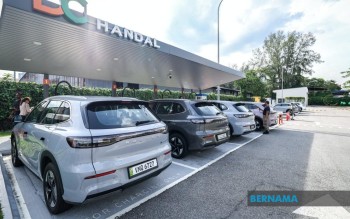
Malaysia's electric vehicle market stands on the cusp of significant expansion, with charging infrastructure emerging as a critical enabler of this growth trajectory. At the Global Automotive and Technology Expo (GATE 2026) held at the Malaysia International Trade and Exhibition Centre (MITEC) from August 26-28, Xi'an LINCHR New Energy Technology Co Ltd has highlighted a fundamental principle underpinning successful technology imports: localisation must precede deployment. The company's participation signals deepening Chinese involvement in Southeast Asia's EV infrastructure ecosystem, yet its leadership has offered a cautionary perspective on how such partnerships should unfold.
Yuan Qingmin, chairman of LINCHR, emphasised that electric vehicles and their supporting charging networks exist in symbiotic relationship. Bottlenecks in either domain inevitably constrain growth in the other, creating a chicken-and-egg dynamic that developing markets must navigate carefully. China's early adoption of both EVs and extensive charging infrastructure has generated substantial technological expertise, yet Yuan stressed that exporting this knowledge is not a straightforward copy-paste exercise. The transition requires deliberate adaptation to local environmental realities, market structures, and regulatory frameworks. For Malaysia, this distinction carries profound implications as the country positions itself as a regional EV hub over the coming three to five years.
LINCHR's collaboration with local manufacturer Swift Bridge Technologies Sdn Bhd exemplifies the cooperative model Yuan advocates. Rather than imposing complete turnkey solutions, the partnership encompasses a broad spectrum of mutual development: charging infrastructure standards, product design, technological innovation, and engineering specifications all emerge from joint deliberation. This approach acknowledges that Malaysian engineers and manufacturers possess irreplaceable understanding of local conditions, from grid characteristics to infrastructure capabilities to consumer behaviour patterns. The arrangement also distributes knowledge transfer bidirectionally, preventing the foreign partner from wielding disproportionate control over Malaysia's charging ecosystem.
Concrete examples underscore Yuan's philosophy. LINCHR has already modified its charging station designs specifically for Malaysia's tropical maritime climate. The company adopted oil-immersed insulation technology for printed circuit boards, substantially enhancing resistance to salt spray corrosion that would otherwise degrade equipment rapidly in Malaysia's hot and humid conditions. This seemingly technical adjustment represents a profound insight: Chinese charging stations designed for temperate or arid climates may functionally fail in equatorial environments within months, rendering imported technology economically wasteful and strategically counterproductive. Such refinements emerge only through sustained engagement with local partners who understand regional vulnerabilities.
Standardisation represents another dimension where localisation proves essential. LINCHR, Swift Bridge, and the Standards and Industrial Research Institute of Malaysia (SIRIM) formalised a tripartite cooperation agreement in March of the previous year, establishing frameworks for testing and certification standards suited to Malaysian conditions. Equipment testing laboratories have undergone upgrading to meet these standards, creating institutional capacity for ongoing quality assurance. This institutional approach prevents the scenario wherein Malaysian chargers technically function but lack compliance with national or regional standards, complicating interconnectivity across the charging network and creating potential liability issues for consumers and operators.
Yuan acknowledged that replicating Chinese technology wholesale, while potentially meeting minimum functional requirements, risks fundamental unsuitability for Malaysian market conditions. The temptation to pursue this path exists: wholesale technology transfer appears faster and cheaper than collaborative development. However, premature failures, safety concerns, and incompatibility with local infrastructure would ultimately impose far greater costs—both financial and reputational—than patient localisation processes. For a developing EV market seeking to establish consumer confidence and attract investment, early technological failures would prove particularly damaging.
LINCHR's credentials in this space carry substantial weight. The company commands more than 70 percent of China's market share in EV charging testing technology solutions, positioning it among the world's leading firms in this specialised domain. Yet Yuan recognises that this dominance in China does not automatically translate to international markets. Overseas expansion fundamentally requires technology transfer to capable local partners, coupled with sustained research and development activities rooted in understanding local conditions. This perspective contrasts sharply with certain multinational approaches that assume technological universality across diverse geographic contexts.
The role of government agencies, energy utilities, and industry operators becomes increasingly significant in this framework. GATE 2026 provided LINCHR with direct engagement opportunities across this stakeholder spectrum, facilitating conversations about infrastructure compatibility, grid integration, and strategic priorities for Malaysia's EV transition. These discussions prove invaluable for multinational firms seeking to position their technologies appropriately within the broader national strategy, rather than pursuing isolated commercial objectives disconnected from systemic considerations.
Looking toward Malaysia's medium-term future, Yuan highlighted an emerging technological frontier: the transformation of EVs from passive electricity consumers into active grid participants. As vehicle-to-grid technology matures and becomes integrated with increasingly intelligent charging infrastructure, EVs will discharge stored electricity back into the grid during peak demand periods, effectively functioning as distributed energy resources. This evolution carries profound implications for Malaysia's energy system, potentially mitigating grid strain and enhancing renewable energy integration. Yet realising this vision depends critically on charging infrastructure standards and protocols capable of managing bidirectional power flows—precisely the area where local adaptation and rigorous testing standards prove most consequential.
The convergence of these technological and organisational developments suggests that Malaysia's EV charging future will be shaped significantly by how effectively foreign expertise integrates with local knowledge and capability. LINCHR's emphasis on localisation over replication provides a template for other multinational firms considering market entry across Southeast Asia. As Malaysia's EV market accelerates over the coming years, the infrastructure supporting this transition will determine whether the nation establishes itself as a regional leader or remains dependent on imported solutions with limited local adaptation. The LINCHR-Swift Bridge partnership, supported by rigorous SIRIM-led standardisation, represents a potentially instructive model for balancing technological transfer with local ownership and adaptation.

