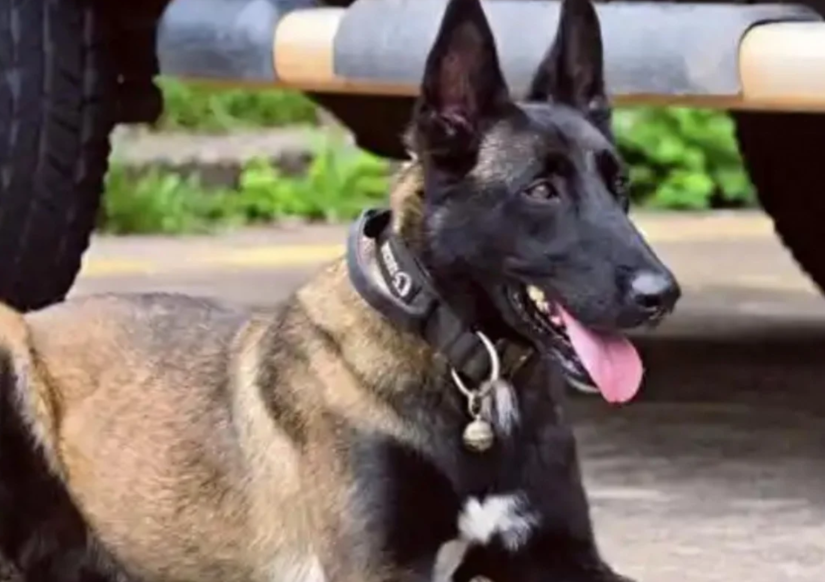
The bond between handler and working dog reached extraordinary heights in southwestern China when Bulu, a four-year-old German shepherd trained for narcotics detection, refused sustenance for half a year while her handler remained hospitalised. The reunion between Awei and his canine partner, documented in viral video footage now viewed over 10 million times, has sparked widespread reflection across China about the sacrifices made by both human and animal law enforcement professionals operating in the country's war on drugs.
The incident unfolded in November during a counternarcotics operation at an abandoned building in Chuxiong, Yunnan province, where Awei and Bulu were deployed to locate drug-related suspects. As the pair worked through debris-filled corridors dimly lit by emergency lighting, Bulu's superior senses detected the sound of suspects attempting to flee the scene. The German shepherd surged forward with her handler in pursuit, but in the chaotic conditions, Awei lost his footing on the second storey and fell heavily to the ground below. Officers at the scene found him in critical condition, convulsing and coughing blood, his consciousness wavering between awareness and delirium. One colleague's voice can be heard in footage urging the stricken officer to persevere, reminding him that "we still have battles to fight together"—a reflection of the camaraderie that defines paramilitary police culture in China.
Meanwhile, Bulu remained at her handler's side, circling anxiously and repeatedly nuzzling him in what witnesses interpreted as an attempt to rouse him from his condition. Emergency responders transported Awei to hospital, where medical teams discovered multiple fractures affecting his head and chest. He slipped into a coma lasting five days before eventually regaining consciousness, marking the beginning of a long and uncertain recovery process. The severity of his injuries meant separation from his working partner was unavoidable, and Bulu was transferred to the police training base where she typically resided when not deployed operationally.
The separation proved profoundly difficult for the dog. Over the ensuing six months, Bulu's behaviour changed markedly—she stopped accepting regular meals and water, grew visibly agitated, and ceased her normal training activities. Rather than remaining in designated areas, she developed a repetitive pattern of returning to locations where Awei might logically appear: the dormitory where handlers rested, the main gate where police vehicles entered, and the training routes they had traversed together countless times. Security cameras captured poignant moments of Bulu rushing toward returning police vehicles in apparent hope, only to retreat in disappointment when realising her handler was not aboard. Each false alarm seemed to reinforce her determination to maintain vigilance at these locations.
Bulu's behaviour attracted attention from her trainers and fellow officers, who recognised in the dog's actions a form of emotional distress and longing that challenged simple notions of animal cognition. Some observers noted that her refusal to eat during this period appeared to reflect genuine psychological distress rather than mere physiological loss of appetite. The six-month ordeal transformed what might have been viewed as routine operational separation into a window onto the depth of attachment that can form between police dogs and their handlers—relationships forged through years of shared training, trust-building, and high-stakes deployment.
When Awei finally completed sufficient rehabilitation to return to active duty, authorities arranged for his reunion with Bulu at the training base. The reunion, captured on video, became the emotional centrepiece of a story that would resonate across Chinese social media platforms. Upon seeing his handler, Bulu barked intensely and sprinted toward him at full speed. Awei, overwhelmed by the moment, dropped his luggage and knelt to embrace his partner. The footage garnered more than 10 million views and over 580,000 likes on mainland Chinese social media platforms, with comments reflecting the public's appreciation for their bond. One widely shared observation noted that "what Bulu was waiting for was not just its handler, but a comrade-in-arms," capturing the military-style dimension of police dog partnerships.
While Awei underwent his lengthy rehabilitation, his colleagues pursued the original narcotics investigation that had resulted in his injury. The operation ultimately proved successful from a law enforcement perspective, with officers arresting 11 suspects, seizing 4.4 kilograms of drugs, and recovering over 500,000 yuan—approximately US$75,000—in illicit funds. The case's conclusion brought a measure of professional vindication to the investigation that had cost Awei his health, though it could not erase the months of separation and suffering experienced by both handler and dog.
The story has illuminated the scale and significance of China's canine police force, which numbered more than 29,000 active dogs as of 2024, according to CCTV News. These animals typically serve an average of eight years in operational roles, meaning most spend their entire working lives in high-intensity deployment scenarios. Long-term service in such demanding environments frequently results in joint and spinal injuries that mirror those seen in human personnel, raising questions about the physical toll placed on these animals in service of law enforcement objectives. The recognition of such injuries has led to greater attention to police dog welfare within Chinese security institutions.
Retirement policies for China's police dogs reflect the recognition of handler-dog bonds similar to those demonstrated by Awei and Bulu. Most retired canines remain with their original handlers and units, allowing handlers to care for their former partners through old age. Some dogs eventually become available for public adoption, creating opportunities for civilian families to provide homes for retired working animals. This approach acknowledges both the practical reality that handlers often develop deep attachments to their canine partners and the ethical obligation to provide dignified conclusions to lives spent in service.
The Awei and Bulu story arrives at a moment when Chinese society shows increasing interest in animal welfare and the emotional dimensions of human-animal relationships. The viral success of their reunion video suggests audiences are prepared to engage seriously with narratives about animal consciousness, grief, and loyalty rather than dismissing such framings as anthropomorphic sentimentality. For Southeast Asian audiences observing Chinese society, the story also illustrates how paramilitary and police institutions in the region increasingly integrate sophisticated working dog programmes into their operational structures, with corresponding policy frameworks addressing animal welfare concerns. The emotional resonance of the Bulu-Awei narrative may prompt greater public attention to similar working relationships across the region's security services.

