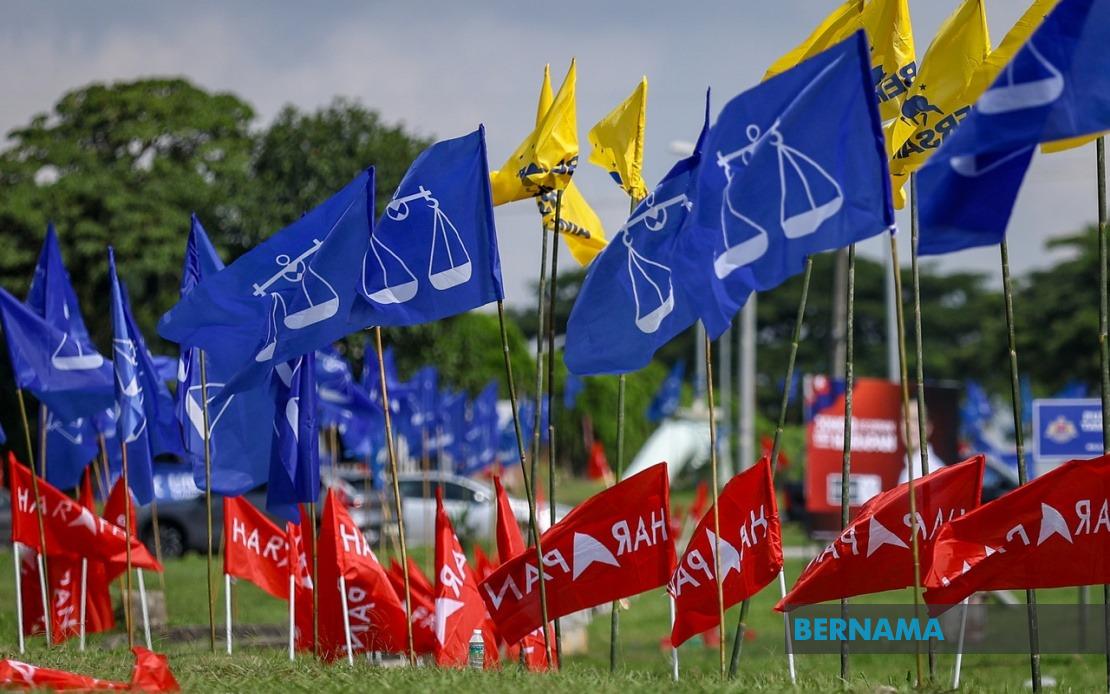
The coming Saturday state election in Johor has placed Chinese voters in a pivotal position as kingmakers, with analysts suggesting their voting preferences will pivot on how they assess the federal government's overall track record rather than state-level issues alone. Making up approximately 30 to 36 per cent of Johor's 2.7 million registered voters—or between 810,000 and one million people—the Chinese community forms the largest voting bloc in roughly 12 to 14 of the state's 56 constituencies, predominantly in urban and semi-urban centres such as Johor Bahru, Iskandar Puteri, Batu Pahat, Kluang, Muar and Segamat. This concentration of influence means their electoral behaviour could determine which coalition emerges victorious and how substantially parliamentary representation shifts in the state.
According to Dr Lau Zhe Wei, an Assistant Professor at the International Islamic University Malaysia (IIUM), Pakatan Harapan now labours under a fundamentally different set of circumstances compared to the 2022 Johor state election. At that time, PH operated from the opposition benches at the federal level, allowing it to capture sympathy and protest votes from those dissatisfied with the ruling coalition's governance. Today's reality is markedly different: with PH holding the federal reins following the 2022 general election, voters inevitably scrutinise the coalition's performance at the national level when making their state election decisions. Though voters are theoretically capable of separating federal from state politics, the reality suggests that major national developments invariably bleed into state-level sentiment, particularly when those events generate significant public controversy.
Dr Lau emphasised that PH's most substantial challenge lies in mobilising outstation Johoreans—those working in Singapore and Kuala Lumpur—to return home and cast votes. This demographic segment, which played a decisive role during the 2022 general election with comparatively high turnout, tends to participate less enthusiastically in state polls. Should turnout patterns mirror the 2022 state election rather than the stronger engagement witnessed during the general election, several DAP-held constituencies with razor-thin majorities could become vulnerable. For instance, Tangkak was won with fewer than 500 votes, a margin so narrow that any fluctuation in voter participation could reverse the outcome. Meanwhile, MCA's four Chinese-majority seats—Bekok, Yong Peng, Paloh and Pekan Nanas—were captured with comfortable four-digit majorities, suggesting these may prove more resilient against opposition challenges.
The emergence of Parti Bersama Malaysia (Bersama) introduces an additional complicating factor for PH's electoral calculus. Although its actual electoral strength remains untested and undefined, the party carries potential to splinter votes traditionally directed toward Pakatan Harapan, particularly among voters seeking a third option. This dynamic parallels the Sabah experience, where DAP secured no state seats, suggesting that vote fragmentation can produce dramatically different outcomes depending on local circumstances and voter demographics.
Beyond local constituency dynamics, broader national governance issues appear destined to shape Chinese voter behaviour, particularly among the urban electorate. National-level controversies involving human rights concerns, federal institutional challenges, and policy decisions made in Putrajaya all factor into voting calculations for Chinese voters who tend to adopt a wider geopolitical lens rather than fixating solely on grassroots-level developments. According to Dr Lau, urban voters—who constitute PH's core support base—deliberately evaluate developments occurring outside their immediate constituencies because such issues carry implications for the nation's trajectory and their own interests within a broader framework.
Ted Lee, a senior research officer at Merdeka Center, provides a more nuanced assessment of Chinese voter motivations by identifying two distinct concerns that may constrain their ability to switch allegiance toward Barisan Nasional despite frustration with certain MADANI government policies. The first centres on widespread anxiety that voting for BN would be interpreted as endorsing the coalition's cooperation arrangement with Parti Islam SeMalaysia (PAS), a partnership that has allowed PAS to remain absent from numerous constituencies, thereby consolidating Malay votes behind BN candidates unopposed. For many Chinese voters wary of PAS's political trajectory and Islamic governance platform, supporting BN through the ballot box feels uncomfortably analogous to facilitating PAS's influence over government decision-making.
The second concern, according to Lee, involves apprehension that elevated BN support could be construed as backing public campaigns to secure a royal pardon for former prime minister Datuk Seri Najib Razak, whose 1MDB-related conviction remains deeply controversial within Chinese communities that view the judicial process as having proceeded appropriately. These dual considerations operate as significant psychological barriers preventing dissatisfied voters from transitioning directly to Barisan Nasional, effectively locking substantial numbers of wavering Chinese voters into either supporting PH or abstaining entirely. Political considerations thus compete directly with economic grievances, creating internal contradictions that complicate individual voting decisions.
On the economic front, Lee observes that Johor's urban Chinese population remains distinctly conservative in institutional and financial outlook compared with their counterparts in Kuala Lumpur, Penang and Selangor. While many have undoubtedly benefited from major infrastructure initiatives such as the Johor Bahru-Singapore Rapid Transit System (RTS) Link, these gains have been offset by mounting anxiety regarding escalating living costs, which continue consuming proportionally larger portions of household budgets. This paradoxical situation—simultaneously enjoying infrastructure improvements whilst struggling with daily affordability—creates psychological tension that manifests as heightened concern for political and economic stability. Johor voters, Lee contends, place exceptional premium on maintaining predictability and continuity within both political institutions and economic conditions, viewing uncertainty as inherently damaging to prosperity.
The demographic and geographic distribution of Johor's Chinese voters reveals important strategic implications for both coalitions. Concentrated predominantly in urban and semi-urban areas with established commercial and professional economies, these voters tend toward sophisticated political reasoning that integrates national considerations alongside local matters. Their electoral behaviour cannot be predicted purely through grievance-focused analysis; instead, it emerges from calculated assessments of comparative risk involving political stability, institutional integrity, economic trajectory and governance performance. This intellectual engagement with politics means that blanket messaging emphasising either economic discontent or federal policy failures may prove insufficient to shift voters accustomed to weighing multiple competing factors simultaneously.
The 2022 state election results provided a baseline from which to extrapolate potential outcomes, though conditions have shifted substantially in the interim. DAP's capture of ten seats two years ago, coupled with MCA's stunning reversal of four previously held DAP seats, demonstrated that Chinese voters were prepared to substantially reorder their political alignments when sufficiently motivated. Whether Saturday's election will produce further realignment or consolidation around existing patterns depends substantially on whether national governance dynamics have created sufficient momentum to overcome the stability-seeking orientation that characterises Johor's Chinese electorate. The outcome will likely determine not only Johor's political complexion but also signal broader trends regarding Chinese voter sentiments toward Pakatan Harapan's national stewardship.

