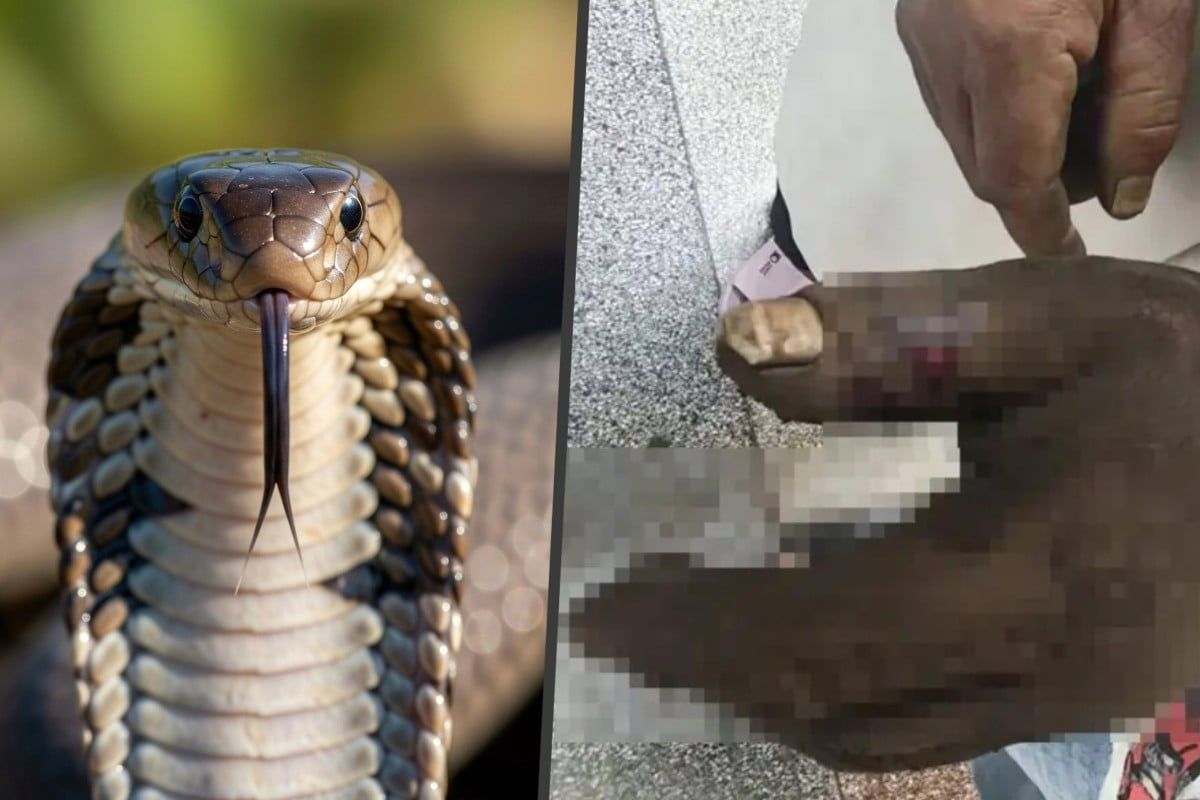
A well-intentioned rescue attempt in southwestern China's Yunnan province has highlighted the dangers of applying fictional first-aid methods to real medical emergencies. When a farmer in Yuanyang county was bitten by a cobra while working in his field, his alarmed wife immediately employed a technique she had seen on television: directly sucking the venom from his injured finger without any protective measures. What unfolded was not a heroic rescue but a cautionary tale that has since captivated Chinese social media and underscored the critical gap between entertainment and medical reality.
The farmer's condition deteriorated rapidly following the bite. His finger swelled considerably and he experienced dizziness and weakness, prompting his wife to act. Her decision to extract the venom orally, though rooted in desperation and misplaced confidence in televised depictions, set in motion a chain of medical complications that would affect both patients. The husband was transported to hospital as his symptoms worsened, but the real drama was only beginning.
Within hours of the attempted extraction, the wife began experiencing alarming symptoms of her own. Numbness crept through her mouth, tongue, face and limbs. By the following day, she felt overwhelming fatigue that signalled something had gone seriously wrong. Her family, now realizing their mother had become a victim herself, rushed her to Honghe Prefecture No 3 People's Hospital in Yunnan. Medical staff confirmed that both individuals had been poisoned by the local cobra species and required immediate intervention with antivenom serum and supportive treatments.
The couple's ordeal, while ultimately survivable, exemplifies a widespread misunderstanding about snakebite first aid that persists partly due to romanticized depictions in popular media. Hospital physicians explained that the human mouth presents an ideal entry point for venom toxins. The oral mucosa is richly supplied with capillaries—tiny blood vessels—that provide rapid absorption directly into the bloodstream. When venom contacts these delicate tissues, poisoning occurs almost instantaneously, transforming the rescuer into another casualty requiring emergency care. This physiological reality stands in stark contrast to the heroic imagery audiences encounter on their television screens.
Compounding this misconception is a fundamental misunderstanding about the nature of snakebite wounds themselves. Medical professionals emphasize that snake fangs create puncture wounds barely visible to the naked eye, resembling tiny pinholes rather than gaping injuries. The venom does not pool near the surface but immediately infiltrates subcutaneous tissues and enters the circulatory system within minutes. Any attempt to extract it through suction is futile, as the toxin has already begun its systemic distribution before external intervention is even possible. This biological reality renders the popular rescue method not merely ineffective but counterproductive.
The dangers of inappropriate snakebite responses extend beyond the venom-sucking myth. Hospital authorities warned against other common emergency responses that compound rather than mitigate harm. Cutting open the wound to allow bleeding, another technique sometimes attempted, risks excessive blood loss and infection in an already compromised patient. Similarly, applying heat to the wound or administering ice both prove harmful and distract from proper medical management. These interventions reflect the same pattern of misconception: the belief that aggressive physical intervention constitutes appropriate emergency response when, in fact, stability and rapid professional medical attention offer the only reliable path to survival.
The correct protocol for snakebite management is fundamentally conservative and focused on minimizing systemic damage while securing expert intervention. Individuals bitten by snakes should immediately contact medical emergency services rather than attempting home remedies. Movement should be restricted to the absolute minimum, as physical activity accelerates the circulation of venom throughout the body and speeds its distribution to vital organs. The patient should be kept calm and immobilized while awaiting paramedics, as stress and exertion both increase heart rate and venom dissemination.
Doctors also stress the value of providing detailed information about the offending snake to medical teams. If possible, photographs of the reptile or accurate descriptions of its coloration, body patterns and distinctive head characteristics enable physicians to identify the species and administer the appropriate antivenom. Different cobra varieties produce different toxin profiles, and misidentification can result in administration of ineffective or inappropriate treatments. This informational component represents one of the few ways bystanders can actively contribute to optimal outcomes rather than inadvertently causing harm.
The Yunnan case resonates within a broader pattern of snakebite incidents capturing public attention across China. In May, a fourteen-year-old student in Guangdong province experienced a terrifyingly narrow escape after being bitten by an unidentified snake on his school campus. The teenager initially dismissed the incident, feeling no immediate pain and unable to identify his attacker. Hours passed before he reported mounting numbness in his limbs and visual disturbances to his teacher. By the time he received hospital treatment and antivenom injection, physicians informed his family that delaying treatment by merely one to two additional hours would have resulted in respiratory failure and death. The boy's survival owed entirely to the narrow margin between seeking timely professional intervention and fatal outcomes.
These incidents reveal how entertainment media shapes public understanding of emergency medicine, often catastrophically. When television dramas consistently depict venom-sucking as heroic and effective, audiences internalize these narratives as factual guidance. The social media response to the Yunnan farmer's case reflected this tension, with observers noting that television dramas frequently present unreliable information despite their entertainment value. One commenter reflected on the disconnect between fictional portrayals and medical reality. Others attempted to reframe the wife's actions more charitably, emphasizing the profound marital devotion that motivated her desperate, if misguided, intervention. Yet the underlying lesson remained unambiguous: trusting dramatized entertainment as medical instruction in genuine emergencies can prove fatal.

