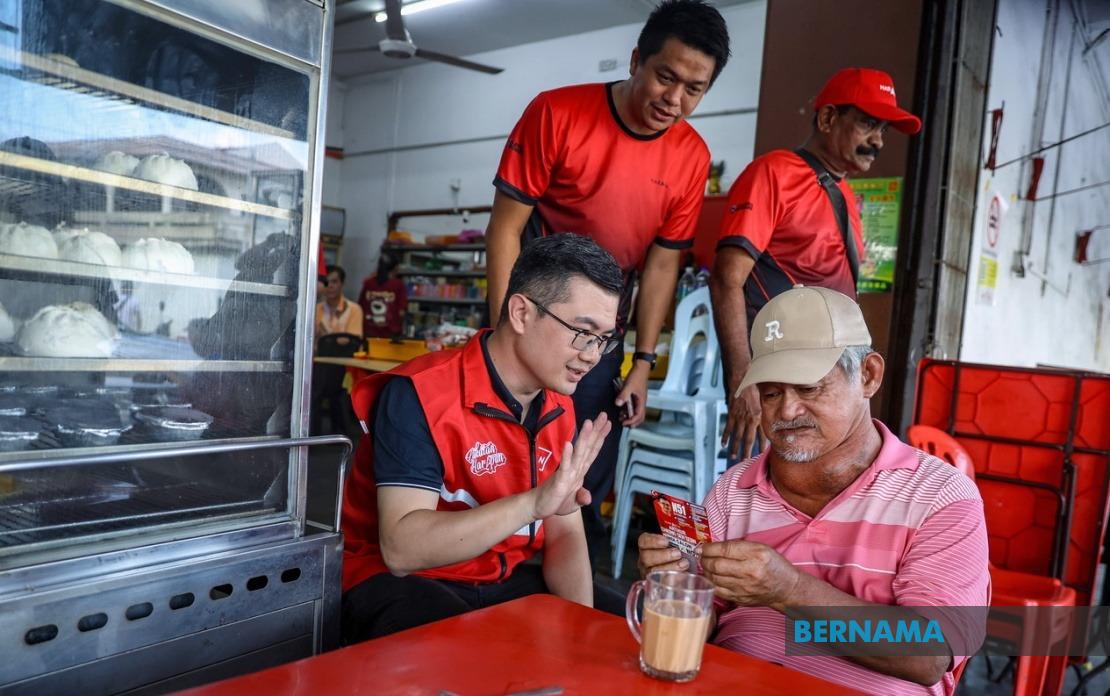
Arthur Chiong Sen Sern, the Pakatan Harapan representative defending the Bukit Batu state seat, is confident he can expand his razor-thin majority from the 2022 election through his demonstrated commitment to constituency work and community welfare. The 36-year-old incumbent is making his case to voters by highlighting nearly two years of ground engagement and infrastructure improvements across the Johor constituency, which encompasses 49,963 registered voters.
Chiong's previous victory came by the slimmest of margins—just 137 votes—when he polled 9,439 votes in a four-way contest in 2022. That narrow triumph has fundamentally shaped his approach to his second bid, spurring him to invest substantially more time and resources in connecting with constituents across all demographics and backgrounds. He has maintained a deliberate strategy of consistent field presence, regularly visiting federal land development authority settlements and attending to local grievances regardless of residents' political affiliation or religious identity.
The assemblyman points to tangible deliverables as evidence of effective representation. He cites his initiative to provide RM20,000 funding for lights installed at a futsal court in one locality, a project that continues to serve the community's youth. Beyond leisure facilities, Chiong has worked with the Department of Irrigation and Drainage to address chronic flooding in vulnerable neighbourhoods such as Kampung Rahmat and Kampung Seri Paya, demonstrating a collaborative approach to public safety challenges that frequently plague low-lying residential areas during monsoon seasons.
Flood mitigation stands out as a particularly significant issue for Bukit Batu residents. Chiong has made a point of being among the first responders during flash floods, ensuring his presence is felt during crises rather than merely during campaign cycles. This hands-on engagement during emergencies has reportedly strengthened his standing among residents who have witnessed his commitment firsthand during the area's most challenging moments.
Chiong's positioning also reflects backing from Pakatan Harapan's national leadership, particularly Prime Minister Datuk Seri Anwar Ibrahim in his capacity as party chairman. This endorsement carries significance in a context where federal resources and credibility can influence perceptions of an incumbent's effectiveness and future prospects. The assemblyman has publicly acknowledged this support, framing his candidacy as an extension of the federal government's commitment to Johor's development.
The political landscape in Bukit Batu has become notably competitive, with a four-way contest shaping the July 11 election. Chiong faces R. Kumaran, the Barisan Nasional and PKR Kulai chief candidate seeking to reclaim ground for the coalition; M. Premanand representing Ikatan Demokratik Malaysia (MUDA), a comparatively newer political force seeking inroads in state politics; G. Tamili from Bersama; and independent candidate Kamaruzaman Ali. This crowded field suggests voter dissatisfaction may be distributed across multiple alternatives, potentially working in the incumbent's favour if he can consolidate support among his 2022 base.
The 137-vote margin from the previous election looms large in political calculations. Such a narrow victory in a constituency of nearly 50,000 voters indicates deep polarisation and suggests that even modest swings in voter preference can determine outcomes. This context explains why Chiong has adopted an intensive, persistent engagement strategy rather than relying on brand recognition or institutional advantages.
Early voting is scheduled for July 7, preceding the main polling day on July 11. This compressed timeline means campaigns have limited remaining days to reinforce messaging and mobilise supporters. For an incumbent operating with a slim previous majority, maximising early voter turnout among sympathetic constituencies could prove decisive, particularly if overall voter participation increases compared to 2022.
The Bukit Batu contest reflects broader dynamics in Johor's 16th state election, where incremental shifts in voting patterns across multiple constituencies will determine the coalition's overall performance. Chiong's ability to convert his service work into increased support will serve as a microcosm for whether grassroots engagement by incumbents translates into measurable electoral gains, or whether challenger parties can capitalise on underlying voter restlessness despite sitting representatives' visible community work.
Chiong's campaign strategy ultimately represents a calculated bet that demonstrated competence and accessibility resonate more powerfully with voters than partisan rhetoric or new political offerings. His emphasis on tangible outcomes—functional futsal courts, reduced flooding, responsive constituent services—suggests confidence that local governance capacity matters to Bukit Batu voters navigating challenges that directly affect daily life and property values.

