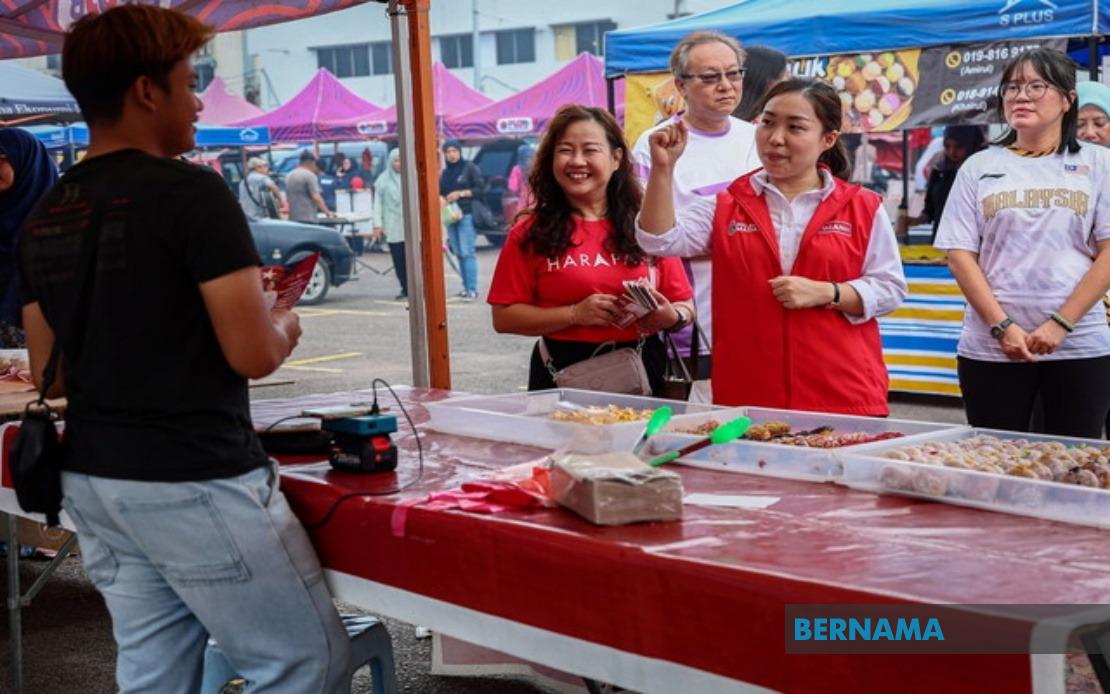
In the southeastern Johor constituency of Mengkibol, Pakatan Harapan's candidate Chu Poh Yee has articulated a comprehensive electoral platform centring on three interconnected policy objectives: revitalising the district's physical infrastructure, generating domestic economic opportunities, and strengthening social safety nets for residents. The young legal professional is positioning these themes as essential to addressing Mengkibol's current development needs and future aspirations as the state heads toward elections on July 11.
Chu's infrastructure agenda prioritises fundamental improvements that directly affect daily life in the constituency. Road maintenance and expansion feature prominently in her vision, reflecting widespread concerns about connectivity in the region. Beyond conventional transport infrastructure, she has highlighted urban agriculture initiatives as a complementary approach to infrastructure development. These community farming projects aim to transform underutilised spaces into productive assets while fostering local engagement, suggesting an understanding that modern infrastructure encompasses both hard services and social-economic systems that sustain livelihoods.
The economic dimension of Chu's campaign addresses a challenge facing many Malaysian constituencies: the outflow of younger residents seeking opportunities elsewhere. She characterises Kluang's business environment as fundamentally sound but underdeveloped, possessing untapped potential that deliberate policy intervention could unlock. Her proposal focuses on creating frameworks for entrepreneurship rather than direct business subsidies, emphasising open platforms and quality employment generation as mechanisms to retain talent and build local prosperity.
Tourism and cultural events represent a strategic economic lever in Chu's thinking. She points to the Kluang Rail Festival as evidence that the constituency can successfully host attractions generating community-wide economic benefits. This recognition of experiential economy potential aligns with broader Malaysian trends toward leveraging heritage and cultural assets for regional development, suggesting awareness of national economic diversification strategies.
Women's workforce participation and family support structures form the third pillar of Chu's platform, reflecting contemporary Malaysian conversations about gender equity in employment. Her emphasis on childcare facilities addresses a structural barrier affecting female labour force participation, particularly in regions where extended family support systems may be weaker. By framing this as a parental welfare issue rather than exclusively a women's issue, she positions quality childcare as contributing to household economic resilience and children's development outcomes.
The campaign environment itself has tested Chu's resolve. Reports of campaign material vandalism and provocative incidents indicate a contested political landscape in the constituency. Her public response—reaffirming her team's commitment despite disruptions—follows a standard political playbook, yet the incidents themselves suggest Mengkibol represents genuinely competitive ground where party activists remain deeply invested in the outcome.
Mengkibol constitutes one of 14 straight fights across the 56-seat Johor state assembly, meaning voters face a binary choice between Chu and her Barisan Nasional challenger Yap Zhi Peng. This configuration concentrates electoral attention and reduces splitting of opposition votes, theoretically enhancing the viability of the non-government candidate. The straight fight format typically indicates constituencies deemed strategically significant by both major coalitions.
The broader electoral context encompasses 172 candidates competing statewide, with early voting scheduled for July 7 preceding main polling on July 11. Johor's state election carries implications beyond the peninsular state itself, potentially signalling voter mood toward Pakatan Harapan's federal governance and Barisan Nasional's capacity to retain ground in a historically important political battleground.
For Malaysian observers tracking regional political dynamics, Chu Poh Yee's campaign reflects evolving expectations of elected representatives. Her platform balances infrastructure and welfare concerns traditional to Malaysian electoral discourse with emphasis on economic dynamism and workforce modernisation. The integration of women's employment facilitation within broader economic strategy, rather than treating it as separate identity politics, suggests how mainstream political actors increasingly operationalise gender considerations.
Chu's positioning as a young legal professional carries symbolic weight in Malaysian politics, potentially appealing to voters seeking generational renewal while maintaining professional credentials. Her emphasis on community engagement through urban agriculture and local entrepreneurship platforms signals receptiveness to grassroots economic participation, contrasting with top-down development models that have characterised some previous state administrations.
The constituency's apparent competitiveness, reflected in both parties fielding serious candidates and the reported campaign intensity, makes Mengkibol one to watch as a bellwether for broader Johor trends. Whether Chu's comprehensive three-point agenda resonates with voters or whether incumbent coalition advantages prevail will offer insights into current voter priorities across peninsular Malaysian constituencies facing similar development and demographic pressures.

