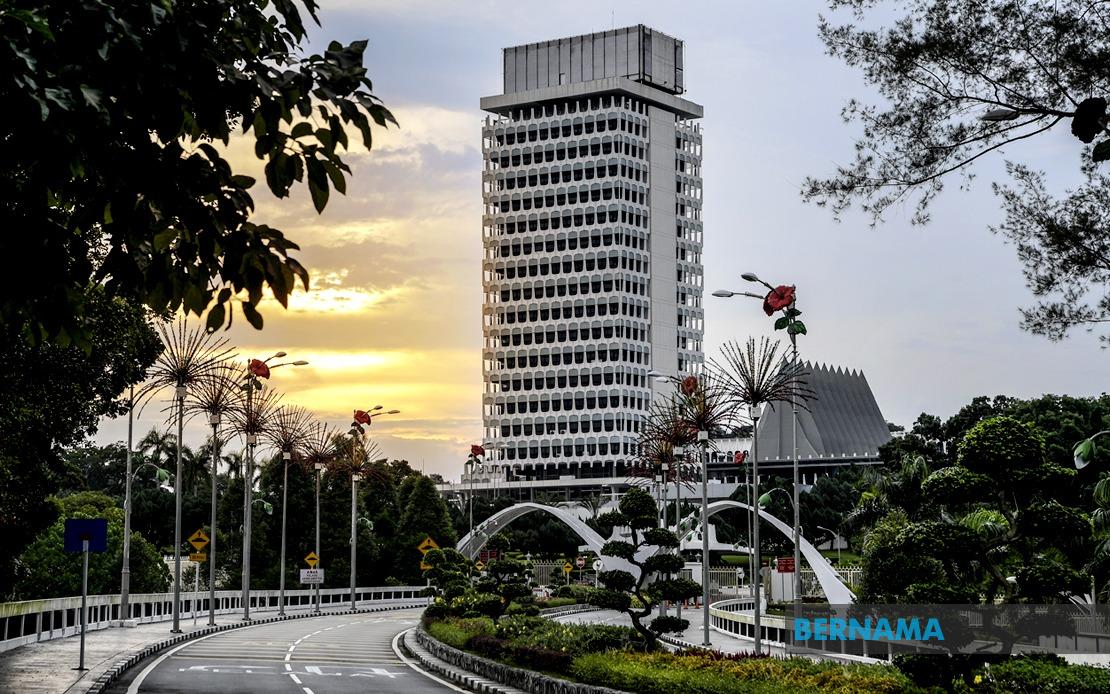
A broad coalition of civil society groups and individual activists has made a renewed push for Malaysia's 15th Parliament to remain in office until its constitutionally-mandated expiration on December 18, 2027. The call comes as the nation continues navigating questions about political stability and the pace of institutional reform under Prime Minister Datuk Seri Anwar Ibrahim's administration. Forty-four non-governmental organisations alongside 25 individuals issued a joint statement emphasising that an uninterrupted parliamentary term would enable the country to advance structural changes essential for democratic health and governance quality.
The signatories framed their appeal around a fundamental principle: that Parliament should discharge its full mandate unless the government explicitly loses the confidence of the legislative majority. This framing positions institutional stability not as a brake on reform but as a prerequisite for it. Among the organisations backing the statement are prominent democracy advocates including Bersih, known internationally for electoral reform campaigns; anti-corruption group C4 Center; youth-focused ABIM; and IDEAS, which specialises in policy research. Their collective weight reflects broad-based frustration with the pattern of early dissolution that has characterised recent Malaysian politics, seen as disruptive to long-term institutional building.
Central to the coalition's proposal is a call for Prime Minister Anwar to convene a cross-party leaders' summit bringing together all parliamentary factions, both government and opposition. This mechanism would be tasked with forging a shared legislative agenda for the Parliament's remaining term. Such a summit represents an attempt to move beyond the adversarial posturing that typically characterises Malaysian politics, creating space for consensus on structural rather than partisan issues. The framing suggests that certain reforms transcend immediate political interest, benefiting whichever coalition holds power in future elections.
The reform package itself is extensive and touches the architecture of Malaysian governance. A key proposal involves separating the roles of Attorney General and Public Prosecutor, a change designed to insulate prosecution decisions from executive control and strengthen judicial independence. Equally significant is a proposed constitutional ceiling limiting any Prime Minister to a maximum 10-year tenure, addressing historical concerns about power concentration and ensuring regular renewal of leadership within the executive.
The coalition advocates for two major pieces of new legislation: an Ombudsman Act and a Freedom of Information Act. These frameworks would create institutional channels for citizens and oversight bodies to investigate maladministration and access government information, foundational elements of accountable governance that remain underdeveloped in the Malaysian context. The Ombudsman proposal echoes international best practice, while freedom of information laws have become standard across comparable democracies, affecting policy transparency and media investigation capacity.
Financial transparency within Parliament itself features prominently in the proposed reforms. The coalition calls for laws mandating that constituency development funds be distributed equitably to all Members of Parliament regardless of party affiliation. This addresses a longstanding grievance where opposition-held seats receive minimal development resources, creating incentives for defection and rewarding parliamentary instability. Extension of postal and absentee voting facilities for overseas Malaysians and those outside their home states would broaden democratic participation among the diaspora and mobile citizens, sectors increasingly significant to Malaysia's knowledge economy.
Parliamentary operations themselves require strengthening according to the statement. Committee functions need expansion, the annual budget cycle requires streamlining, and backbench Members must gain meaningful ability to introduce, debate and pass private members' bills. These operational reforms would shift Parliament from a largely ceremonial body rubber-stamping executive initiatives toward a genuinely deliberative chamber. Currently, private members' bills face de facto blockage, limiting the legislative voice of non-executive lawmakers and concentrating agenda-setting power with the government of the day.
The electoral system itself emerges as a reform target, particularly at state level where the coalition proposes replacing first-past-the-post contests with party-list proportional representation for state assemblymen. This change would dramatically alter outcomes by rewarding total vote share rather than district-by-district victory margins, typically shifting representation patterns in directions favouring broader coalition-building. Simultaneously, the coalition insists that representation quotas expand for women, youth, Orang Asli communities and other marginalised groups, embedding diversity as a constitutional principle rather than relying on voluntary party commitment.
State governments received specific calls to mirror Parliament with their own laws guaranteeing equitable development fund distribution among assemblymen regardless of party. This would require constitutional amendments at the state level and represents an attempt to harmonise governance standards across Malaysia's federal structure. Such changes would reduce the competitive advantage currently enjoyed by ruling coalitions and discourage the constant floor-crossing that destabilises state governments.
Procedural transparency around dissolution itself features in the reform agenda. The coalition urges federal and state governments to announce dissolution dates in advance if they choose not to serve full terms, allowing the Elections Commission, law enforcement, civil servants and voters adequate preparation time. This seemingly technical proposal addresses real coordination problems created by surprise dissolutions and recognises the public administration burden such disruptions create.
The timing of this civil society intervention carries significance. Malaysia has experienced multiple early parliamentary dissolutions in recent years, creating uncertainty about the legislative calendar and forcing repeated election cycles. Each dissolution consumes government resources and creates campaign instability affecting policy continuity. The coalition's statement implicitly argues that democratic legitimacy gains strength when elected representatives complete their mandates and make meaningful use of their terms rather than returning repeatedly to voters.
For Malaysian readers, the implications extend beyond theoretical governance reform. A strengthened parliament with genuine committee power and private members' bill capacity would create more venues for constituency grievances to receive legislative attention. Expanded freedom of information access would help citizens and journalists investigate government spending and policy implementation. Equitable development fund distribution would mean opposition-held constituencies receive resources for local infrastructure improvements based on need rather than political affiliation, directly affecting quality of life in many communities.
The coalition's approach also suggests growing civil society sophistication in Malaysia. Rather than simply criticising government, these organisations have developed detailed institutional blueprints and sought cross-ideological buy-in. Their emphasis on structures benefiting any future government reflects maturity about democratic sustainability. Whether such proposals gain traction depends partly on political calculation by government and opposition alike, each likely weighing whether reforms serve their medium-term interests. The civil society framing—that institutional strength transcends partisan advantage—represents an important voice in ongoing debates about Malaysia's democratic trajectory.

