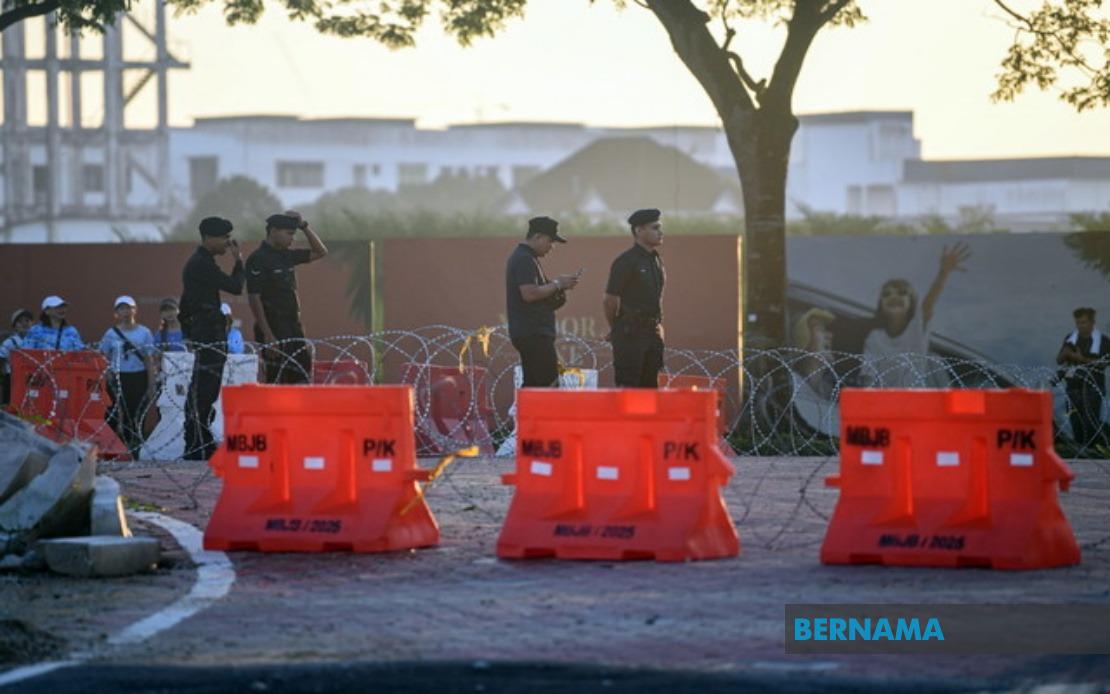
The 16th Johor State Election moved into its formal candidacy phase on June 27 as nomination proceedings unfolded across 56 polling centres spanning the state, with fair weather conditions supporting an orderly and well-coordinated electoral process. Election Commission officers managed the receipt of nomination documents through a designated two-hour window commencing at 9am, while security arrangements remained in place at all locations to ensure decorum and operational efficiency throughout the day.
The Election Commission's logistical preparation appeared comprehensive, with officers completing final arrangements prior to the official commencement of nominations. The procedural window—limited to just 120 minutes—reflected standard practice for such elections in Malaysia, where the concentrated timeframe aims to streamline the registration of candidates while maintaining strict administrative oversight. Nomination centre staff worked methodically to process documentation, with EC personnel trained to verify compliance with electoral regulations governing candidate eligibility and nomination requirements.
Party activism reached fever pitch at several locations, as supporters mobilised from early morning to demonstrate backing for their preferred aspirants. Evidence of grassroots engagement appeared across multiple centres, with some party contingents assembling as early as 7.30am to create visible shows of support and momentum. This early mobilisation underscores the significance Malaysians attach to state-level contests, which determine control over significant fiscal resources and shape provincial governance priorities affecting education, infrastructure, and public services.
Weather considerations, while appearing peripheral, carried genuine operational importance for the electoral process. The Malaysian Meteorological Department anticipated predominantly dry conditions throughout the morning hours, enabling smooth vehicular and foot traffic to and from nomination centres. Afternoon thunderstorms were forecast for selected districts, though the timing suggested minimal disruption to the official nomination window. Such meteorological planning ensures that climatic factors do not inadvertently suppress candidate registrations or create accessibility challenges for electoral officials and participants.
The Johor State Legislative Assembly comprises 56 seats distributed across the second-largest state by population. The dissolution dated June 1 represented the formal triggering of the electoral calendar, initiating a five-week campaign period prior to the main polling date. The Election Commission scheduled early voting for July 7, accommodating military personnel, police officers, and their spouses who might face deployment difficulties on the principal election day. This provision acknowledges that security personnel require alternative voting mechanisms to ensure their democratic participation whilst maintaining operational readiness.
The voter register encompassed approximately 2.73 million citizens—a substantial electoral base that underscores Johor's demographic and political significance within Malaysia's federation. Ordinary voters constituted the overwhelming proportion at just over 2.7 million, whilst military and police personnel and their spouses numbered around 24,700 combined. This composition reflects Johor's character as a predominantly civilian electorate with substantial security force presence, a pattern consistent with the state's role as home to significant naval and military installations.
For regional observers, Johor's electoral exercise carries implications extending beyond provincial boundaries. As Malaysia's second-largest state by population and a traditional political bellwether, Johor outcomes frequently signal broader national sentiment regarding ruling coalition performance or opposition momentum. The state's geographic proximity to Singapore and its status as an economic engine—hosting major petrochemical, manufacturing, and port facilities—means that governance decisions resonate across Southeast Asia's trading networks.
The orderly conduct evident on nomination day suggests that electoral administration remained insulated from the political turbulence that occasionally accompanies Malaysian elections. The presence of security personnel at all nomination centres, combined with EC oversight, provided reassurance that the formal candidacy registration proceeded according to established protocols. Such administrative competence reflects institutional maturation within Malaysia's electoral machinery, notwithstanding periodic criticism regarding transparency and accessibility.
The approximately five-week interval between nomination and polling on July 11 allows candidates customary campaign periods to prosecute their candidacies through rallies, community engagement, and media advocacy. This timeline mirrors historical practice and provides sufficient duration for substantive political messaging beyond purely organisational necessities. The staggered early voting provision on July 7 demonstrates administrative accommodation of diverse operational requirements within the security establishment.
Looking toward July 11, the registered electorate will determine which coalition or opposition bloc controls Johor's provincial apparatus for the ensuing five-year term. The substantial voter base—approaching 2.74 million—ensures that outcomes carry demographic weight and electoral legitimacy. Johor's performance may additionally foreshadow national electoral dynamics, given the state's traditional role as a political indicator of broader Malaysian voter sentiment and the effectiveness of competing political narratives.

