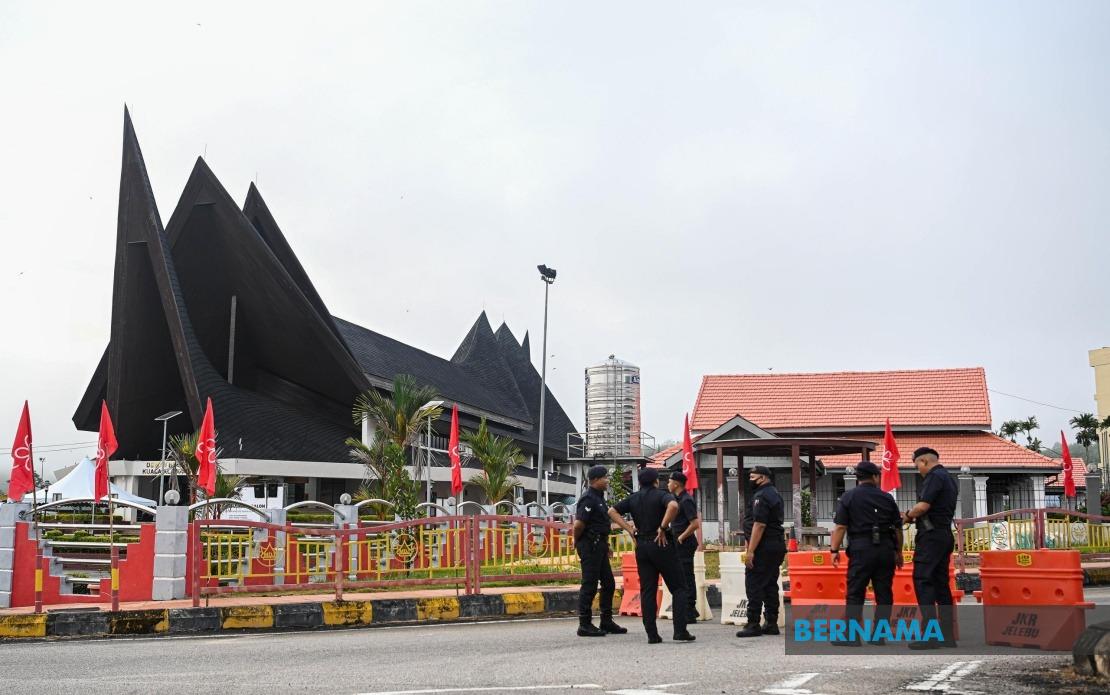
The machinery of electoral democracy set into motion across Negeri Sembilan this morning as nomination centres opened their doors to receive candidates for the 16th state election. Good weather prevailed throughout the state, providing an auspicious backdrop for what is shaping up to be a highly contested ballot on August 1. Election Commission officials had positioned themselves at eight strategic nomination points across the territory, with preparations running smoothly to accommodate the filing deadline that would close at 10 am. The orderly scene reflected months of planning by the administrative authority tasked with managing one of the nation's most closely watched state contests.
Activity began gathering momentum from dawn, with election officials conducting final checks on documentation and verification procedures well before the 9 am commencement. By 7 am, journalists and camera crews had already staked their positions at the nomination centres, anticipating the formal announcement of candidates who would contest the 36 available seats in the state assembly. Party representatives and enthusiastic supporters were arriving in waves throughout the morning, their presence underscoring the significant political stakes at play. The atmosphere combined the procedural formality of electoral governance with the grass-roots energy of political competition that characterises Malaysian state elections.
The upcoming contest represents a substantial realignment from the outcome two years earlier. In 2023, Pakatan Harapan emerged as the largest bloc by winning 17 of 36 seats, securing sufficient numbers to form the state government. Barisan Nasional followed with 14 seats, while Perikatan Nasional captured five. That distribution established the current political configuration in Seremban's corridors of power, but today's nomination process signals that none of the major players are taking their position for granted. The intervening two years have witnessed significant shifts in the political landscape, both in the peninsula and within Negeri Sembilan's regional dynamics.
Pakatan Harapan's decision to contest all 36 seats represents an aggressive posture, signalling confidence that the coalition can build upon or defend its current majority despite the known dissatisfaction that often accompanies the middle years of any government's tenure. Barisan Nasional, contesting 25 seats, appears to be focusing its resources on constituencies where the coalition retains organisational strength and historical support. This selective approach suggests a strategic calculation about where the party system remains competitive. Perikatan Nasional, fielding 11 candidates, continues to position itself as an alternative to the ruling Pakatan arrangement, though the coalition's performance trajectory in recent months has been questioned by political analysts across the country.
The emergence of Parti Pribumi Bersatu Malaysia as a solo competitor contesting 24 seats marks an intriguing development in this election cycle. Bersatu's decision to proceed independently rather than as part of a broader opposition configuration reflects internal party dynamics and broader calculations about the political landscape. The arrangement whereby Parti Bersepakat Hak Rakyat Malaysia, or Urimai, will contest two seats under the Bersatu logo suggests an attempt to maximise electoral appeal through technical arrangements that preserve party identity while expanding candidate selection. Smaller parties, including Parti Sosialis Malaysia, Parti Orang Asli Malaysia, and Parti Barisan Jemaah Islamiah Se-Malaysia, each nominated single candidates, reflecting the niche positions they occupy within Malaysia's political spectrum.
The electorate that will determine the outcome on August 1 comprises nearly 890,000 registered voters, a substantial constituency by any measure. The composition of this electoral base reveals important demographic dimensions: 867,151 are ordinary civilian voters, while 16,884 military personnel and their spouses hold voting rights, and 5,455 police officers are eligible to cast ballots. The inclusion of security sector voters in state elections reflects Malaysia's constitutional framework and has historically carried implications for certain constituencies, particularly those with military or police installations. The distribution of these voters across the state's various constituencies will influence campaign strategies as parties calculate where their respective support bases are concentrated.
The dissolution of the state assembly on June 5 set the timeline for this entire process, with the Election Commission subsequently announcing the compressed campaign schedule that parties have navigated over recent weeks. Early voting is scheduled for July 28, allowing those with specific circumstances—travelling workers, elderly voters, or those with mobility challenges—to cast their votes before the main polling day. This bifurcated voting arrangement has become standard practice in Malaysian elections and reflects administrative evolution in how the Electoral Commission manages the logistics of democratic participation across geographically dispersed populations.
The nomination process itself serves as more than mere procedural formality in Malaysia's electoral system. It provides the first genuine test of party organisation, revealing which parties possess robust candidate pipelines and which are struggling to field competitive teams. The clustering of nominations across eight centres rather than a single location distributes logistical demands and signals respect for the geographic expanse of the state. Media presence from the earliest hours demonstrates the genuine public interest in this contest, with political journalism playing its established role in chronicling the institutional machinery that underpins democratic governance.
For Malaysia's broader political system, this Negeri Sembilan election will serve as a significant indicator of momentum heading into the next phase of national politics. State elections function as barometers of public sentiment, revealing whether ruling coalitions have maintained voter confidence or whether opposition forces have successfully mobilised alternative support. The results on August 1 will reverberate beyond Seremban's state secretariat, providing data points that analysts and party strategists will dissect for insights into voter preferences, demographic trends, and the durability of electoral coalitions that voters formed in previous contests.

