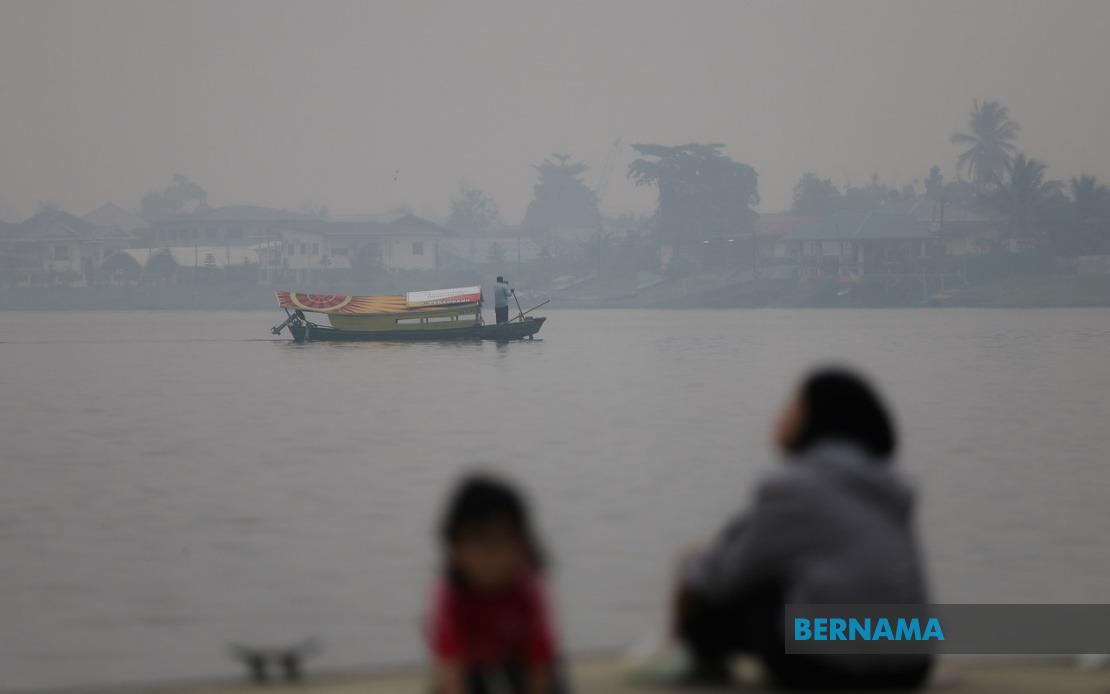
Malaysia has activated cloud seeding operations in regions grappling with hazardous air quality and depleting water reservoirs, marking an escalation in the government's response to the dual crisis of haze pollution and water scarcity during the current dry season. Deputy Prime Minister Datuk Seri Dr Ahmad Zahid Hamidi disclosed that the intervention targets areas where the Air Pollutant Index has climbed above 150, a threshold indicating unhealthy air conditions. The initiative represents a coordinated effort involving the Malaysian Meteorological Department and the Royal Malaysian Air Force, two agencies whose resources are essential for executing such weather-modification techniques effectively.
The urgency behind this measure stems from a concerning trend affecting the nation's water security. Multiple dams across Malaysia have experienced progressive declines in water levels, a situation exacerbated by prolonged hot weather and reduced rainfall. By implementing cloud seeding, authorities hope to induce precipitation that will simultaneously address the haze problem—whereby particles are washed from the atmosphere—while replenishing critical water reserves that supply households and industries. The timing of these operations demonstrates how Malaysia's environmental challenges have become interconnected, with one crisis amplifying another.
According to Datuk Seri Dr Ahmad Zahid, cloud seeding was already underway in Putrajaya at the time of his statement. The government has scheduled additional operations across three states from September 3 to 5, specifically targeting Sarawak, Kedah, and Perlis. This geographic distribution reflects the widespread nature of the haze problem, which has affected multiple regions rather than remaining confined to a single area. The three-state deployment suggests that water security concerns are not limited to the Klang Valley or Selangor, but extend into East Malaysia and the northern peninsula.
However, cloud seeding remains an inherently uncertain undertaking, dependent on meteorological conditions that officials cannot fully control. The Deputy Prime Minister acknowledged this constraint in his remarks, emphasizing that successful operations require not just the presence of clouds but also favorable atmospheric patterns. Even when clouds are present, their trajectory matters significantly; if weather systems move away from targeted areas rather than toward them, the intended outcome cannot be achieved. This unpredictability means that cloud seeding functions as a supplementary measure rather than a guaranteed solution to either the haze or water shortage.
Sarawak's air quality situation appeared particularly acute at the time of Datuk Seri Dr Ahmad Zahid's announcement. According to readings from the Department of Environment's Air Pollutant Index Management System portal, Serian recorded a hazardous API level of 412 at 12:30 pm on August 30, representing air quality dangerous even for healthy individuals. Samarahan followed with an API of 332, while Kuching registered 304. The Sri Aman district, though recording a marginally lower reading of 228, still fell within the very unhealthy category. These measurements demonstrate that East Malaysia faces some of the most severe haze episodes affecting the country.
The API readings in Sarawak exceed thresholds that typically trigger health advisories and emergency protocols. Air quality at these levels warrants restrictions on outdoor activities, recommendations for vulnerable populations to remain indoors, and enhanced monitoring in healthcare facilities. Schools and workplaces in severely affected areas sometimes implement closures or shift to alternative arrangements. For Malaysian policymakers, the persistence of such readings necessitates not merely reactive responses like cloud seeding but also investigation into underlying causes, whether local sources or transboundary pollution from neighboring regions.
Cloud seeding technology works by introducing particles—typically silver iodide—into clouds to encourage water droplet formation and precipitation. In theory, this approach offers a method to accelerate natural processes and generate rainfall when atmospheric conditions are marginally conducive. For water management, this technique provides a non-structural intervention that complements conventional strategies like water rationing, demand reduction, and reservoir management. For air quality, induced rainfall can physically remove suspended particles from the atmosphere, providing immediate relief even if it does not address the sources of emissions.
The announcement came during Datuk Seri Dr Ahmad Zahid's visit to the 2026 Malaysia Agriculture, Horticulture and Agrotourism Show (MAHA) at Serdang, where he launched the Laman Usahawan Desa KKDW initiative. The context underscores how environmental pressures intersect with agricultural and rural development concerns. Water availability directly impacts agricultural productivity, particularly in regions dependent on irrigation. Haze, meanwhile, affects crop growth and market operations at agricultural venues. Thus, the cloud seeding initiative carries implications extending beyond environmental management into economic sectors reliant on stable water and air conditions.
Looking forward, the effectiveness of these cloud seeding operations will likely inform Malaysian policymaking on climate resilience and environmental management. If operations successfully induce precipitation in targeted areas, the government may expand or routinize the program during high-risk seasons. Conversely, if results remain inconclusive, policymakers will need to accelerate long-term solutions including emissions reduction, transboundary pollution cooperation with neighboring countries, and infrastructure investments in water storage and treatment. For Malaysian citizens and businesses, the current crisis highlights the fragility of environmental systems and the importance of sustainable practices that minimize both air pollution and water wastage during vulnerable periods.

