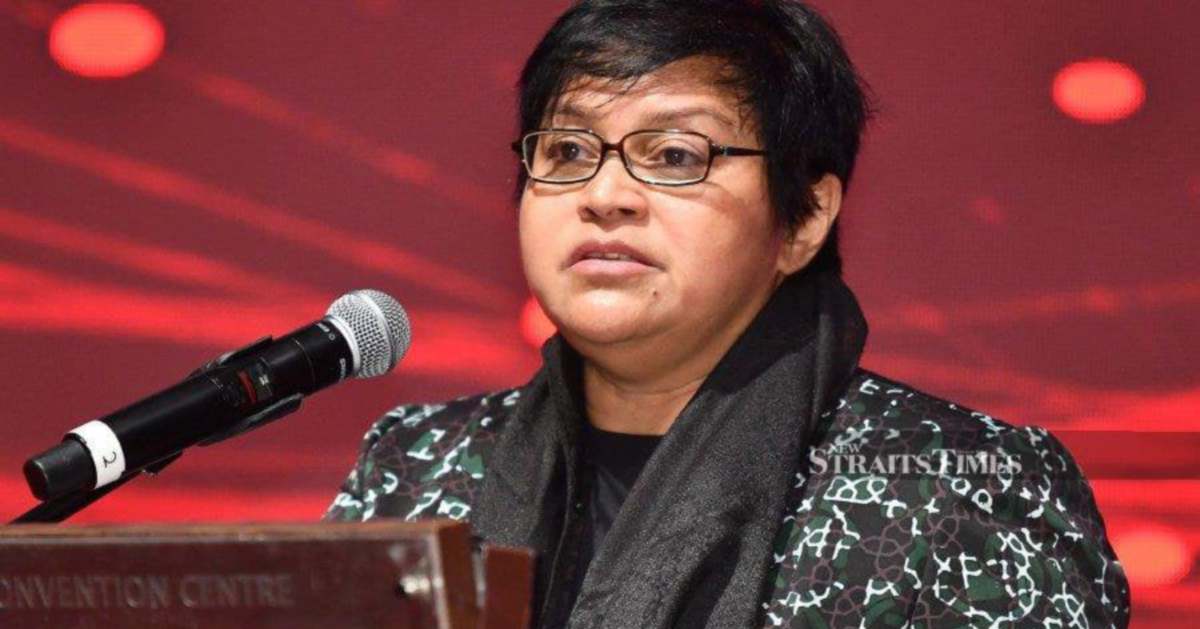
Any substantive discussions about establishing a coalition or unity government in Johor must be deferred until after electoral outcomes are finalized, according to Umno's information chief Datuk Seri Azalina Othman Said, speaking from Putrajaya on the matter of post-election political arrangements in the state.
The statement reflects the established practice in Malaysian politics where party leadership typically refrains from engaging in governance negotiations prior to electoral contests. This sequential approach—voting first, coalition-building second—remains the conventional wisdom among senior political figures, even as speculation inevitably swirls around which combinations of parties might emerge victorious and subsequently ally with one another. By insisting on this procedural boundary, Azalina underscores the principle that electoral mandates must take precedence over pre-emptive power-sharing arrangements.
For observers tracking Johor's political trajectory, this pronouncement carries particular weight given the state's pivotal role within Malaysia's broader political landscape. As the second-largest state by voter population and a traditional bastion of Umno influence, developments in Johor elections significantly influence national political calculations. Any viable coalition arrangement involving Johor therefore carries ramifications extending beyond the state capital Johor Bahru to affect inter-party dynamics at the federal level.
The timing of Azalina's statement suggests that speculation about prospective governing coalitions has already become sufficiently prevalent to warrant a clarifying intervention from Umno's communications apparatus. Her remarks appear designed to curtail premature horse-trading and maintain focus on the electoral process itself rather than on backroom maneuvers. This emphasis on maintaining campaign momentum without distraction from coalition mathematics reflects a disciplined approach to managing party messaging during contested elections.
In the Malaysian context, unity government arrangements have gained considerable prominence following the 2022 federal elections, when a complex multi-party coalition emerged to secure parliamentary control. This relatively recent experience with coalition governance has heightened public and media attention to how post-election partnerships develop. Johor, therefore, enters its electoral cycle with heightened awareness that power-sharing configurations could be equally significant as individual party performance.
Azalina's insistence on procedure also addresses a broader concern: that premature coalition negotiations might undermine campaign integrity or suggest that electoral outcomes have been predetermined. By demarcating a clear temporal boundary—results first, negotiations thereafter—the Umno information chief positions her party as respecting the fundamental democratic principle that voters' choices must determine political arrangements rather than elite decisions made beforehand. This stance carries particular importance in an era when public confidence in electoral processes and political transparency remains a contested terrain in Malaysian discourse.
The political environment surrounding such statements reflects deeper tensions within Malaysia's party system. Potential partners for coalition arrangements—whether drawn from Umno, other Barisan Nasional components, or opposition-aligned parties—might privately harbour very different expectations about eventual power distributions. By maintaining silence until results are declared, party leaders avoid exposing these latent disagreements prematurely, preserving strategic flexibility while managing internal party unity.
For Malaysian voters and regional observers monitoring the state's electoral dynamics, Azalina's clarification establishes that Umno at least intends to conduct its campaign on substantive policy grounds rather than on the basis of predetermined coalition mathematics. Whether other parties similarly respect this demarcation between campaign and negotiation phases remains to be seen, but Umno's publicly stated position provides a framework against which subsequent conduct can be measured.
The statement also signals confidence, albeit carefully measured, about Umno's prospects in the coming election. Parties anticipating electoral disappointment typically engage more openly in preliminary coalition discussions as insurance against poor outcomes. Conversely, parties expecting favorable results can afford to maintain procedural orthodoxy, betting that their strong mandate will provide advantageous negotiating positions. Azalina's insistence on waiting for results could therefore be read as reflecting Umno's internal assessment of its likely electoral performance in Johor, though such interpretations should be treated cautiously given the inherent unpredictability of electoral contests.

