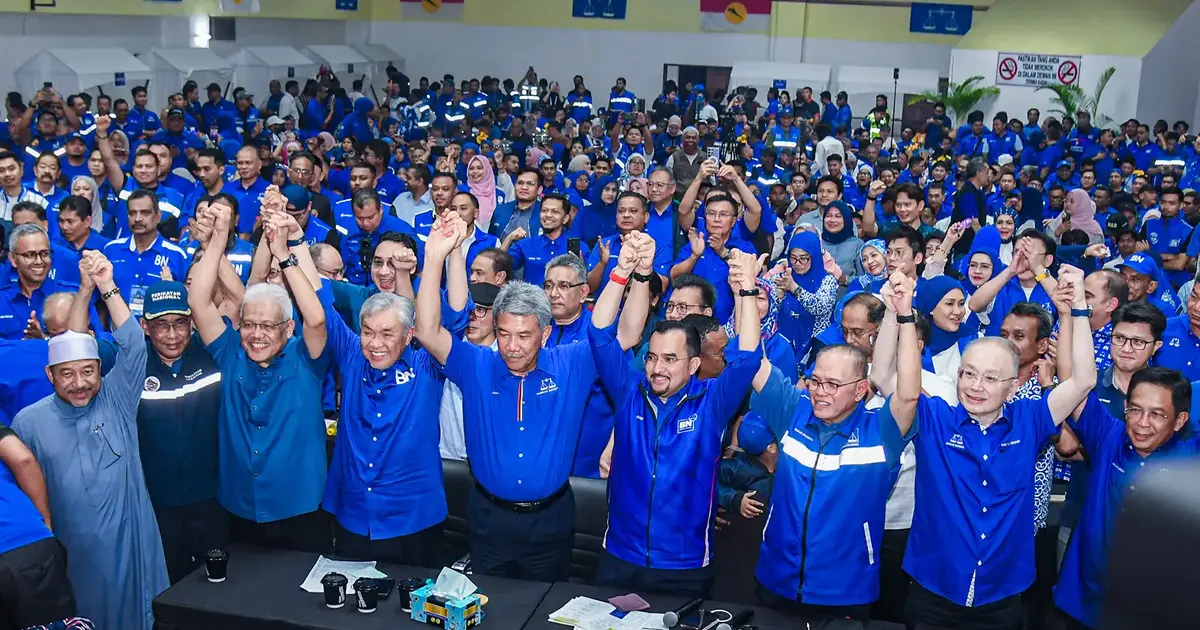
Malaysia's ruling coalition faces mounting pressure to resolve critical pre-election arrangements, with political analysts emphasizing that the Barisan Nasional and Perikatan Nasional alliance must lock in seat allocations and agree on a joint prime ministerial candidate well before campaigning begins. The timing of these negotiations has become increasingly urgent as both blocs navigate the complexities inherent in forging a unified electoral strategy across multiple parties and constituencies.
Tawfik Yaakub, a respected political observer, underscores that postponing such fundamental decisions could prove costly for coalition cohesion. The analyst notes that general elections demand unprecedented coordination among allied parties, and any lingering ambiguity over seat distribution or leadership arrangements risks triggering internal friction that could undermine campaign momentum. This perspective reflects growing concern among political circles that the coalition's strength depends largely on demonstrating solidarity and clear direction to voters.
The Barisan Nasional-Perikatan Nasional arrangement itself represents a relatively recent consolidation of Malaysia's political landscape, bringing together historically distinct groupings under a shared electoral umbrella. For this partnership to function effectively, both coalitions must establish transparent mechanisms for deciding which parties contest which seats, a process that invariably involves delicate negotiations around marginal constituencies and competitive regions. Early agreement on these practical matters signals to the electorate and within-party members alike that leadership is organised and committed to collective success.
The question of a unified prime ministerial candidate carries particular weight, as it effectively sets the public face of coalition governance and establishes the hierarchy among partner parties. Choosing prematurely could alienate factions feeling overlooked, while delaying the announcement invites speculation and faction-building among ambitious political figures. A well-timed, consensual arrangement, by contrast, demonstrates that coalition partners have worked through their differences constructively and reached genuine accord on leadership vision.
Malaysia's electoral system, with its first-past-the-post constituency contests and complex interplay between federal and state-level politics, means that seat allocation proves far more intricate than simple numerical division. Certain constituencies carry outsized symbolic importance, others present demographic complications, and some face unique historical or communal considerations. Resolving these technical arrangements in advance allows campaigns to focus on policy messaging rather than becoming entangled in territorial disputes or perceptions of unfair advantage.
The coalition model prevalent in contemporary Malaysian politics demands constant management and recalibration. Unlike single-party systems where internal mechanisms handle resource distribution, multi-party coalitions must negotiate visibly and reach transparent agreements that satisfy multiple principals. This transparency requirement, while theoretically promoting democratic accountability, also means that any perceived unfairness in seat allocation or leadership selection becomes immediately visible to rival coalitions and dissatisfied voters, potentially triggering defections or reduced turnout among core supporters.
Regional observers note that Southeast Asian electoral coalitions frequently experience mid-campaign disruptions when foundational arrangements remain unresolved. Thailand, Indonesia, and the Philippines have all witnessed coalition collapses triggered by unmet expectations regarding seat distribution or ministerial positions. By establishing clear, agreed parameters early, Malaysia's BN-PN alliance can potentially avoid such pitfalls and project the unified strength necessary to counter opposition challenges.
The stakes extend beyond coalition management to encompass broader questions about government formation and policy continuity. A clear mandate from aligned parties on seat allocation and leadership ensures smoother transition periods and reduces the risk of sudden realignments that could shift parliamentary arithmetic. For investors, civil society organisations, and international observers, such clarity provides reassurance that Malaysia's governance structures remain stable and predictable.
Since Malaysia returned to regular election cycles, coalition preparation has emerged as critical differentiator between effective governance arrangements and troubled partnerships prone to fracture. The current emphasis on early negotiations reflects lessons learned from previous arrangements that foundered due to unresolved disputes. Implementing these insights through prompt, comprehensive seat-sharing and leadership agreements allows the BN-PN partnership to enter campaign periods with unified messaging and coordinated strategy.
The broader implication for Malaysian democracy involves normalising transparent coalition negotiation as routine rather than exceptional activity. When coalition partners approach seat allocation and leadership selection as standard governance tasks requiring early completion, rather than matters deferred until last-minute horse trading becomes necessary, political culture shifts toward greater predictability and institutional stability. This professionalisation of coalition management reflects the maturation of Malaysia's democratic systems and the recognition that coalition success depends fundamentally on upfront, honest negotiation among partners.

