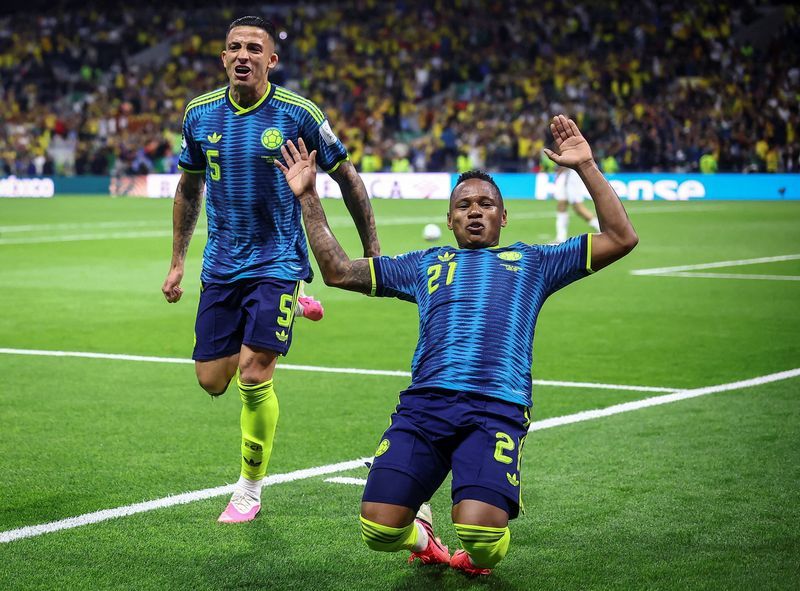
Colombia enter their second Group K fixture with momentum on their side after opening their World Cup campaign with a 3-1 victory over Uzbekistan, though manager Nestor Lorenzo remains acutely aware of the defensive vulnerabilities his team exposed during a concerning second-half performance. The South American outfit will test themselves against DR Congo on Tuesday in what promises to be a more demanding examination than their scoreline might suggest, facing an opponent who has already served notice of their tournament credentials through an impressive 1-1 draw against tournament favourites Portugal in their opening match.
Lorenzo's squad sit in a commanding position within the group structure. Victory would mathematically guarantee progression to the Round of 32 and could potentially secure top seeding depending on Portugal's result against Uzbekistan. Yet the Argentine coach has cautioned his players against complacency, recognising that DR Congo's maiden World Cup appearance in nearly five decades represents a team playing with the kind of confidence that often unsettles supposedly superior opponents. The Congolese side's defensive solidity and capacity to execute devastating transitions have already troubled one of the tournament's elite sides, suggesting that Colombia must address the lapses that nearly cost them dearly against a relatively modest Uzbek team.
The burden of Colombia's attacking enterprise rests heavily upon Bayern Munich's Luis Diaz, whose explosive pace and directness proved decisive in the opening encounter. Diaz marked his tournament debut with both a goal and an assist while earning the match's individual honours, repeatedly finding space in behind the Uzbek defence through his willingness to run at defenders. However, this dependence on one player's individual brilliance concerns Lorenzo, who has also urged captain James Rodriguez to exert greater influence on proceedings. Rodriguez occupied a peripheral role in the opening win, with Colombia's attacking patterns flowing predominantly through Diaz's contributions rather than the creative orchestration his midfield role typically demands.
Lorenzo identified a specific tactical concern regarding his team's possession-dominated approach against Uzbekistan. The Colombian manager noted that excessive ball retention occasionally worked counterintuitively, with his side becoming static and predictable rather than penetrating decisively. This tendency to recycle possession without purposeful intent prevented Colombia from finishing moves with clinical efficiency, a shortcoming that could prove costly against more organised opposition. The team requires greater purposefulness in the final third, transforming their dominance of the ball into more consistent scoring opportunities.
DR Congo, meanwhile, arrive in Mexico City as unlikely tournament darlings following their spirited performance against Portugal. Yoane Wissa's opening-minute goal marked the nation's first World Cup strike in a competition they had not contested since 1974, when they competed under the name Zaire. Coach Sebastien Desabre has constructed a team capable of implementing a disciplined defensive shape while remaining lethal on the counter-attack, precisely the formula that frustrated Portugal's attacking ambitions. Their approach relies upon compact defensive organisation and the capacity to transition rapidly from defence to attack, launching direct passes over the top of opposing defences to exploit spaces behind fullbacks.
Lorenzo has specifically highlighted the tactical problem that DR Congo's style poses to his team's typical attacking methodology. He acknowledged that the Congolese preference for transition football and long-ball distribution represents a fundamentally different challenge from Uzbekistan's more methodical possession-based approach. Colombia's defensive shape, which creaked noticeably in the second half of their opening match, faces direct examination against an opponent specifically designed to prey upon the spaces Colombian fullbacks leave exposed during attacking transitions. The disconnect between Colombia's attacking ambitions and defensive stability must be reconciled before this encounter.
Despite these concerns, Colombia possess considerable tactical flexibility and the individual quality to overcome opposition playing at this level. Their opening victory confirmed their tournament credentials, and the calibre of players available to Lorenzo—particularly through their attacking depth—provides multiple avenues for breaking down even well-organised defensive structures. The Colombian team's experience in significant tournaments provides a reservoir of composure that younger or less established sides might lack when facing similar scenarios.
The Estadio Azteca in Mexico City provided a buoyant atmosphere during Colombia's opener, with thousands of supporters transforming the famous venue into a de facto home ground. With their World Cup base established in Guadalajara, Colombian fans have demonstrated their commitment to travelling north for matches, and the prospect of facing African opposition traditionally generates warm diplomatic relations within stadium confines. This atmospheric advantage, while never decisive, provides genuine psychological benefit and represents the kind of marginal advantage that distinguishes World Cup campaigns.
DR Congo must balance their tournament ambitions with realistic assessments of their opponent's superior resources and experience. Yet their performance against Portugal suggests they possess the defensive discipline and tactical nous to frustrate Colombia's ambitions, even if their aspirations of progressing further require either victory or strong performances in their remaining fixture. Colombia's progression appears probable given their current trajectory, but the path to that outcome will demand addressing their defensive deficiencies and establishing greater attacking consistency beyond their reliance upon individual brilliance.

