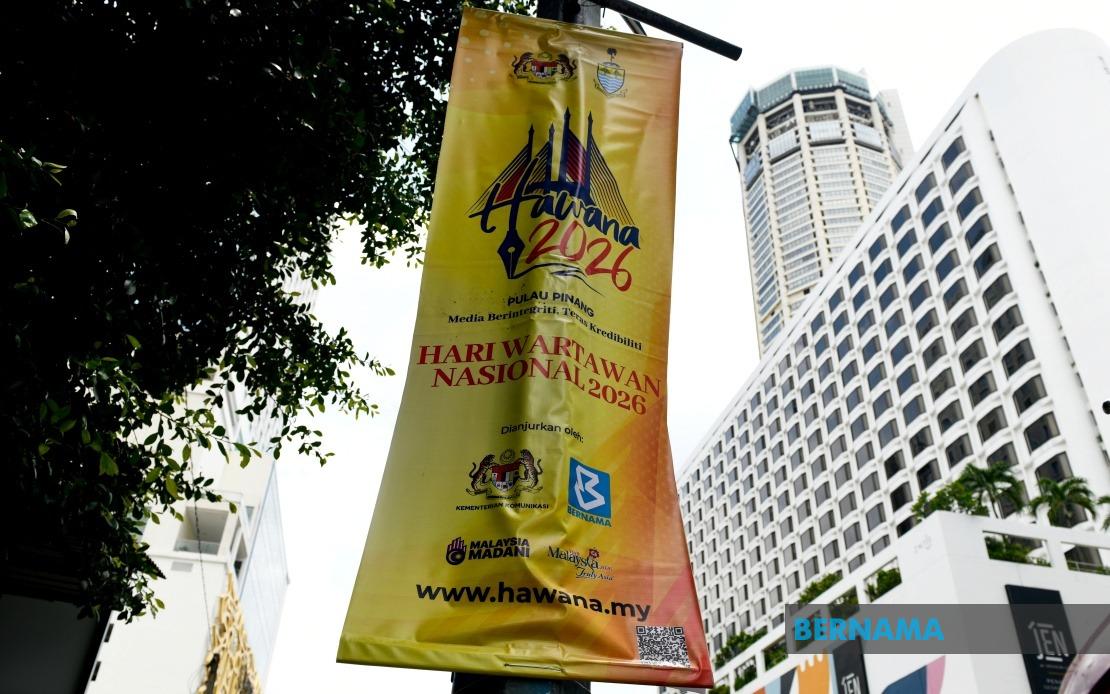
Communications Minister Datuk Fahmi Fadzil has travelled to Penang for a two-day working engagement focused on the culmination of the National Journalists' Day (HAWANA) 2026 celebrations. The visit, which commenced in George Town, encompasses a series of high-profile events designed to honour the media profession's contributions to national development and chart the future direction of contemporary journalism in Malaysia.
The minister's itinerary reflects a strategic blend of professional engagement and public outreach. He opened proceedings by attending the Malaysia Media Retreat Programme 2.0 in Seberang Jaya on the first afternoon, followed by a formal state-level dinner with Penang Yang Dipertua Negeri Tun Ramli Ngah Talib later that evening. These gatherings serve a dual purpose: recognising media practitioners' pivotal role in the nation's progress whilst creating space for industry leaders and policymakers to exchange insights on contemporary media challenges.
The Malaysia Media Retreat Programme represents a significant platform for bringing together editors-in-chief and senior management from both domestic and international media organisations. Such forums have become increasingly important in Southeast Asia, where media landscapes are rapidly evolving due to technological disruption and changing audience consumption patterns. Malaysia's positioning of these dialogues at ministerial level underscores the government's recognition that a healthy media ecosystem remains essential for democratic governance and informed public discourse.
Parallel to the professional programming, Fahmi participated in the RIUH Pi HAWANA Carnival, a three-day cultural event that extends beyond traditional journalism celebrations. Hosted at the PICCA Convention Centre @ Butterworth Arena, the carnival bridges the gap between media practitioners and the creative economy more broadly. This integration reflects an emerging global recognition that journalism, cultural production, and entrepreneurship increasingly intersect in the digital age.
The carnival programming reveals considerable ambition in its scope. Beyond traditional media discussions, attendees engage with hands-on creative workshops spanning cyanotype printmaking, albumen printing, and stone-carving techniques. These activities acknowledge that storytelling in the modern era extends across multiple mediums and artistic disciplines. With more than 24 local creative product brands exhibiting alongside 20 food and beverage vendors, the event functions as an economic platform supporting Malaysian entrepreneurs whilst celebrating cultural diversity. The inclusion of 16 stage performances featuring established local artists such as Sakura Band and emerging talent reflects the ministry's commitment to showcasing Malaysia's vibrant entertainment sector.
On the second day, the minister's schedule continued with a grassroots engagement component. The Jiwa@Sembang Santai programme, held at Seberang Jaya Public Market Food Court, demonstrates an effort to situate media conversations within everyday community spaces rather than confining discussion to formal institutional settings. This approach proves particularly relevant for Malaysia, where public markets remain vital social gathering points across urban and semi-urban areas, offering opportunities for direct ministerial interaction with diverse citizen perspectives.
The centrepiece of the two-day visit remained the HAWANA 2026 Grand Finale, themed "Media Integrity Strengthens Credibility". Scheduled to be officiated by Prime Minister Datuk Seri Anwar Ibrahim, this event anticipated bringing together approximately 1,000 media professionals from across Malaysia and internationally. The choice of theme reflects global concerns about misinformation, declining trust in institutions, and the media's responsibility in maintaining societal cohesion. For Malaysian media practitioners, the forum addresses particularly salient issues given the region's experience with rapid digitalisation, political polarisation, and the proliferation of unverified information across social platforms.
The event's international participation dimension carries significance for Malaysia's regional positioning. By hosting a gathering that attracts media professionals from beyond national borders, the country reinforces its aspiration to serve as a regional hub for media dialogue and journalism excellence. This proves especially pertinent in Southeast Asia, where cross-border media challenges—including digital piracy, coordinated disinformation campaigns, and talent mobility—increasingly require collaborative responses from journalists and regulators across multiple jurisdictions.
Organised by the Ministry of Communications with Bernama, the Malaysian National News Agency, serving as the implementing entity, HAWANA represents the country's premier institutional recognition of media professionalism. Bernama's central role underscores the symbiotic relationship between national news agencies and broader media ecosystems. In Malaysia's context, where Bernama functions as both a news disseminator and custodian of journalistic standards, its stewardship of HAWANA reinforces the principle that professional excellence constitutes a collective responsibility rather than an individual pursuit.
The emphasis on journalistic integrity within HAWANA 2026's programming framework addresses concrete challenges facing the profession. Malaysian journalists navigate complex terrain encompassing online harassment, resource constraints at traditional outlets, competition from unaccountable digital publishers, and occasional governmental pressure. By elevating integrity discussions to a national platform attended by policymakers and industry leaders, the events create accountability structures and professional solidarity networks that strengthen journalism's institutional resilience.
For Malaysian media organisations and practitioners, such high-level engagement carries tangible implications. Direct access to communications ministry leadership provides opportunity to articulate sectoral concerns regarding regulatory frameworks, digital transformation funding, and workforce development. Conversely, the government utilises such forums to communicate policy priorities and expectations regarding media responsibility, particularly concerning reporting on sensitive national matters.
The geographic selection of Penang merits consideration within Malaysia's broader institutional geography. As a state with significant media presence, established creative industries, and a cosmopolitan demographic, Penang offers an appropriate venue for discussions around contemporary journalism. The decision to situate major national media events outside Kuala Lumpur reflects efforts to decentralise policy discourse and acknowledge that media practice and concerns extend far beyond the capital region.
Looking forward, HAWANA 2026's emphasis on credibility and integrity signals the media profession's determination to address public scepticism and demonstrate journalism's enduring value amid profound technological and social disruption. For Malaysian readers and citizens, the outcomes of such professional dialogues ultimately determine whether journalism continues serving its constitutional role of informing democratic participation and holding power accountable across all levels of governance.

