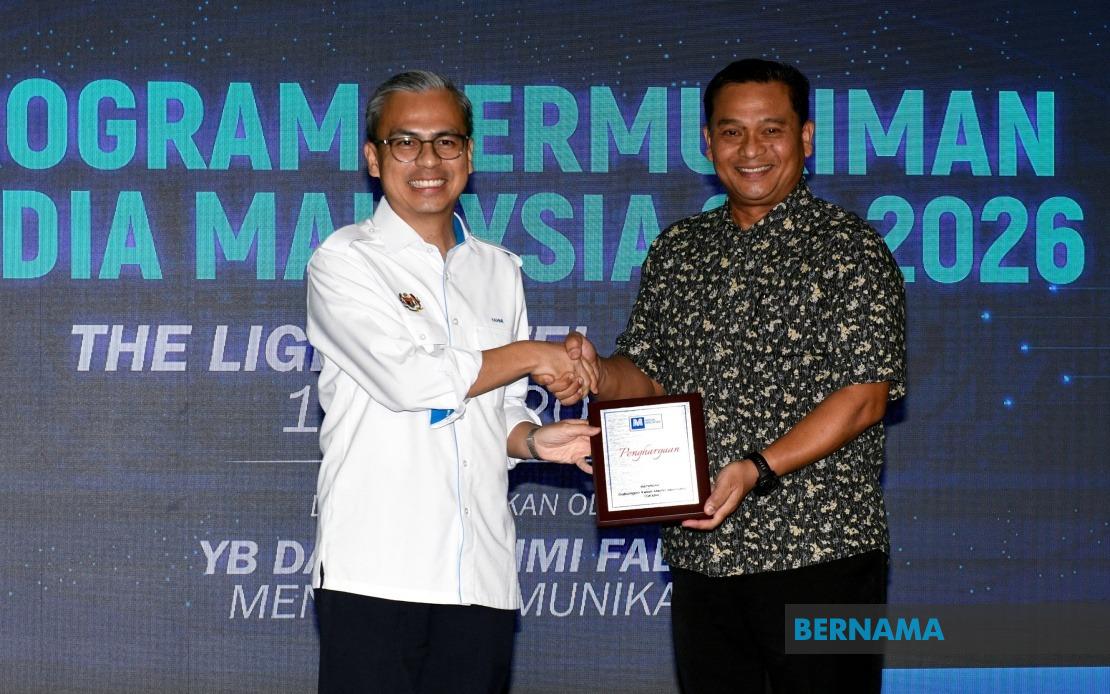
Communications Minister Datuk Fahmi Fadzil has unveiled a financial support package for Malaysia's media sector, committing RM10,000 to each state media club affiliated with the Malaysian Media Clubs Association (GKMM), alongside a separate RM30,000 allocation for the association to fund journalist welfare initiatives and related programmes. The announcement, made at the Malaysia Media Retreat Programme 2.0 in Butterworth, signals renewed government backing for media practitioners amid broader concerns about the industry's sustainability and professional standards.
The minister emphasized that these funds should be deployed strategically to maximise their impact on the journalistic community. Speaking to an audience that included Communications Ministry secretary-general Datuk Abdul Halim Hamzah, Malaysian National News Agency (Bernama) chief executive officer Datin Paduka Nur-ul Afida Kamaludin and Bernama editor-in-chief Arul Rajoo Durar Raj, Fahmi framed the allocation as a demonstration of government commitment to preserving and strengthening the nation's media landscape.
The financial injection comes at a critical juncture for Malaysian journalism, where media organizations face mounting operational pressures and workforce challenges. By channeling support through GKMM—the umbrella body representing state-level media clubs—the government has chosen an institutional framework that allows for coordinated assistance while respecting the relative autonomy of provincial journalism associations. This approach acknowledges the decentralized nature of Malaysia's media infrastructure and recognizes that journalism operates at multiple geographic levels.
Fahmi articulated a central thesis underlying the funding decision: journalists perform an indispensable function as witnesses to events and custodians of factual information, a role that transcends technological disruption. He specifically addressed anxieties about artificial intelligence by asserting that AI cannot substitute for human journalism, grounding his argument in the irreplaceable value of disciplined reporting grounded in primary sources and professional expertise. This rhetorical move reassures the media industry that technological advancement will not diminish official recognition of journalism's societal importance.
The minister also clarified GKMM's institutional role within Malaysia's media governance ecosystem. Although the association lacks formal trade union status, Fahmi suggested that it functions as an effective advocacy channel through which practitioner concerns can reach policymakers. This framing legitimizes GKMM without converting it into a formal labour representative body, preserving governmental flexibility while acknowledging the association's legitimate voice in sector-wide discussions. The distinction matters for Malaysian industrial relations, where media professional associations operate in a regulated landscape quite different from traditional unionized sectors.
The government's stated intention to continue soliciting media industry input on policy matters represents a significant commitment to collaborative governance in this domain. Fahmi pointed to the Malaysian Media Council Act as a successful case study, noting that the legislation was substantially shaped by suggestions and perspectives from media practitioners themselves. This precedent suggests that future regulatory or support measures may similarly benefit from industry consultation, creating space for media organizations to influence the conditions under which they operate.
For Malaysia's regional position, this funding gesture holds symbolic importance. Southeast Asian governments face mounting international scrutiny regarding press freedom and journalist safety, making public commitments to media welfare a matter of diplomatic significance. The allocation, though modest in absolute terms, demonstrates official recognition that journalism requires material support and that practitioners deserve welfare consideration from state institutions. This contrasts with approaches in some neighbouring countries where media-government relations are more contentious.
The timing of these announcements during a dedicated media retreat programme underscores the Communications Ministry's prioritization of direct engagement with journalism stakeholders. Rather than imposing support mechanisms unilaterally, the ministry chose an inclusive forum where practitioners could convene and receive policy announcements. This methodology, whether intentional or circumstantial, fosters dialogue and signals openness to media sector perspectives.
For individual state media clubs, the RM10,000 allocation enables modest but meaningful investments in member welfare programmes, professional development initiatives, or operational expenses. The sum, while not transformative, provides breathing room for clubs that often operate with minimal administrative capacity. The supplementary RM30,000 to GKMM itself allows the central organization to coordinate national-level initiatives, potentially including advocacy campaigns, professional standards work, or inter-club capacity building. The dual-level funding structure acknowledges both local and federated dimensions of Malaysia's journalism associations.
The emphasis on journalist welfare reflects broader concerns about media industry sustainability. Malaysian newsrooms have experienced significant workforce reductions over the past decade as digital disruption and advertising market fragmentation squeezed traditional business models. Government support for welfare programmes—whether health insurance supplements, professional insurance, or emergency assistance funds—addresses an unmet need within an industry where many practitioners lack robust occupational safety nets. The allocation thus responds to material vulnerabilities that predate current technological anxieties.
The minister's invocation of journalism's irreplaceability carries particular weight in Malaysia's contemporary media environment, where social media proliferation has created widespread scepticism about institutional credibility. By asserting that human journalists provide essential value that algorithms cannot replicate, Fahmi attempts to rebuild confidence in professional journalism as a countervailing force against misinformation. This rhetorical positioning aligns media welfare support with broader government objectives around information integrity and public discourse quality.
Looking forward, these allocations may establish precedent for ongoing government financial support to the media sector through institutional channels. Should the funding prove durable across budget cycles, it could stabilize certain media club operations and enable more ambitious professional development programmes. Conversely, if these allocations represent one-off gestures, their impact will remain circumscribed. The sustainability question matters significantly for Malaysian media practitioners planning around budgets that increasingly depend on diversified funding streams including government support.
The government's communications ministry, under Fahmi's leadership, appears committed to positioning itself as a partner in media sustainability rather than merely a regulator or occasional critic. This approach reflects recognition that healthy journalism ecosystems serve broader governance objectives by ensuring information quality and public accountability. Whether this partnership model can withstand inevitable future tensions between official interests and editorial independence remains to be seen, but the funding announcement demonstrates institutional acknowledgment that Malaysian journalism requires material investment from multiple stakeholders including state institutions.

