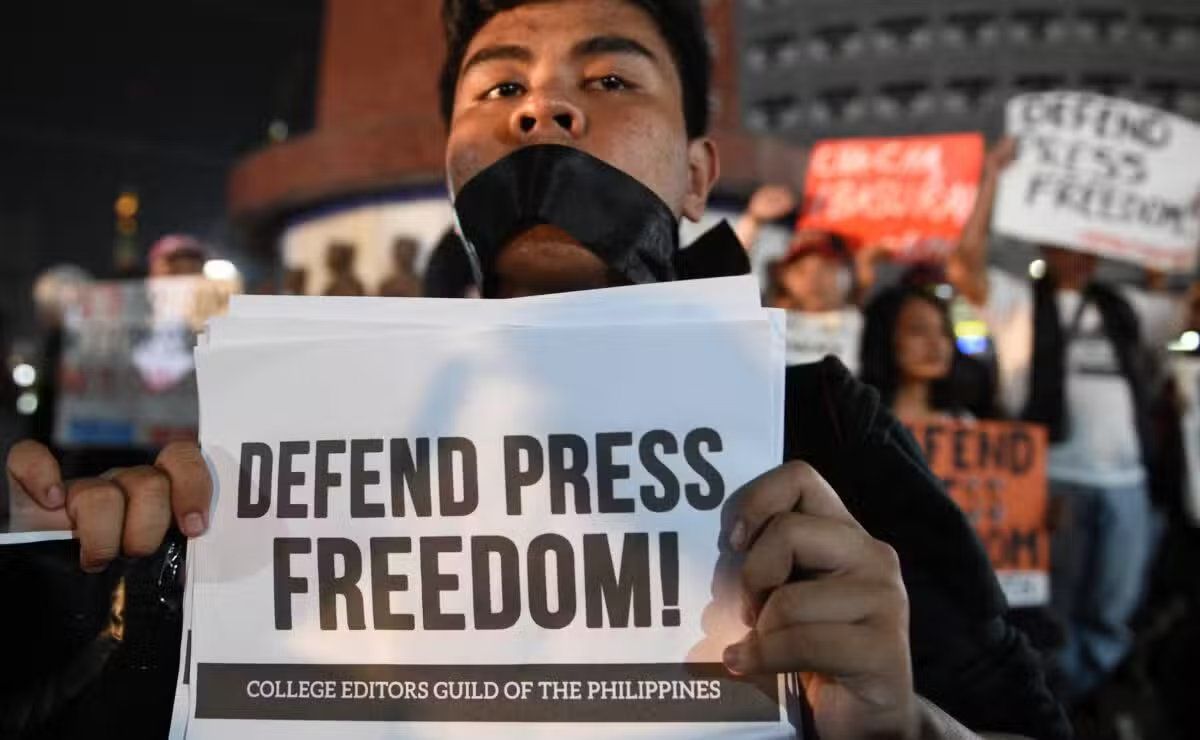
The Philippines is witnessing a deepening crisis in press freedom as documented cases of attacks against journalists continue to climb under President Ferdinand Marcos Jr.'s administration. The National Union of Journalists of the Philippines has recorded approximately 260 incidents of violence, intimidation and legal harassment targeting media workers over the past four years. Yet beneath this stark statistical measure lies a pattern far more damaging to the country's democratic health: the attacks disproportionately target those with the fewest defences.
Analysis of the documented cases reveals that over 180 incidents involved journalists working for community newspapers, local radio stations, campus publications and independent news platforms. This concentration exposes a vulnerability within the Philippine media ecosystem that carries profound implications for democratic accountability. The journalists most exposed to attack are precisely those who serve populations furthest from the capital, operating from newsrooms with skeletal budgets, minimal legal support and institutional safeguards that pale in comparison to major Manila-based publications.
The economics of provincial journalism compound these dangers significantly. Community reporters typically earn substantially less than their counterparts in large metropolitan newsrooms while simultaneously shouldering greater personal risk. They work in environments where local political and commercial interests wield considerable leverage, where the boundary between workplace and residential community blurs, and where physical proximity to those in power creates both investigative opportunity and personal vulnerability. For many, the modest salary bears no relationship to the genuine hazards they encounter in pursuing stories of public interest.
The experience of Jay Lavapiez, a 48-year-old radio broadcaster and station manager of Baskog Radyo in Roxas City, Capiz, crystallises this dangerous reality. In June, armed assailants on a motorcycle blocked his vehicle and fired four bullets from a 9-millimetre pistol in what police classified as an assassination attempt. This violent attack followed months of legal harassment targeting both Lavapiez and his wife India, who also works in media. The couple had reported on a cemetery operated by a local official and documented alleged abuses and corruption—journalism conducted, as they emphasised, in good faith and service to the public. Yet their reporting prompted the filing of multiple cyberlibel cases against them and their staff across three separate jurisdictions in Manila, Muntinlupa and Capiz.
Lavapiez articulates with particular clarity the specific vulnerabilities facing provincial journalists. Unlike reporters in metropolitan newsrooms who can potentially relocate or distance themselves from subjects of investigation, community journalists must navigate the complicated terrain of covering neighbours, scrutinising officials they may encounter at markets or community events, and continuing their work in the same streets where they live. This geographic and social proximity, while potentially enriching investigative journalism through deep community knowledge, simultaneously transforms every published story into a personal confrontation. The pressure operates not only through direct violence but through accumulated psychological toll—the knowledge that one's address is known, one's patterns are observable, and one's family members are identifiable.
The case of RJ Ledesma, a community journalist killed in Toboso, Negros Occidental in April while conducting reporting on renewable energy initiatives and their effects on agricultural communities, represents the ultimate expression of this vulnerability. Ledesma was among 19 people killed in a military operation subsequently condemned by a fact-finding mission for serious violations including alleged indiscriminate firing despite clear visibility. His death underscores that the risks facing provincial journalists extend beyond libel cases and online harassment to encompass lethal force.
The pattern of attacks reveals calculated suppression targeting specific categories of reporting. Cyberlibel complaints—civil cases initiated not necessarily by those directly harmed but by powerful individuals—function as effective tools of intimidation. A single critical article about a local official's conduct can generate cascading legal proceedings across multiple courts, draining resources and consuming the time and emotional energy of journalists and their families. Unlike criminal cases that require proof beyond reasonable doubt, cyberlibel suits function on lower evidentiary thresholds, making them particularly effective weapons against less-resourced outlets unable to afford sustained legal defence.
The institutional dimension of this crisis deserves particular attention in the Southeast Asian context. The Philippines' press freedom ranking has deteriorated significantly in recent years, reflecting not simply dramatic incidents of violence but this systematic pressure on community journalism infrastructure. As larger publications based in Manila maintain better institutional capacity to resist intimidation through legal teams and international publicity, the squeeze tightens on provincial outlets already operating on minimal margins. The long-term consequence threatens to be a hollowing-out of local journalism capacity precisely when communities most need reliable information about local governance and accountability.
For Malaysian and broader Southeast Asian observers, the Philippine situation carries instructive warnings. The attacks on community journalists reflect a deliberate strategy targeting journalism's most vulnerable point: its distributed, locally-rooted character. Journalists working far from national capitals and major media institutions lack the institutional visibility and international attention that sometimes protects prominent reporters. Yet these community journalists perform essential democratic functions by providing information flows that major media may neglect and by maintaining accountability relationships that function only through sustained local presence.
Lavapiez emphasises that community journalists do not seek special privileges or extraordinary protections. Their request remains fundamentally modest: the basic capacity to conduct their work without threats, harassment, legal persecution designed to silence, or physical harm for asking questions in the public interest. This baseline standard—freedom from intimidation for legitimate journalism—represents the foundational requirement for democratic governance. When this freedom erodes specifically for community journalists, entire populations lose access to information about those wielding power over their daily lives.
The deteriorating security environment for provincial journalists also reflects broader questions about the Philippine state's capacity or willingness to protect press freedom. The concentration of attacks on smaller outlets and independent journalists suggests that neither market competition nor institutional development has generated sufficient protection. Instead, the pattern indicates that power holders have learned to target journalism's weakest points, exploiting resource asymmetries and geographic vulnerabilities.
The documentation by the National Union of Journalists carries significance beyond merely compiling victim statistics. Behind each recorded number exists an individual journalist, a functioning newsroom, and a community whose access to reliable information has been compromised. As Philippine society continues navigating questions of democratic governance, institutional accountability and citizen participation, the fate of community journalism represents far more than a media sector issue—it constitutes a fundamental challenge to whether distributed democratic accountability can survive in an environment of escalating intimidation.

